The basic principle: understanding meiwaku and shared consideration
Japanese etiquette centers on the concept of meiwaku, which refers to causing trouble or inconvenience to people around you. Rather than demanding flawless execution of traditional customs, local society values visible awareness and a willingness to share space cooperatively. A sincere attempt to be considerate matters far more to residents than knowing every historical detail.
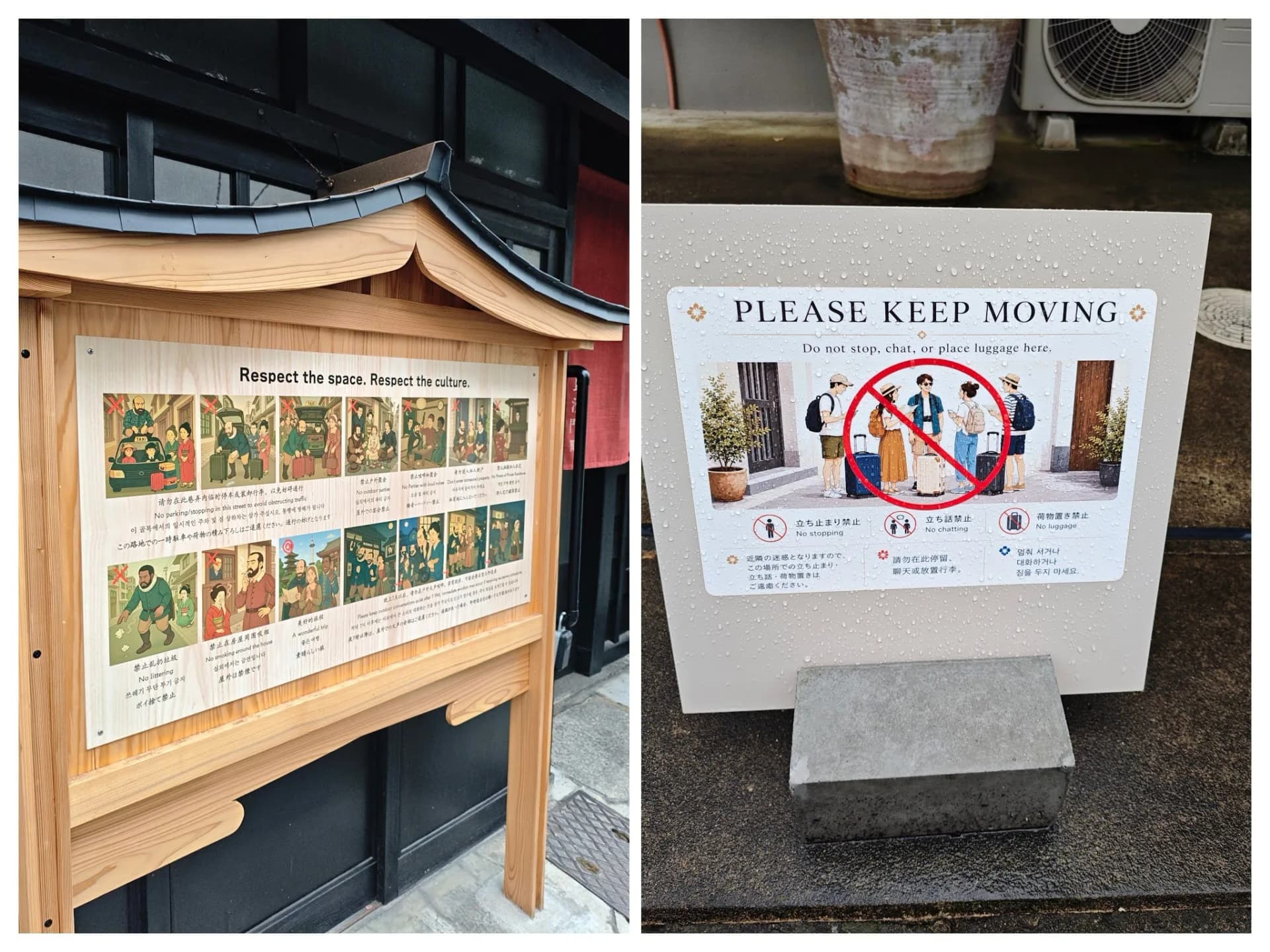
In everyday practice across Kyoto, this means staying mindful of your physical footprint and speaking volume. If you bump into someone or need to pass through a crowd, a soft sumimasen immediately signals goodwill. Pairing it with a slight bow and saying arigato gozaimasu when receiving assistance at a shop counter will resolve almost any minor misunderstanding.
Train and transit etiquette: platforms, quiet cars, and luggage
Public transit in Japan operates on strict mutual consideration to keep millions of daily journeys running on schedule. Passengers keep conversations quiet, turn mobile phones to silent manner mode, and manage personal baggage so aisles remain clear. Understanding boarding lines and luggage policies prevents friction on both city buses and intercity trains.
Platform queues and carriage quiet
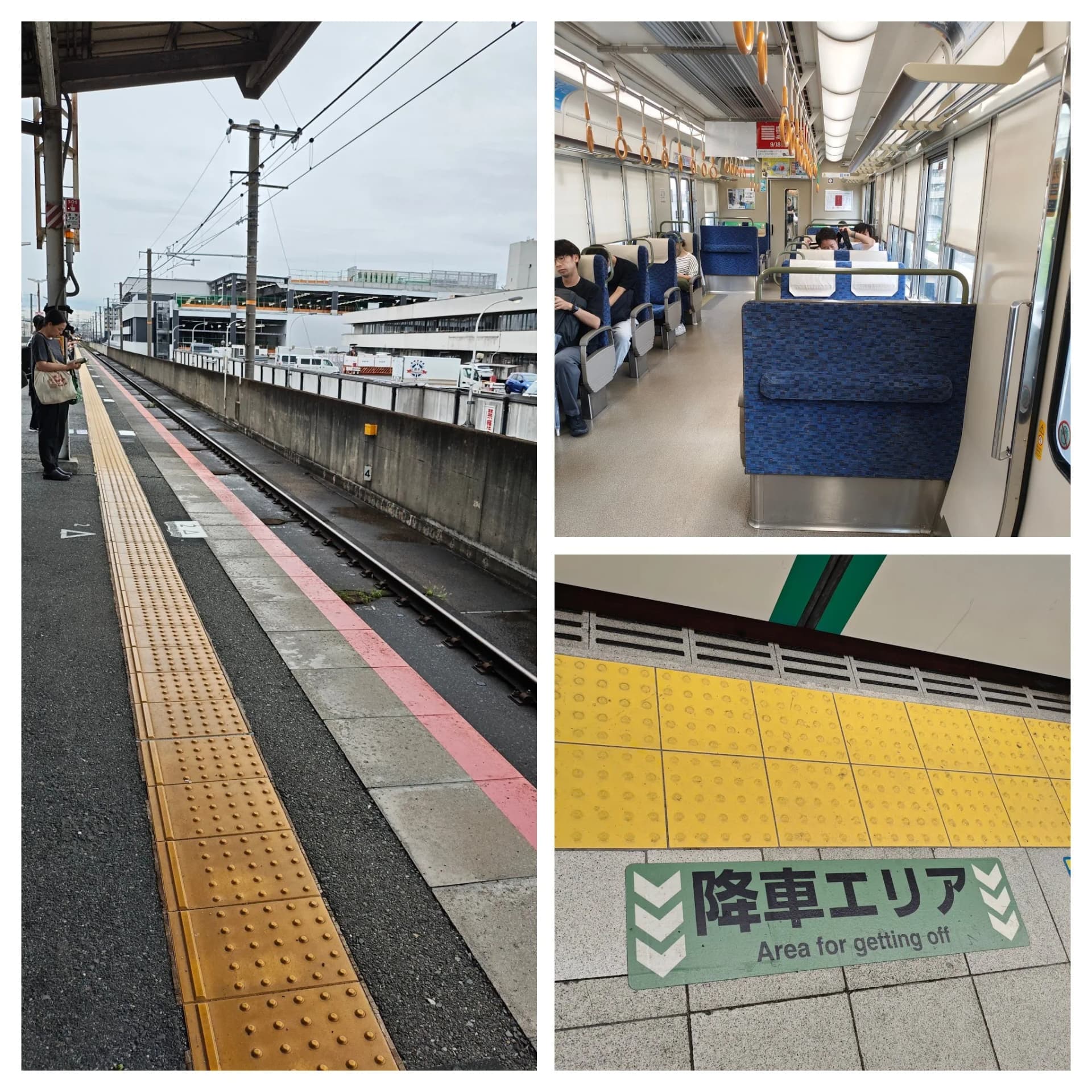
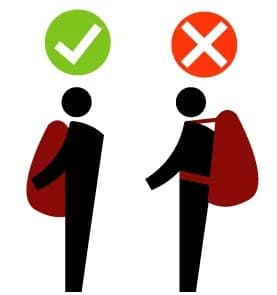
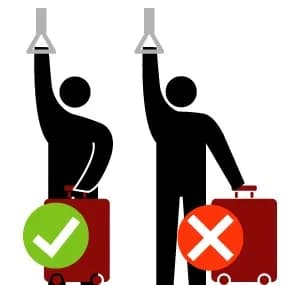
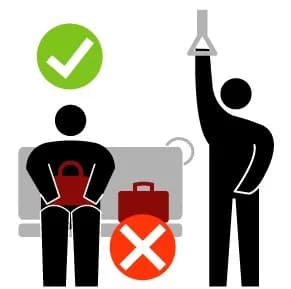
Station platforms use painted lines and geometric symbols to show passengers where train doors will open. Line up behind these marks in two single-file rows at stations like JR Kyoto or Keihan Sanjo, leaving the center open for exiting passengers before you board. Pay extra attention on Shinkansen platforms and stay strictly behind the solid yellow line; train operators will not hesitate to yell or blow their whistle if you step over it. If you want to take photos of the bullet train, always maintain a safe distance. Once inside the carriage, set your phone to silent mode, avoid voice calls, and pull your backpack onto your chest or place it on the overhead luggage rack.
 |  |  |
|---|
Eating on local trains versus the Shinkansen
Eating on commuter trains and city subways is avoided, though taking a quick sip of water from a sealable bottle is acceptable. In contrast, eating on long-distance trains like the Shinkansen is standard practice. Travellers regularly purchase boxed bento meals from station kiosks before boarding bullet trains, eating comfortably at their reserved seats.
Kyoto city buses and large luggage
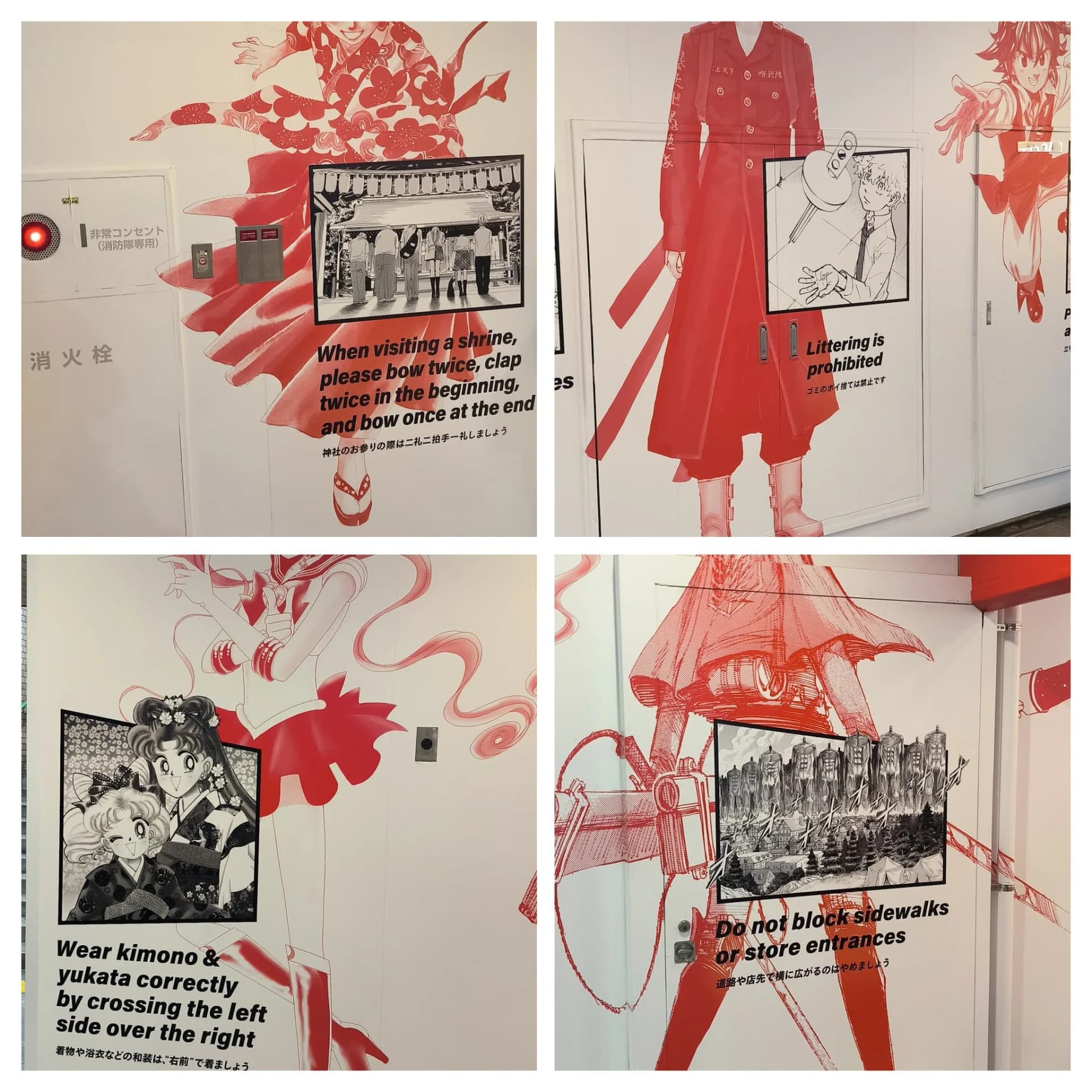
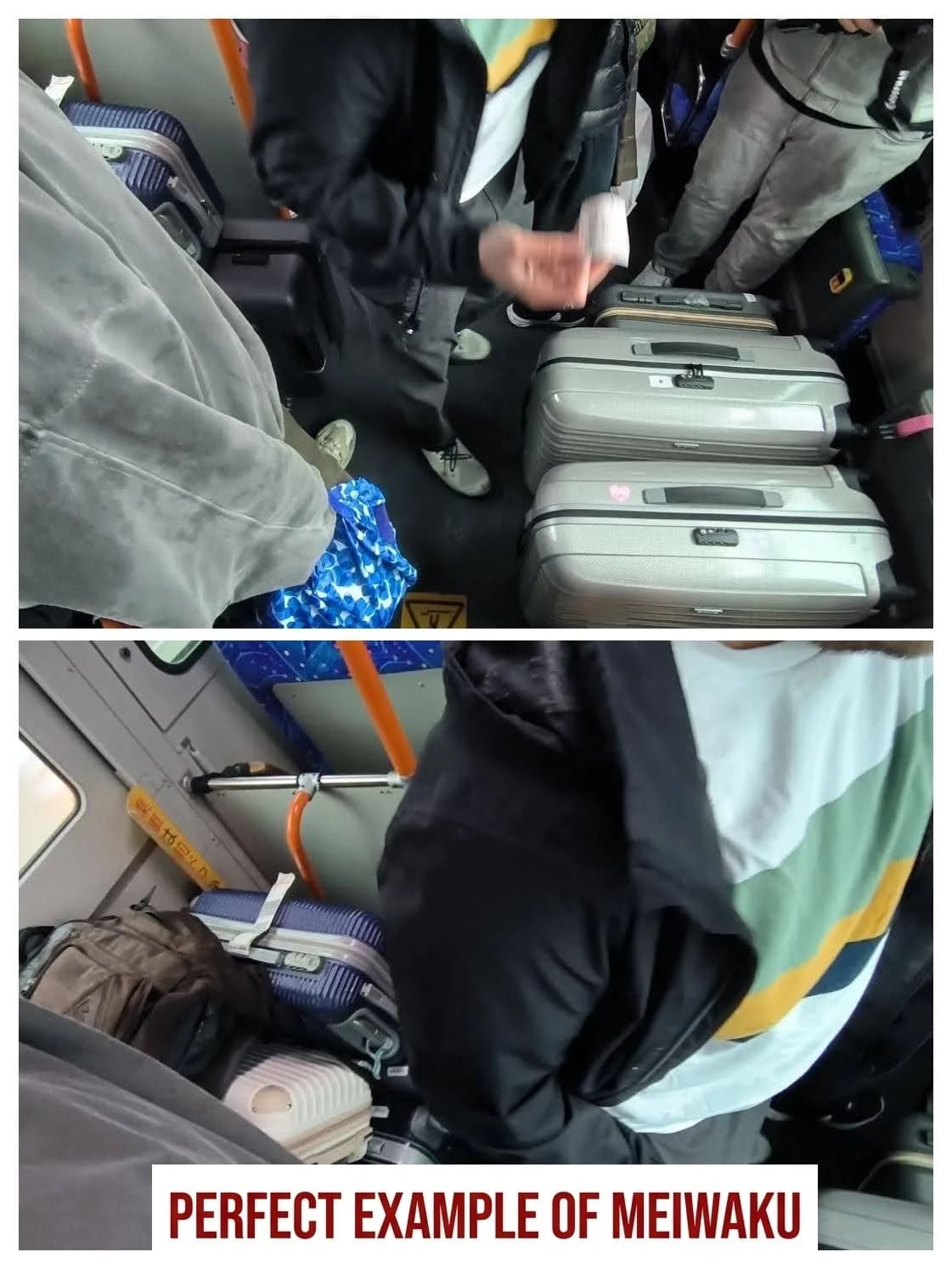
Kyoto City strictly requests that travelers do not bring large suitcases onto standard city buses like route 206 under its "Hands-Free Bus" policy. Single aisles on standard buses are narrow, and bulky luggage blocks local residents who rely on the bus network for daily commutes and hospital visits. The city has installed multilingual signage across major hubs redirecting passengers with heavy bags to dedicated express transit options and hospital visits. The city has installed multilingual posters across major hubs to redirect passengers with heavy bags.
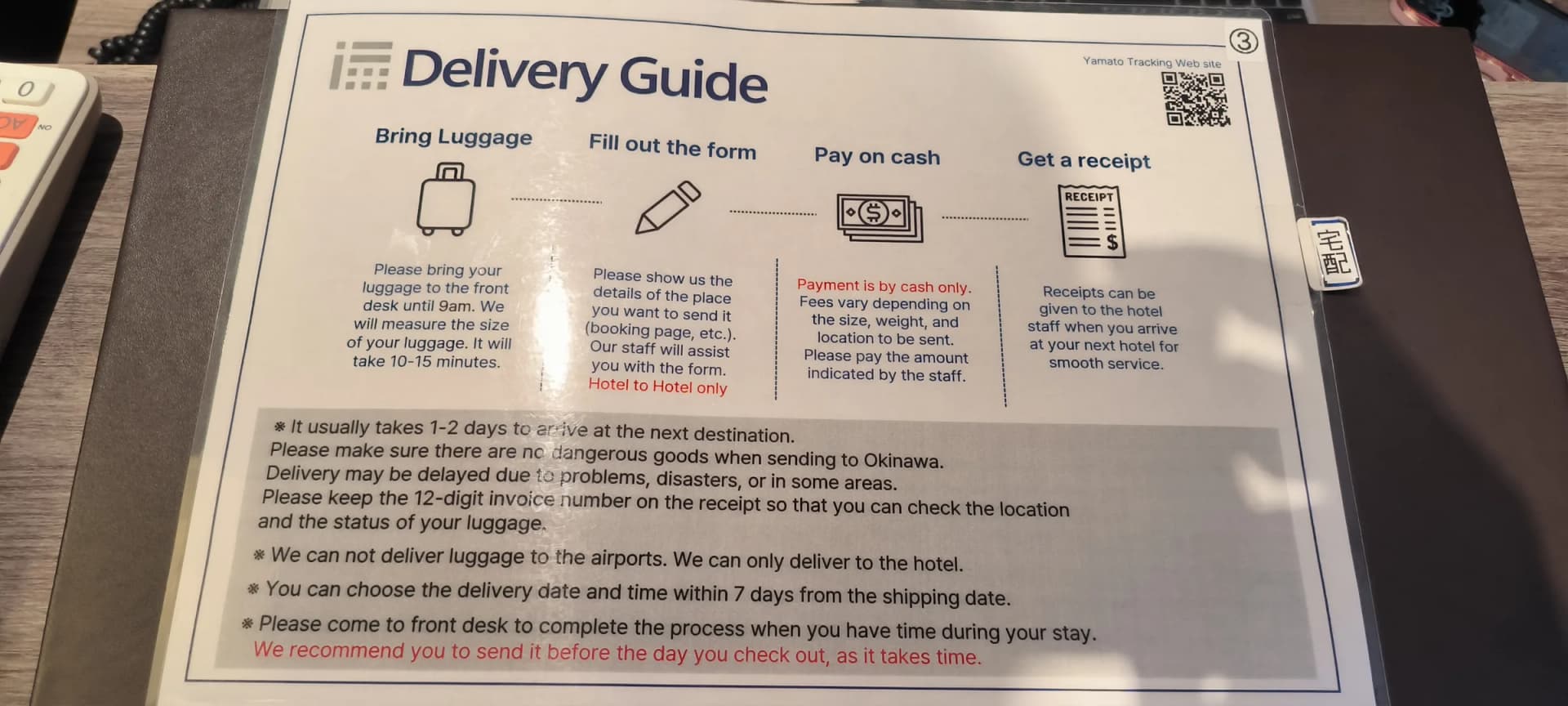
To move luggage across town, use the Karasuma subway line, hail a taxi, or use luggage transfer services like Yamato Transport. Sending heavy bags between your Tokyo hotel and Kyoto accommodation costs around 2000 to 3000 yen per piece and frees you from dragging suitcases through crowded transit hubs.
Entering buildings: how to handle the genkan, tatami, and slippers
Traditional indoor spaces separate the clean interior from the outside street through a sunken entryway called a genkan. You must remove outdoor footwear before stepping onto the raised wooden floor, and specific rules dictate where your feet and slippers can go. Following the correct step sequence protects delicate flooring and demonstrates respect for the host.
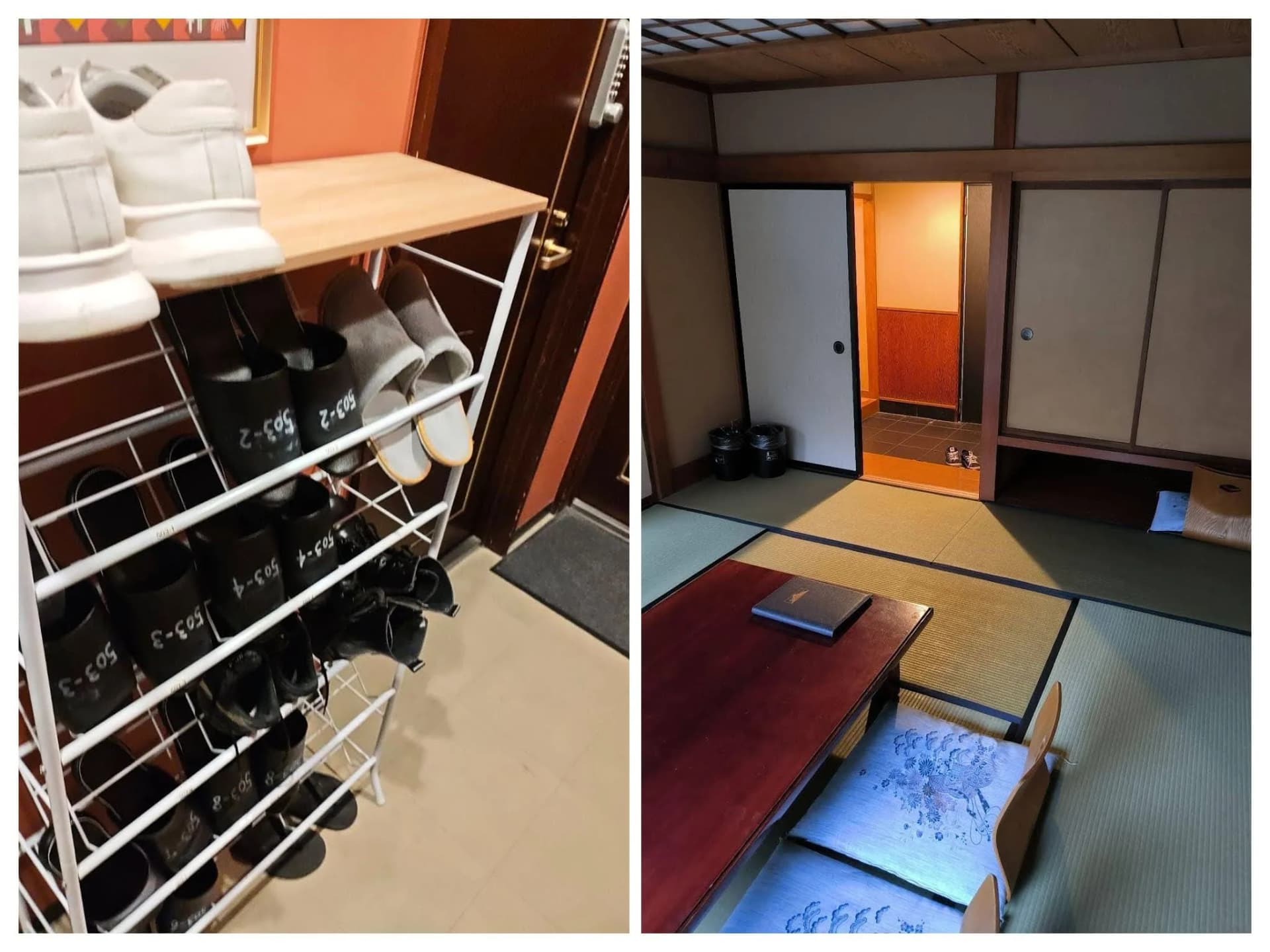
The step sequence at a genkan threshold
Remove your shoes while stepping directly up onto the raised wooden floor, ensuring your socks never touch the stone floor of the entryway. Once you are standing on the wooden ledge, turn around, crouch down, and turn your shoes so the toes point toward the front door, then neatly set them off to the side.
Stepping backwards onto the stone floor in your socks transfers street dirt onto the clean interior boards, which defeats the purpose of the entryway. Take your time during this transition, using the wall or entrance bench for balance if needed.
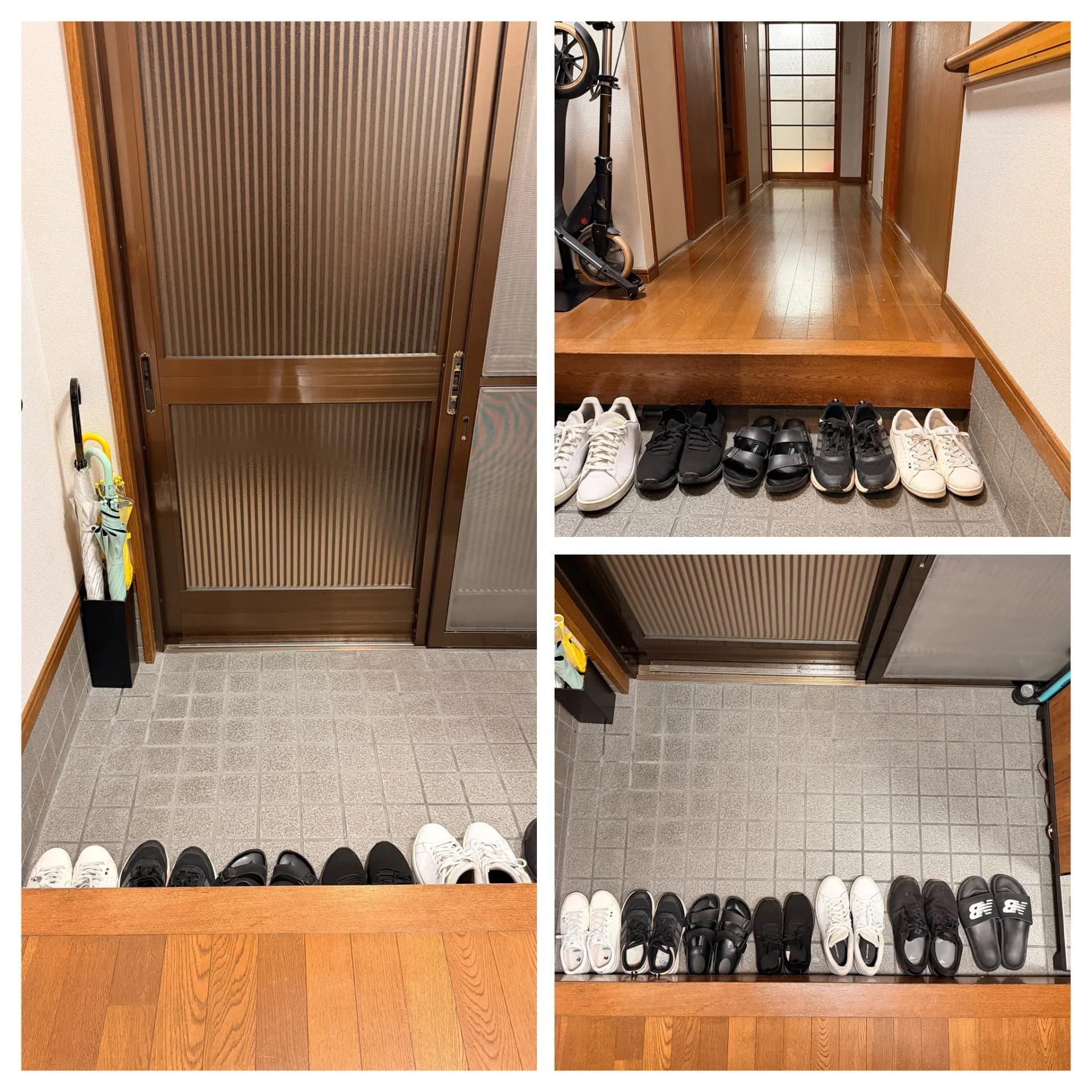
Socks and tatami mat care
Bare feet damage natural rush tatami mats and untreated cypress wood, so always wear clean socks when visiting homes or temple halls. If you wear sandals while walking around Kyoto in summer, keep a clean pair of cotton socks in your daypack to slip on before entering indoor sites. Step onto tatami mats only in socks, leaving any indoor guest slippers behind on the wooden corridor.
The restroom slipper swap
Ryokan, traditional restaurants, and private homes provide dedicated plastic slippers just inside the restroom door. Step out of your indoor hallway slippers outside the restroom threshold, step into the restroom slippers, and reverse the process when exiting. Leaving the restroom while still wearing toilet slippers is a common slip, so check your feet before walking back onto polished wood corridors.
Visiting sacred sites: telling shrines from temples and following rituals
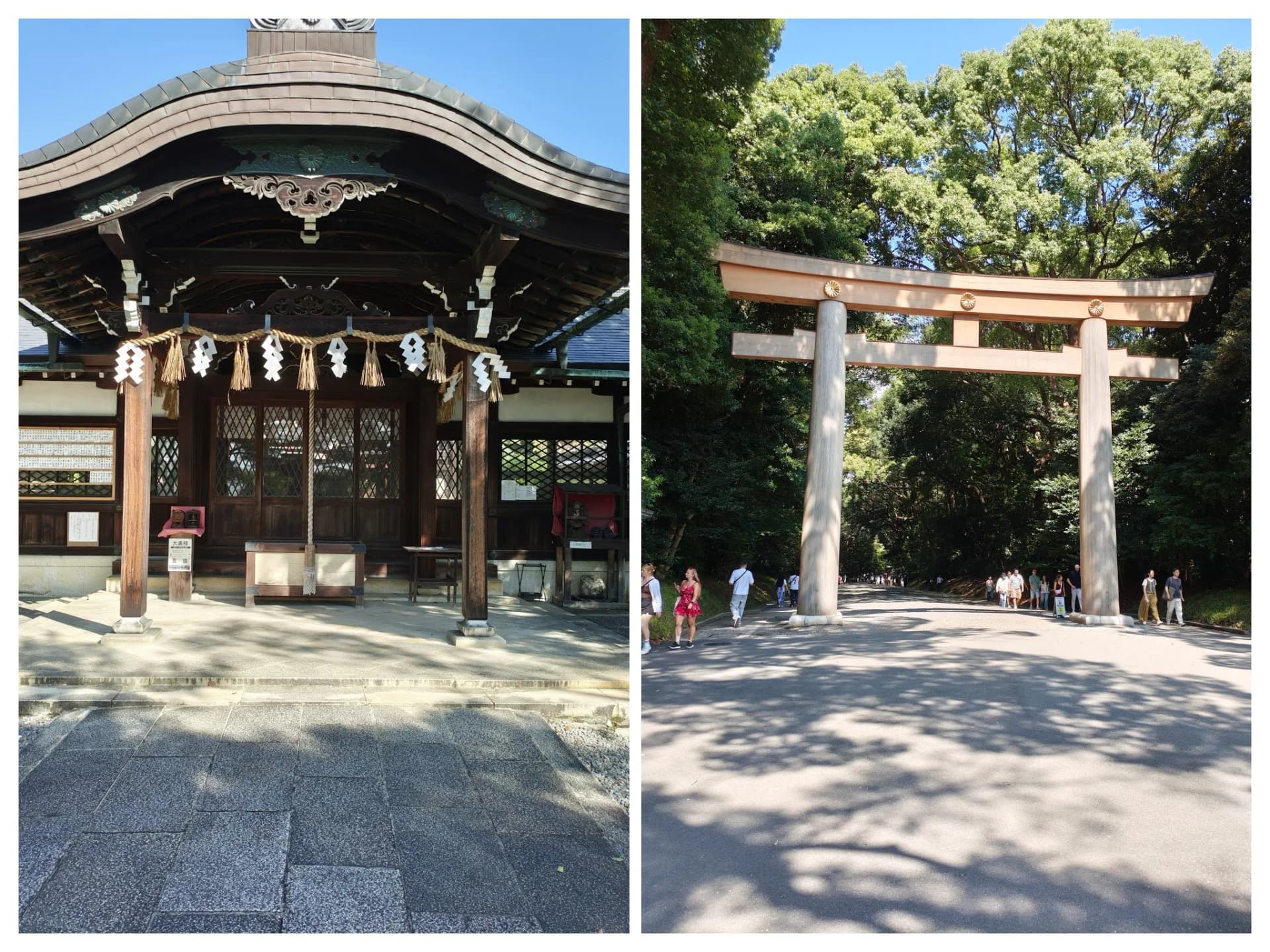
Shinto shrines and Buddhist temples represent distinct spiritual traditions in Japan and follow different codes of conduct. Shrines honor native spirits under wooden torii arches, while temples house Buddhist statuary behind large wooden gates. Knowing the physical differences ensures you use the correct sequence of bows and gestures at each site.
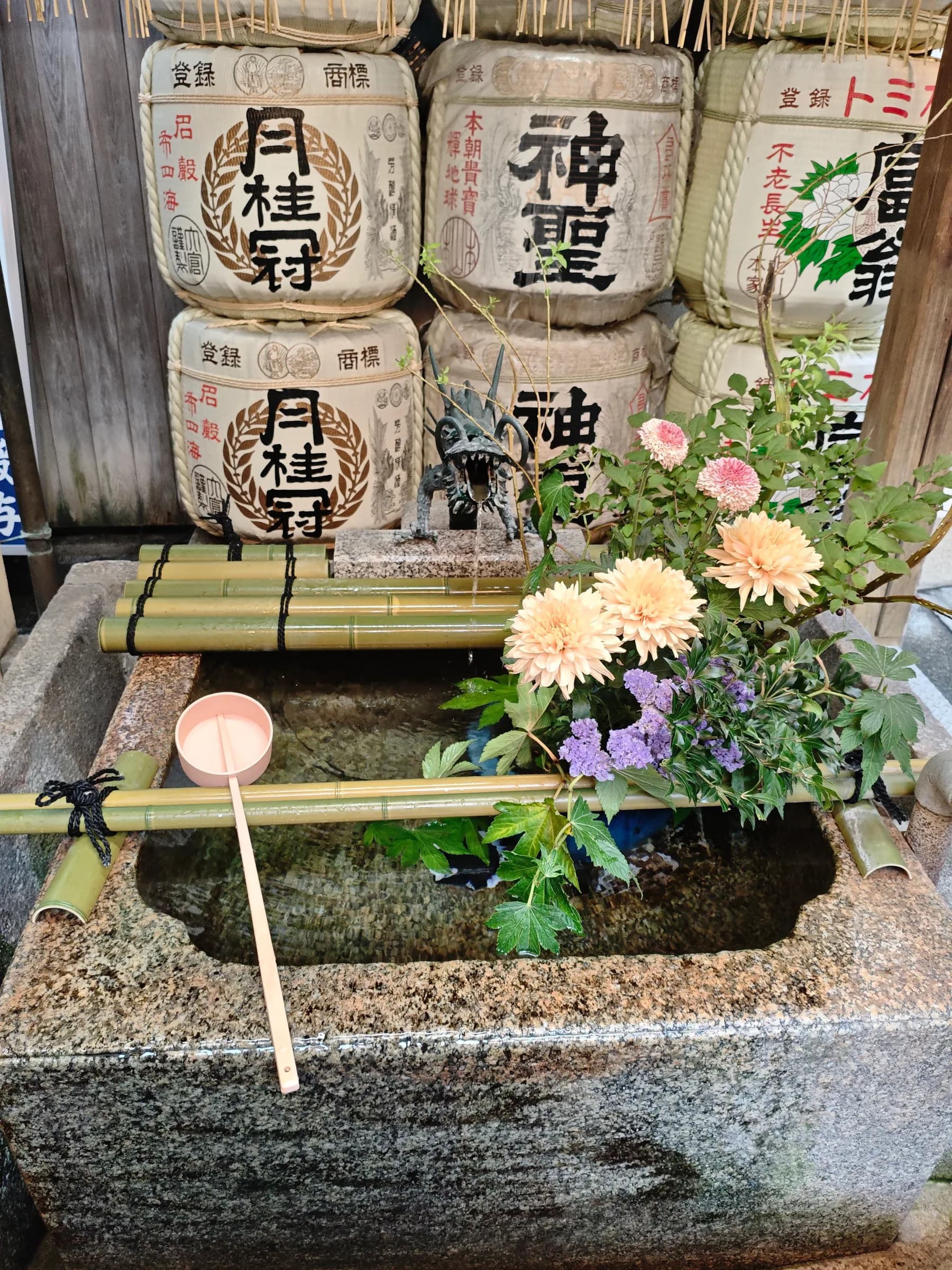
Purification steps at the water basin
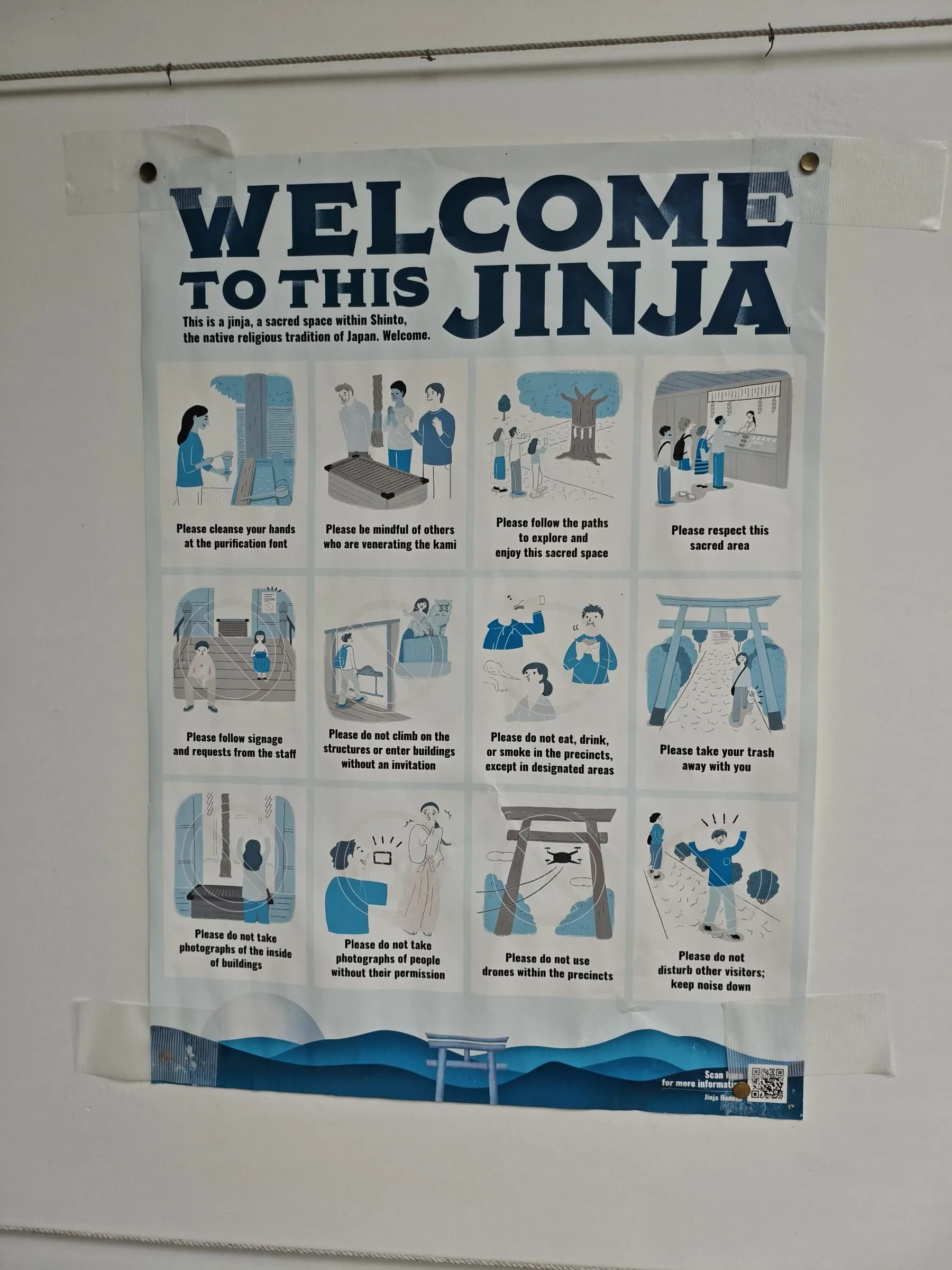
Before approaching an altar at a shrine or temple, stop at the water pavilion called a chozuya (or temizuya) to purify your hands and mouth. Take the wooden ladle in your right hand, fill it once with water, rinse your left hand, then switch hands to rinse your right. Pour a small amount into your cupped left hand to rinse your mouth, spit beside the basin stone, and tilt the ladle upright so the remaining water washes the handle.
Shrine worship: two bows, two claps, one bow
At a Shinto shrine, toss a coin into the wooden offering box, ring the hanging bell once if available, then bow deeply twice to a 90-degree angle. Clap your hands twice at chest level (Kashiwade). Keep your palms together for a moment of silent prayer, then finish with one final deep bow. When walking along the main path leading to the shrine (Sando), stick to the sides rather than the middle, as the center is reserved for the deity.
Temple visits: silent contemplation without clapping
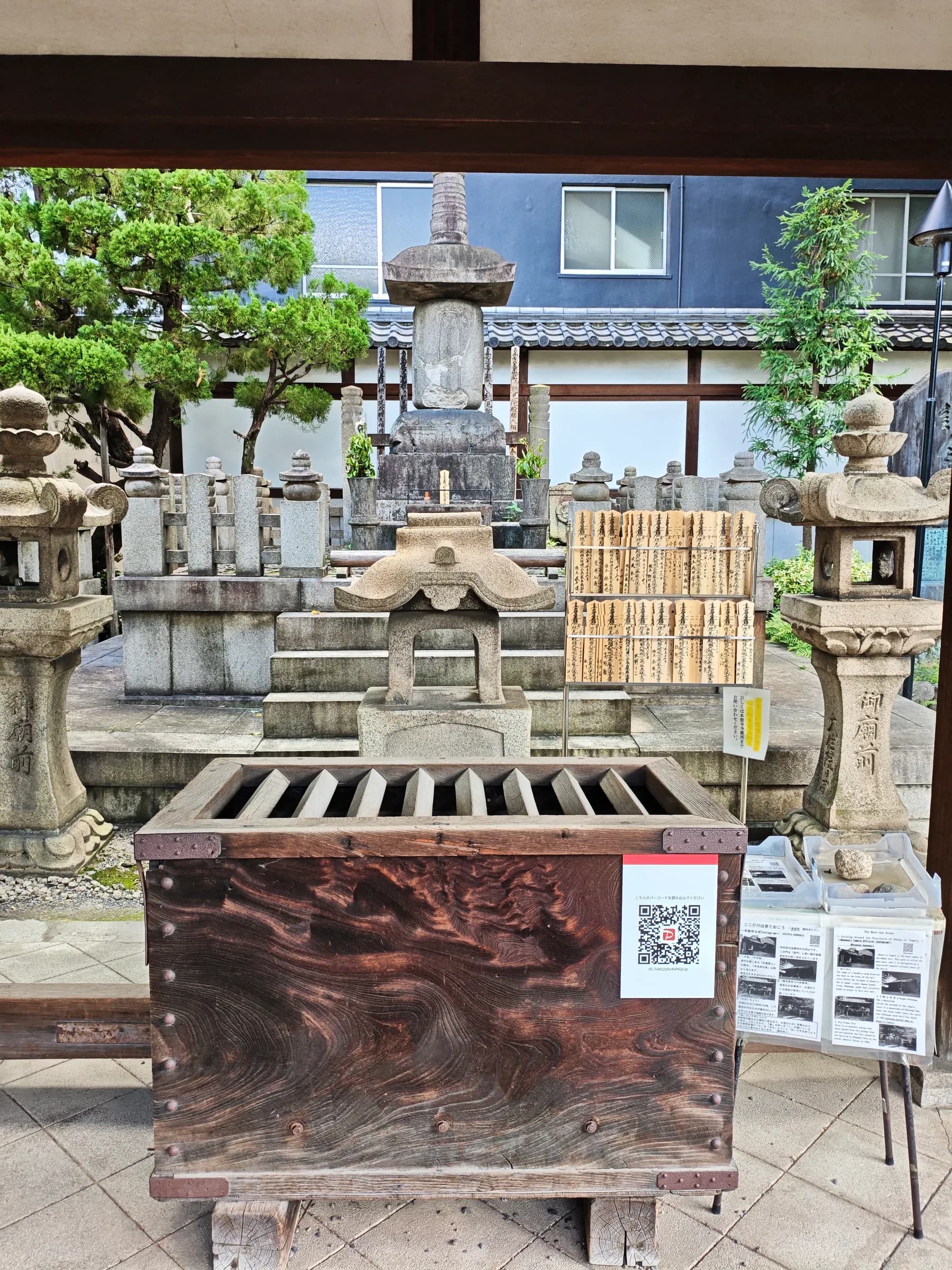
At a Buddhist temple, place your coin in the offering box. If there is a bell attached to a rope above the box, ring it gently once or twice to announce your presence to the Buddha. Bow your head slightly and bring your palms together in silent prayer (Gassho)—making sure not to clap. Finish with a brief bow before stepping away. If there is an incense burner in the courtyard, you can purchase a stick, light it, place it upright in the burner, and gently fan the smoke toward yourself to receive its purifying blessings.
Respecting historic Kyoto: street signs, Gion alleys, and city rules
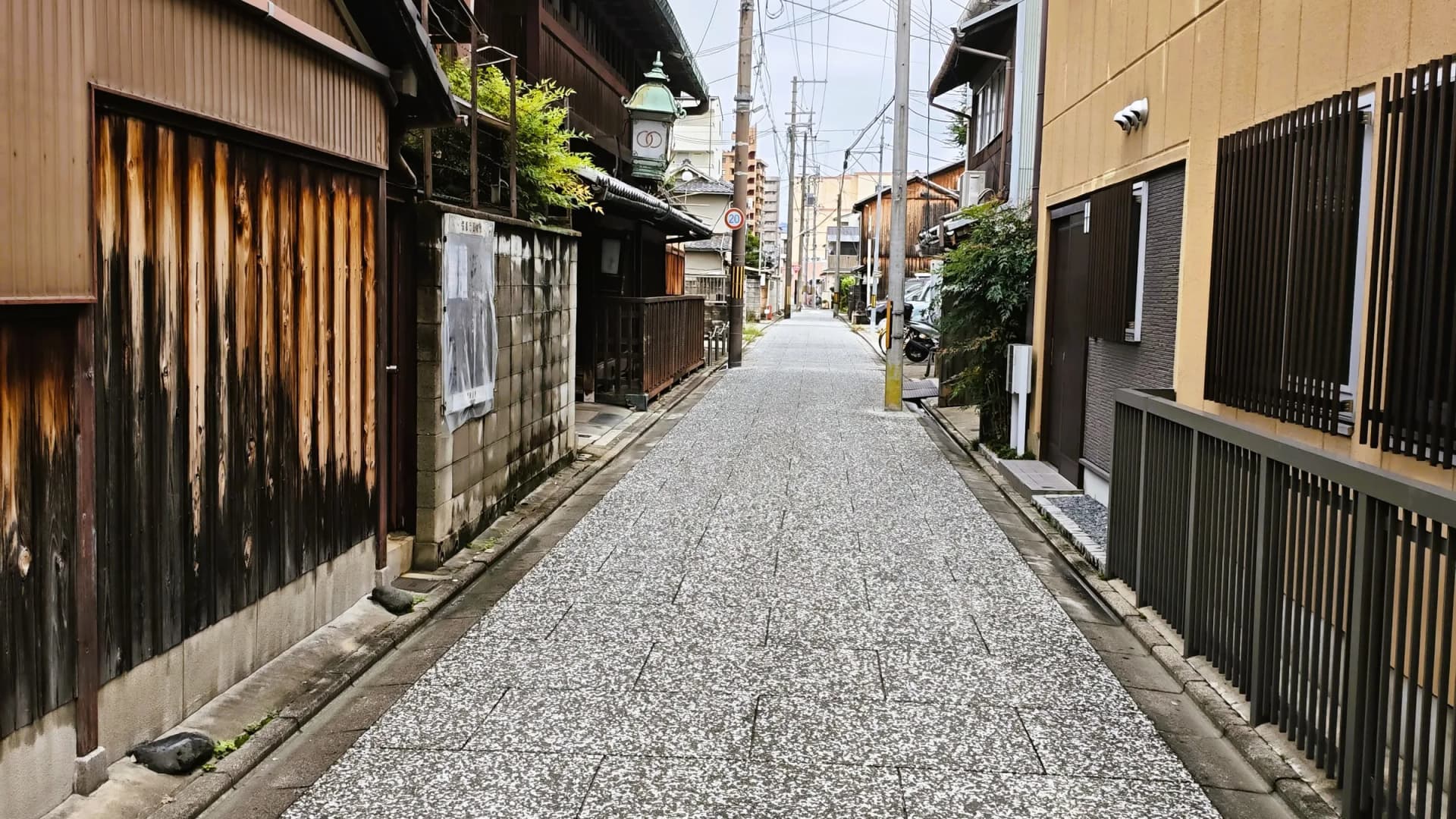
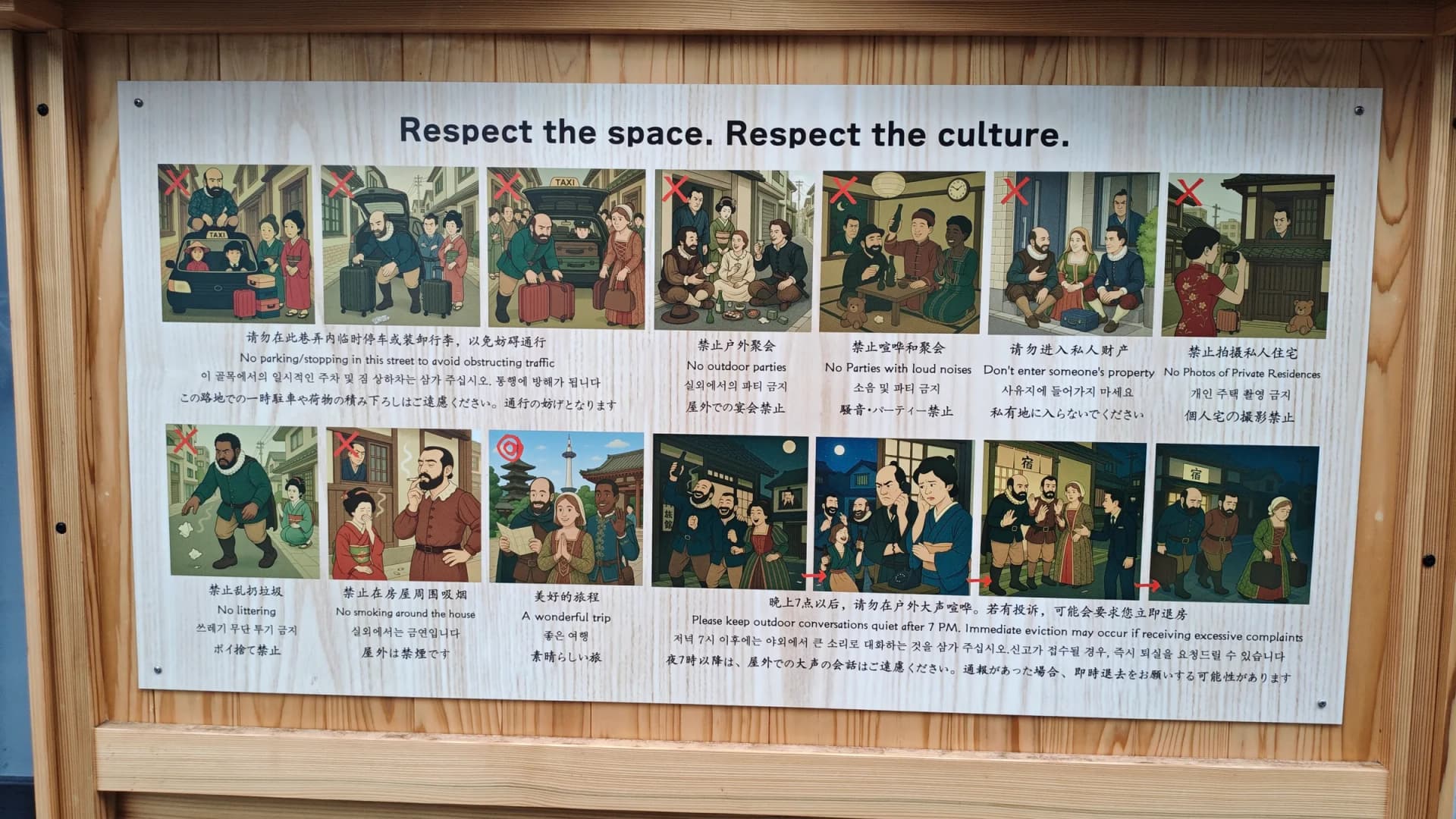
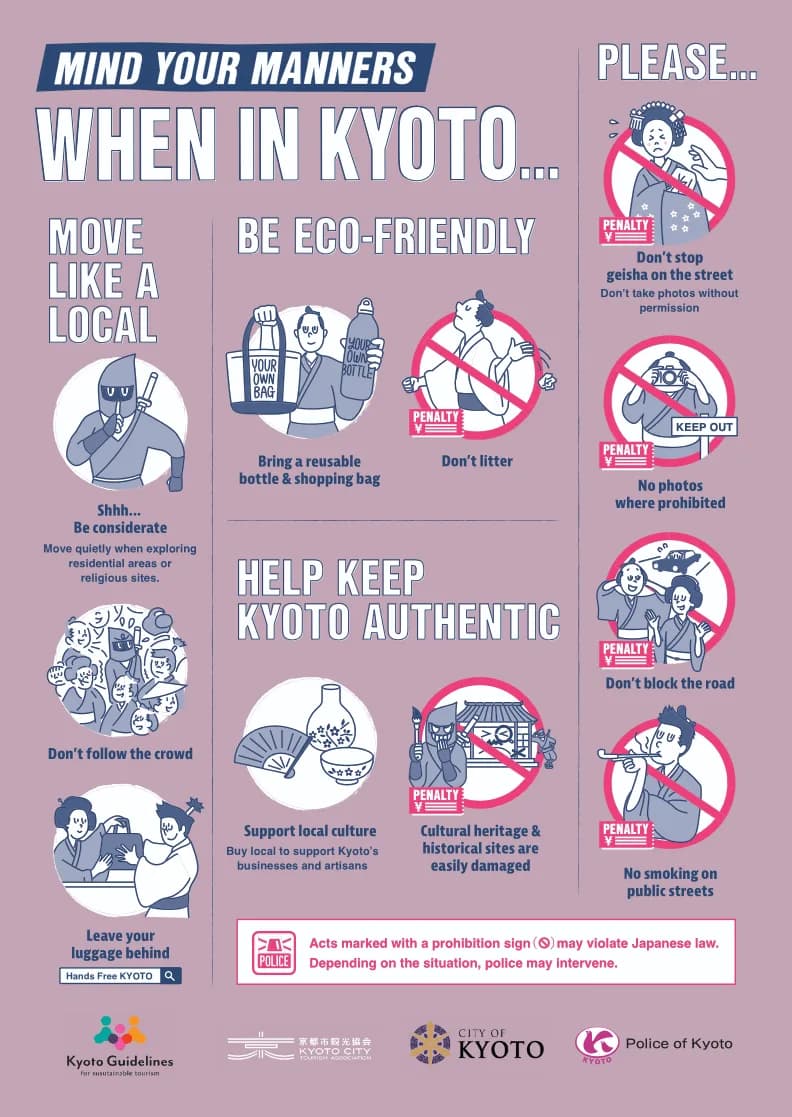
Kyoto balances the rhythms of a residential city with the demands of international travel in historic neighborhoods. Local community councils post clear pictorial signs explaining city ordinances, from photography prohibitions to waste disposal. Respecting these neighborhood boundaries ensures historic districts remain functional for the artisans and residents who live there.
Private roads and photography rules in Gion
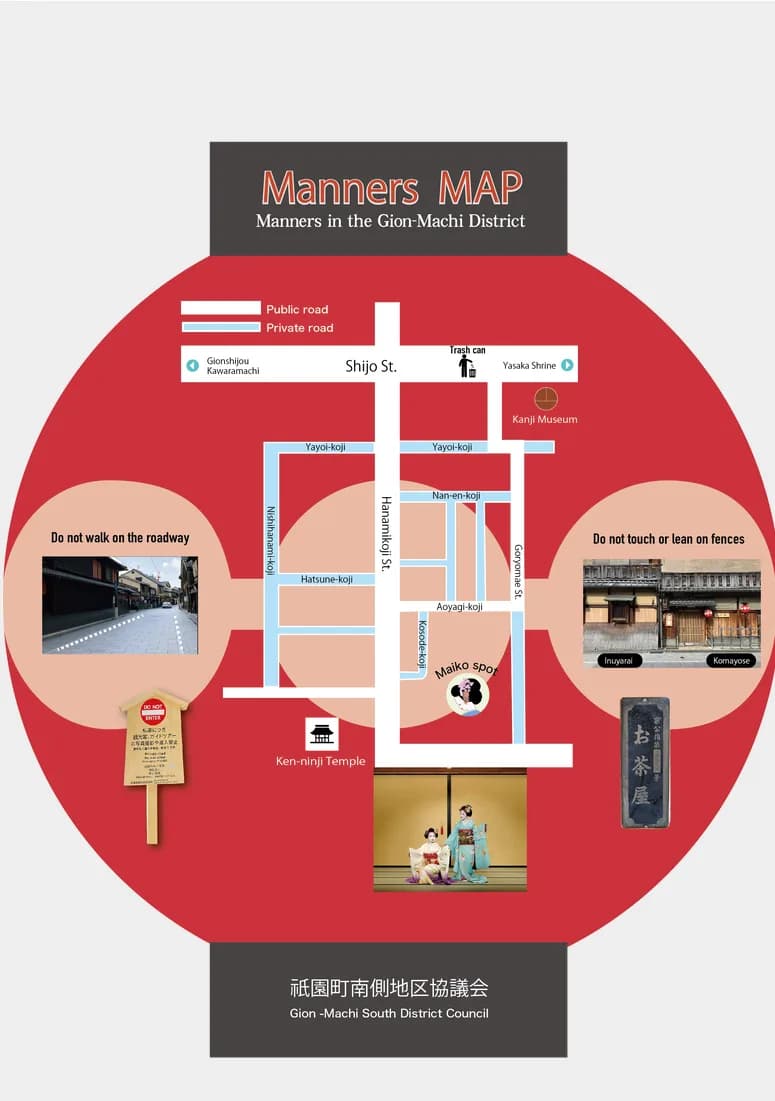
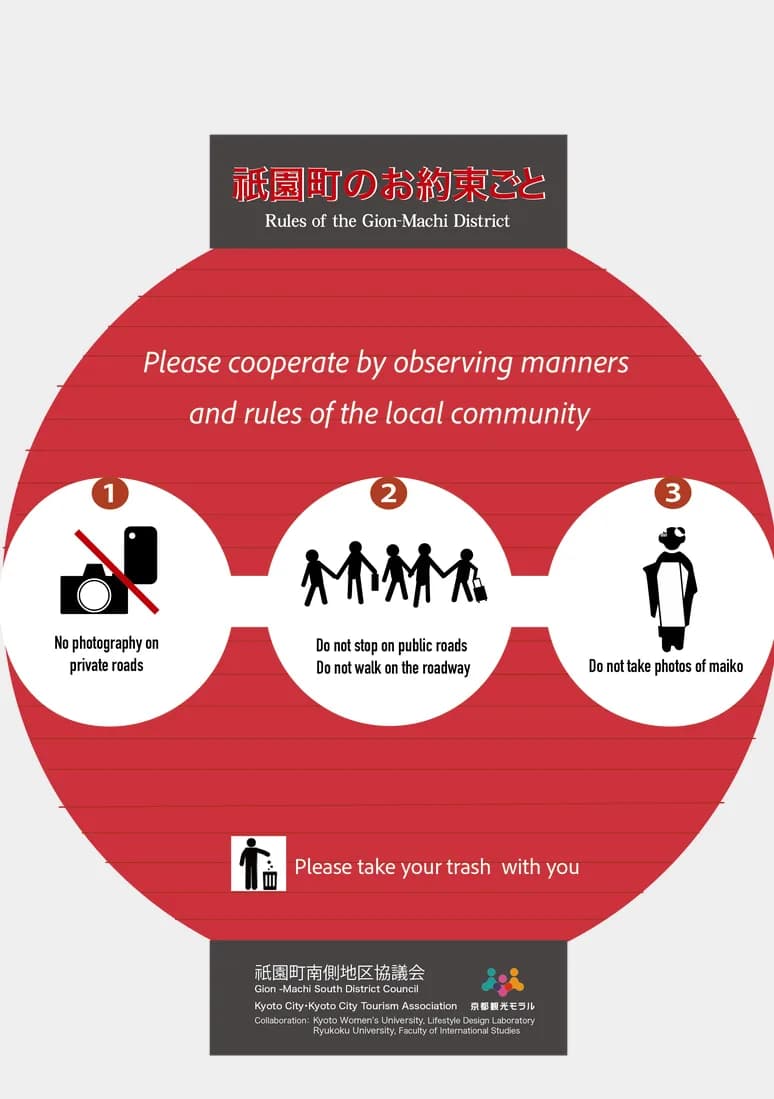
Entering private side alleys marked with red and yellow prohibition signs can lead to a fine of 10000 yen. The Gion South Side neighborhood council instituted this fine to protect residents and tea houses from trespassing and intrusive photography. Stay on public streets such as Hanamikoji-dori and the Shirakawa canal path, and keep your camera lowered if you encounter working geiko or maiko walking between appointments.
Street snacks and the missing trash cans
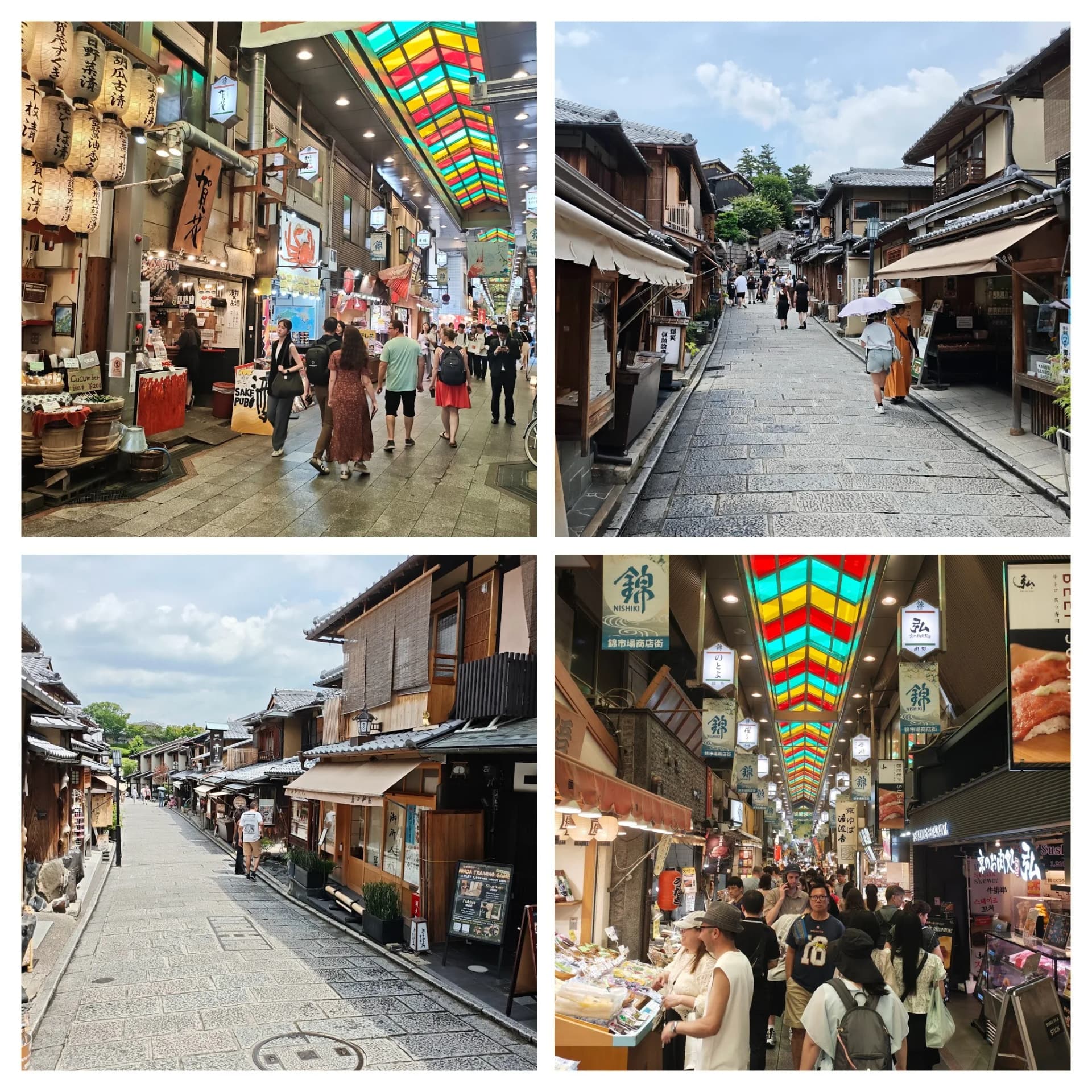
Public trash cans are rare along Kyoto streets, a policy rooted in safety measures and municipal waste rules. To address this, Kyoto City has begun deploying high-tech, solar-powered "SmaGO" smart trash bins—which automatically compress waste and monitor capacity—in select high-traffic tourist zones like Arashiyama and Gion. However, because these bins remain few and far between, standard street food etiquette still applies: when you buy items like dango skewers or matcha soft-serve along Ninenzaka or Nishiki Market, stand beside the stall to finish eating, then hand your paper wrapper and skewer back to the vendor. Keeping a small plastic bag in your daypack is a good idea so you can comfortably carry personal rubbish back to your hotel.
Kyoto cycling rules and parking lots
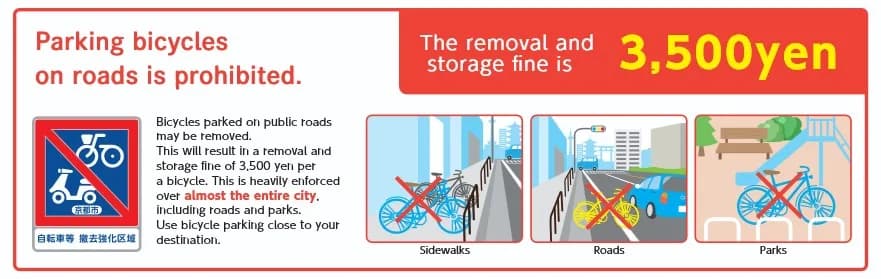
Cycling is a great way to get around Kyoto, but bicycle parking rules are strictly enforced. Leaving a rental bike on sidewalks or near subway station entrances can result in immediate impoundment. Retrieving a bicycle from a municipal impound lot costs ¥3,500 and requires traveling to a retrieval center located south of the city center.
Always park your bicycle in designated municipal lots or coin-operated parking bays, which typically cost between ¥100 and ¥200 for several hours. Look for the blue bicycle parking signs near train stations and major commercial areas like Kawaramachi to park your bike safely.
Street Smoking Ban
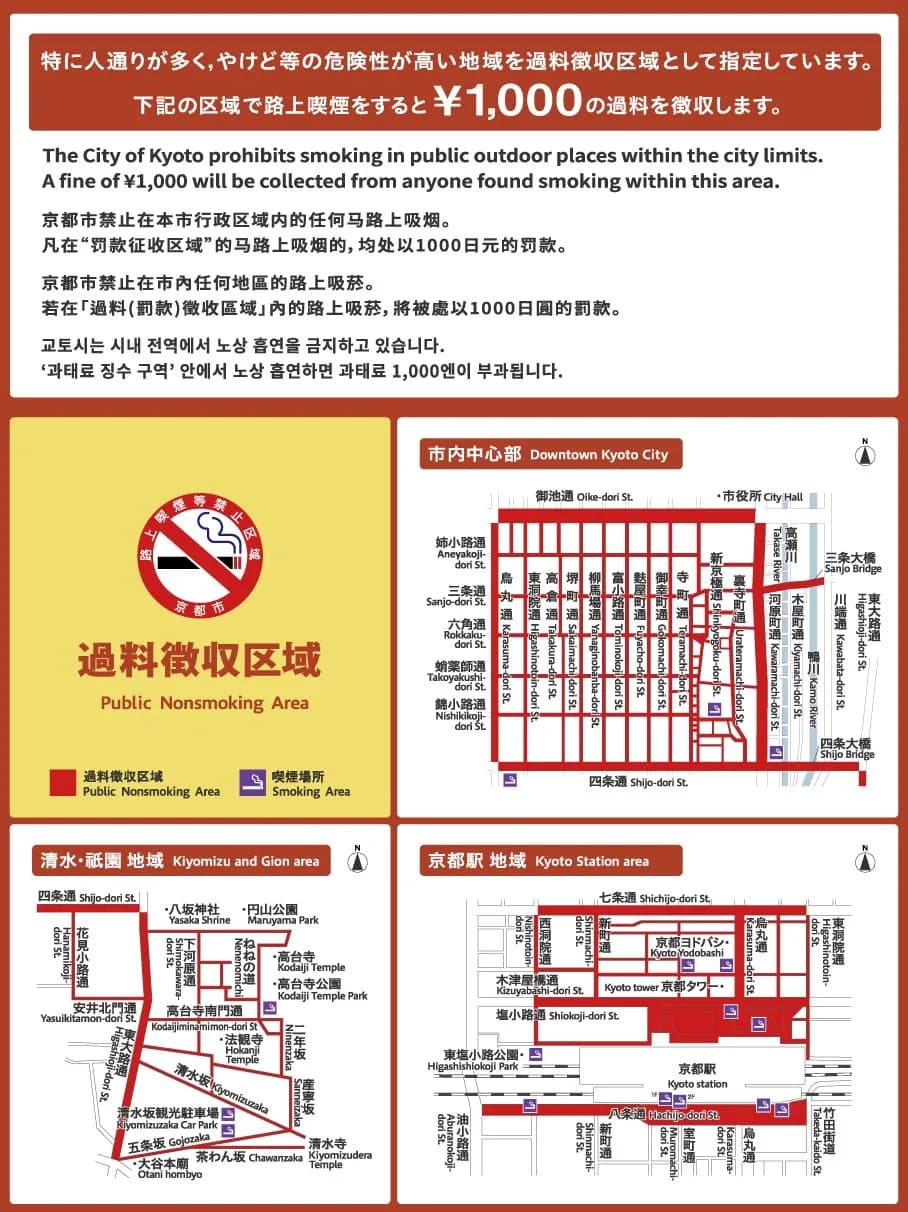
Smoking (including e-cigarettes and heated tobacco devices) is strictly prohibited on public streets and open spaces throughout Kyoto outside of designated areas. The city enforces a zero-tolerance policy, particularly in historic districts like Gion, Higashiyama, and the downtown core. Violators are subject to an on-the-spot fine of ¥1,000 issued by municipal inspectors. If you wish to smoke, look for designated smoking areas (kitsuenjo), typically located near major transit stations, outside certain shopping centers, or inside clearly marked zones.
👉 Click here for a map of designated smoking areas.
To help visitors navigate the city smoothly, Kyoto City Tourism Association provides a dedicated official portal at kyoto.travel/en/responsible-travel/ packed with practical resources for respectful and crowd-smart travel. A key feature of the site is its real-time congestion tool, which offers live YouTube video feeds from cameras stationed at iconic locations like Arashiyama, Fushimi Inari, and Kiyomizu-dera so you can check crowd levels before stepping out. Alongside live footage, the platform publishes hourly congestion forecasts for major sight-seeing areas, helping travelers dodge peak hours, plan alternate scenic routes, and enjoy Kyoto at a far more relaxed pace.