The 1860s crossroads: western Shimogyo and Mibu
If you step off Horikawa-dori Avenue and start heading west, the city noise drops off almost immediately. The heavy traffic vanishes, replaced by quiet lanes, kids on bicycles, small artisan workshops, and old wooden machiya townhouses. You’re looking at a flat 3.5-kilometer loop through western Shimogyo and Mibu—an area where you can walk for hours without seeing a single tour group flag.
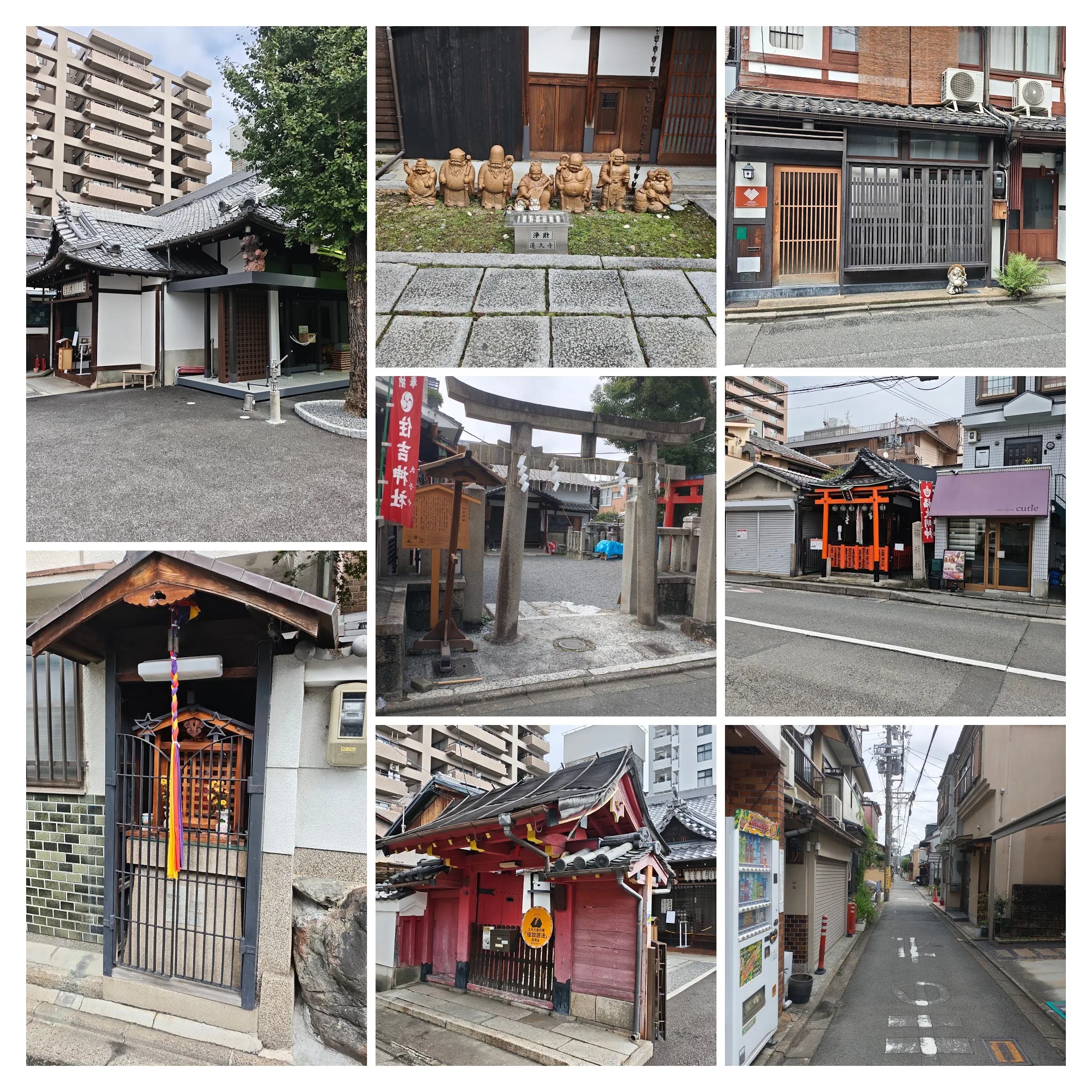
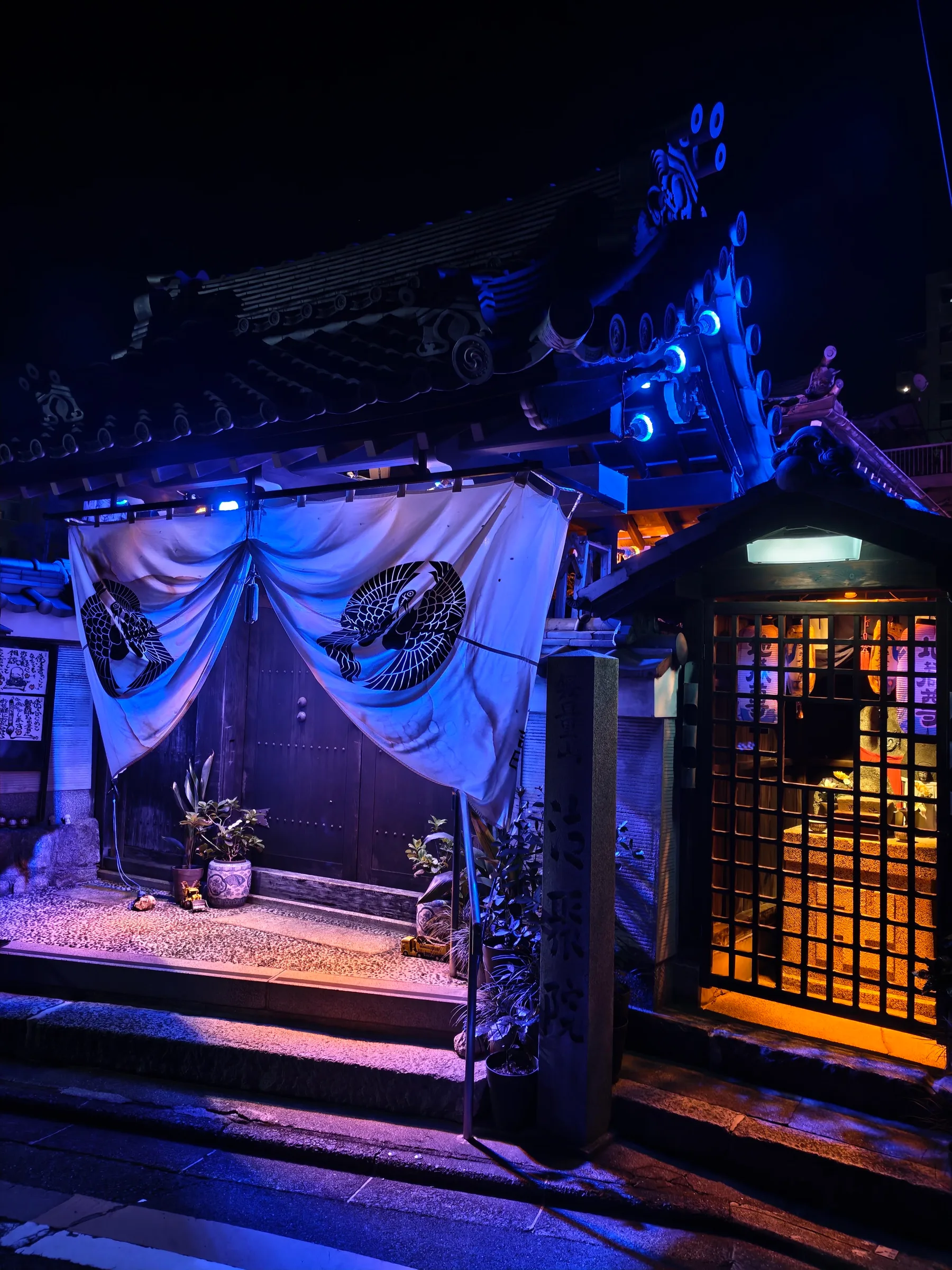
In the 1850s and 1860s, though, this wasn't a peaceful residential pocket. It was an armed, chaotic crossroads where shogunate patrols, rogue ronin, wealthy patrons, and merchants constantly crossed paths.
Nishi Hongan-ji and an Unexpected Red-Brick Landmark
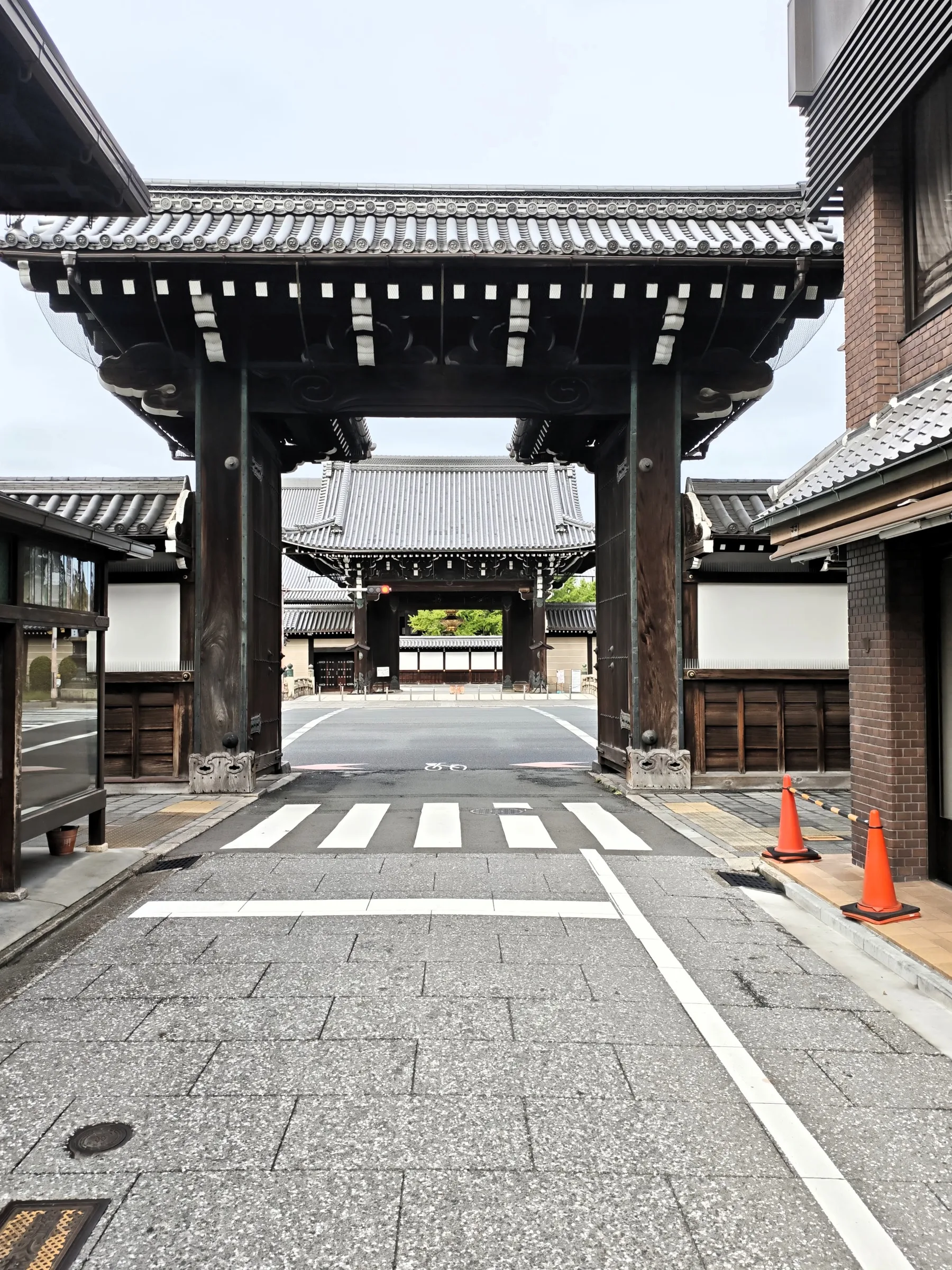
Your best starting point is Nishi Hongan-ji, the massive head temple of the Hongwanji-ha branch of Jodo Shinshu Buddhism. It’s been sitting here since 1591, open from 5:30 AM every day, and completely free to enter.
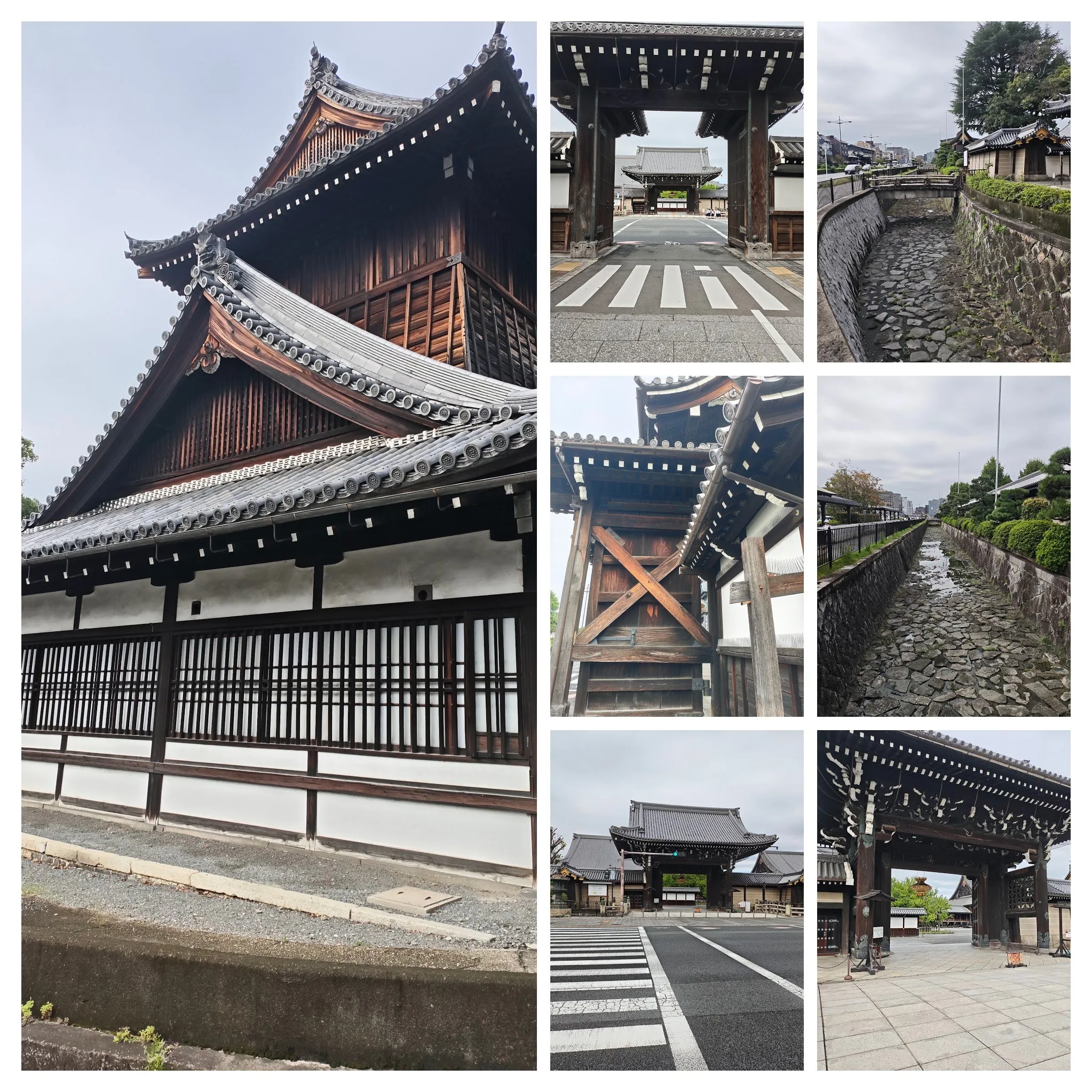
When you get to the main verandas of the Goei-do (Founder's Hall) and Amida-do, you'll need to pull off your shoes. On quiet mornings, sitting on the tatami mats under those massive cedar beams is incredible. But it can get busy. On my last visit, I ran right into a few big school trips, and since the plastic shoe bags at the entrance had run out, I just lined my boots up at the bottom of the steps like everyone else. If you happen to pass through in late November, the 400-year-old "Inverted Ginkgo" (Sakasa Icho) in the main stone courtyard drops a stunning, thick yellow carpet across the paving.
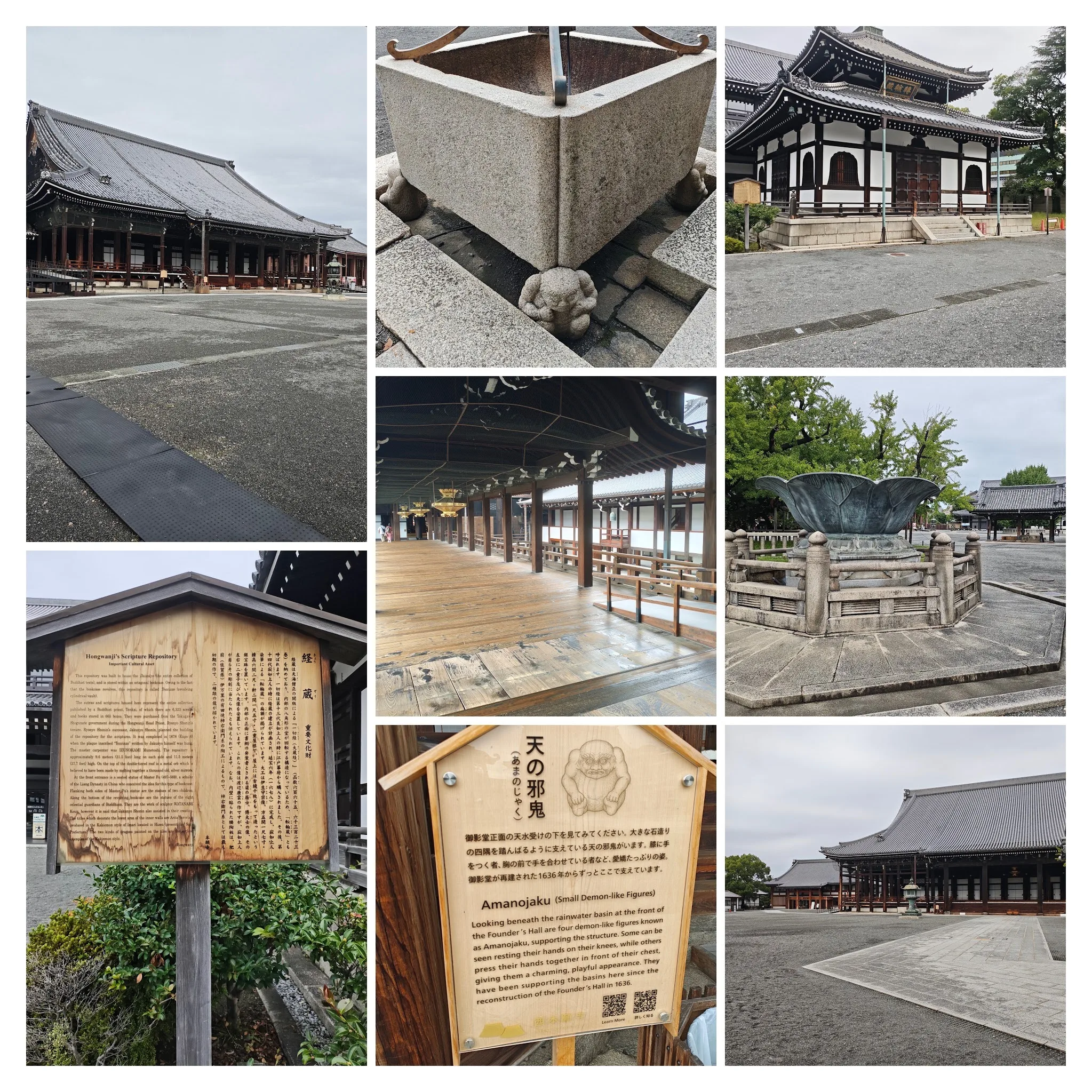
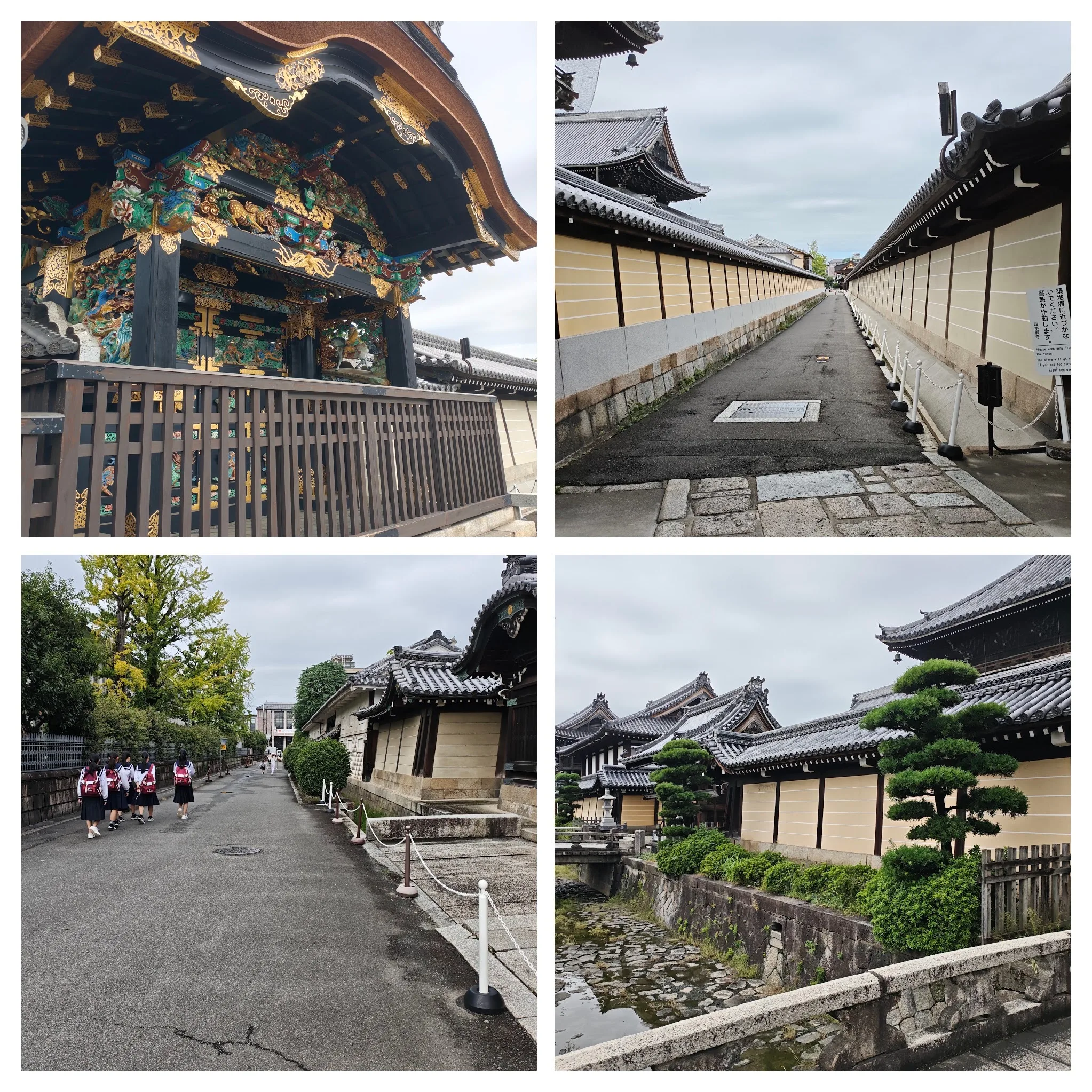
Back in March 1865, the temple monks got stuck with some notoriously unruly lodgers: several hundred swordsmen from the Shinsengumi. They commandeered the temple grounds as a temporary headquarters, held live cannon and rifle drills in the courtyards, and even slaughtered pigs on site. Terrified that the militia would burn the place down or wreck the historic timber, the monks eventually pooled their own money to build the group a separate barracks over at Fudo-do-mura just to get them off the property.
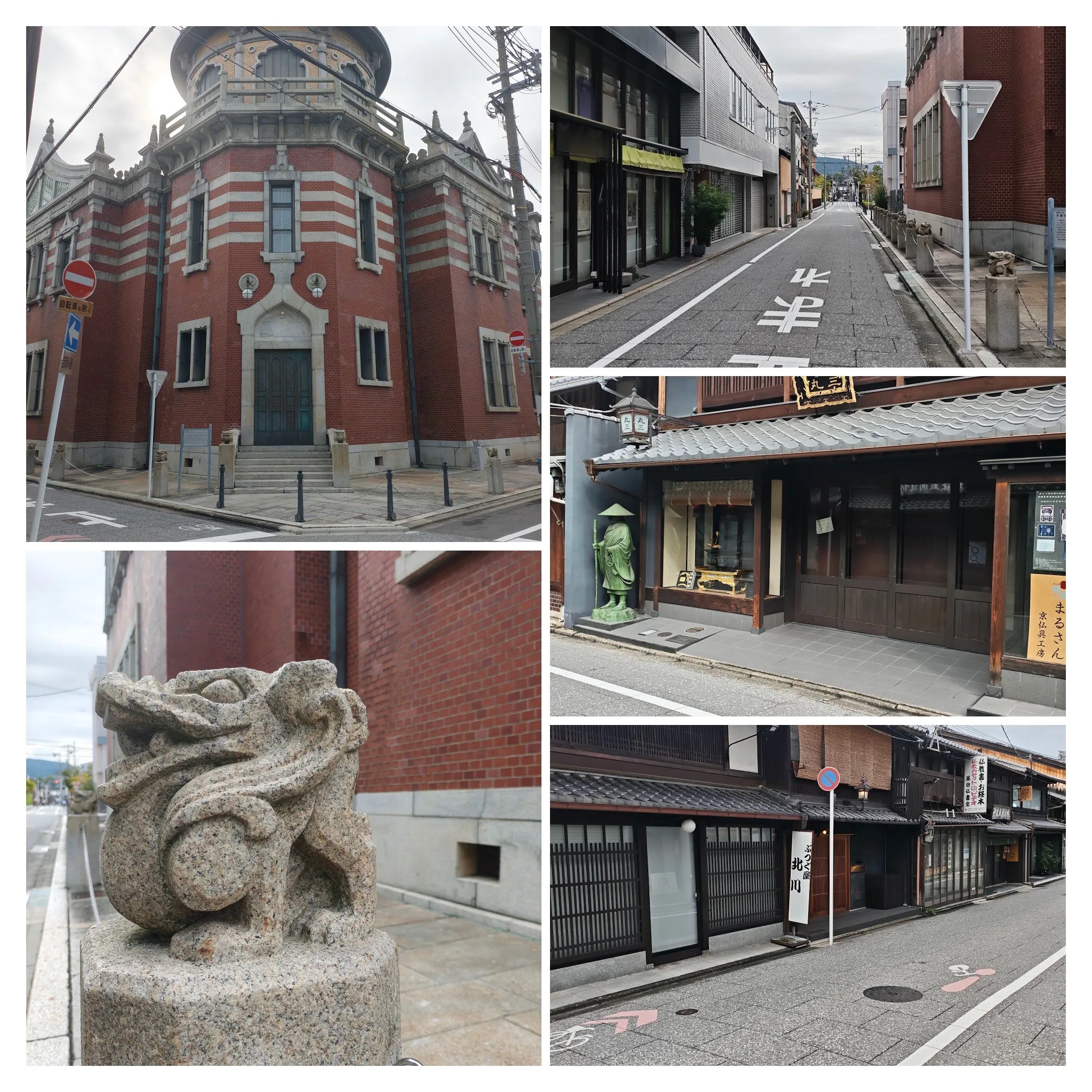
As you leave the main complex and head east down Shomen-dori, pass through the old wooden main gate (Hongan-ji Somon) and look ahead to the corner of Aburanokoji-dori. Traditional streetscapes suddenly give way to something completely unexpected: a bright red-brick building topped with an octagonal dome.
Built in 1912 by Chuta Ito—one of the pioneers of modern Japanese architecture—the Hongan-ji Dendo-in was originally commissioned for a temple-affiliated insurance company. It’s a wild mix of Gothic, British, Indian, and Japanese styles. Walk up close to the stone railings along the street to check out the small, weird mythical creatures carved into the base. It’s a great, tangible slice of late-Meiji experimental design right in the middle of a traditional neighborhood.
Inside the Walled World of Shimabara
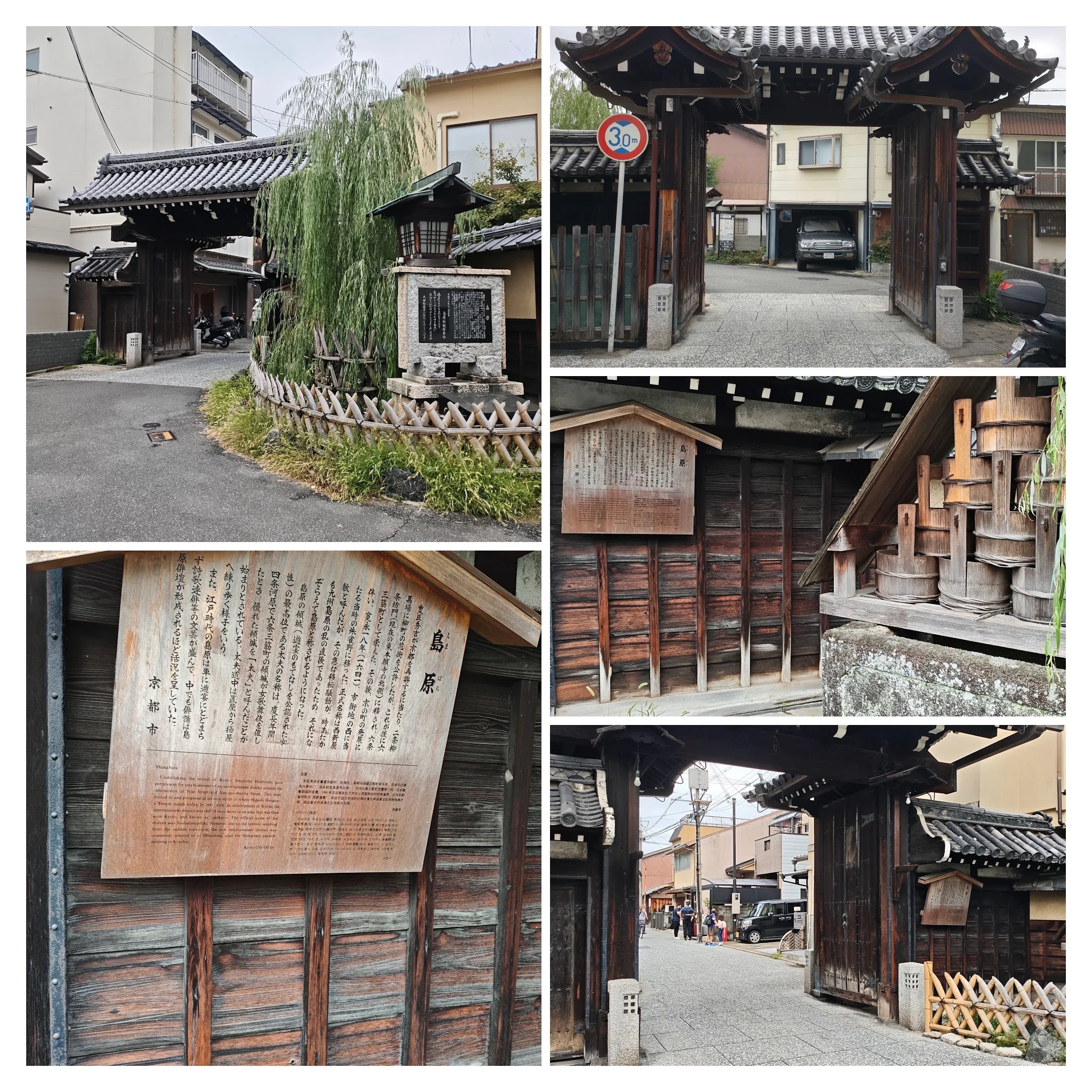
From the Dendo-in, head west along Hanayacho-dori for about twelve minutes toward Shimabara. The first time I walked into this district at night, passing through the grand wooden Shimabara Omon gate with its dark lattice facades, it instantly reminded me of the Entertainment District in Demon Slayer (Kimetsu no Yaiba).
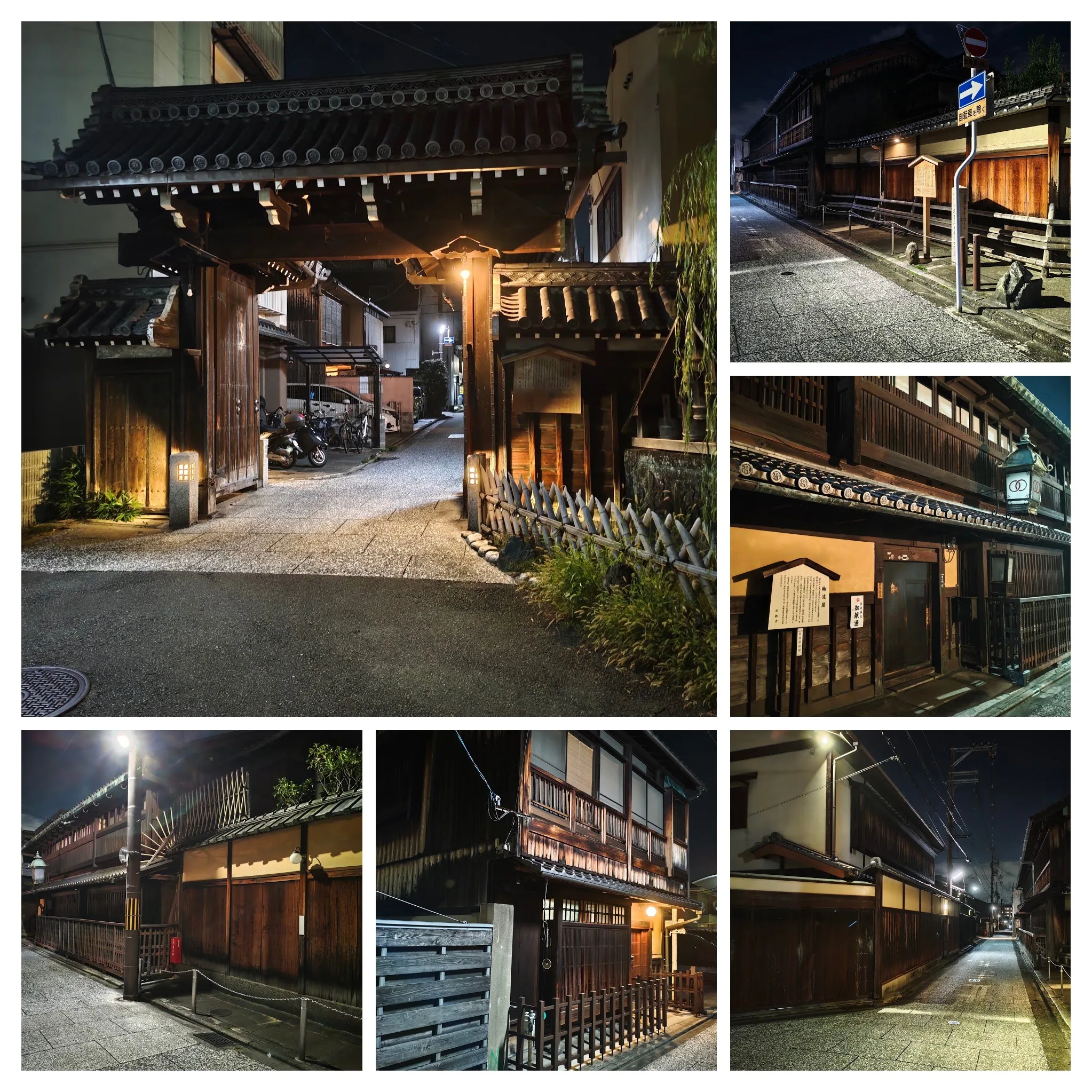
Back in 1641, Shimabara was established behind moats and walls as one of Japan’s three official, licensed pleasure quarters (yukaku), alongside Yoshiwara in Edo and Shinmachi in Osaka. But Shimabara was different. It catered specifically to the Tayu—the absolute highest rank of artist-courtesans, who held court privileges and were celebrated masters of classical music, poetry, and tea.
Just past the gate, you’ll spot a stone marker with a poem by the nun Otagaki Rengetsu, right next to a willow tree called Mikaeri no Yanagi (the "Looking-Back Willow"). This was where departing patrons would turn around for one final look at the quarter before heading home.
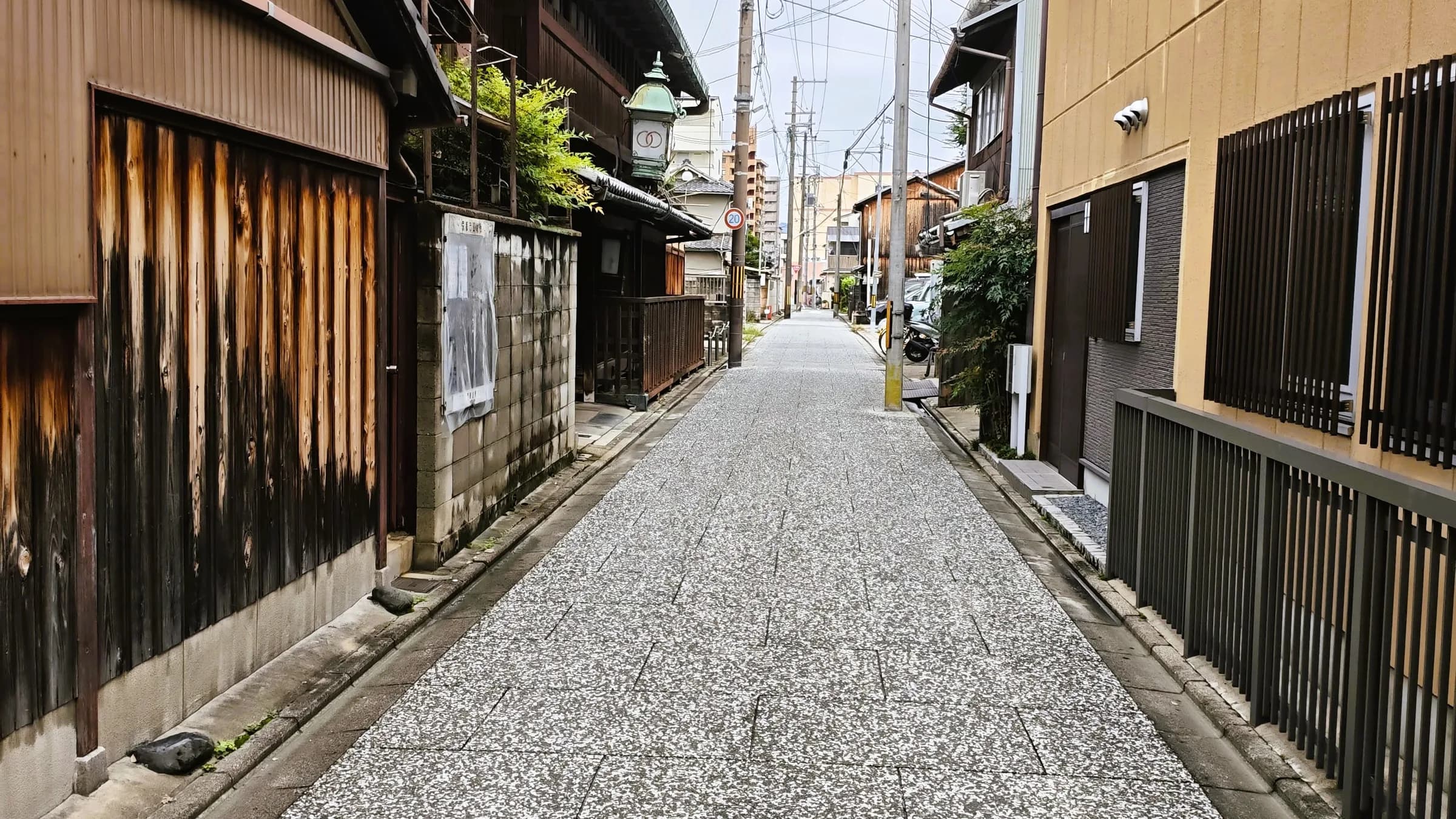
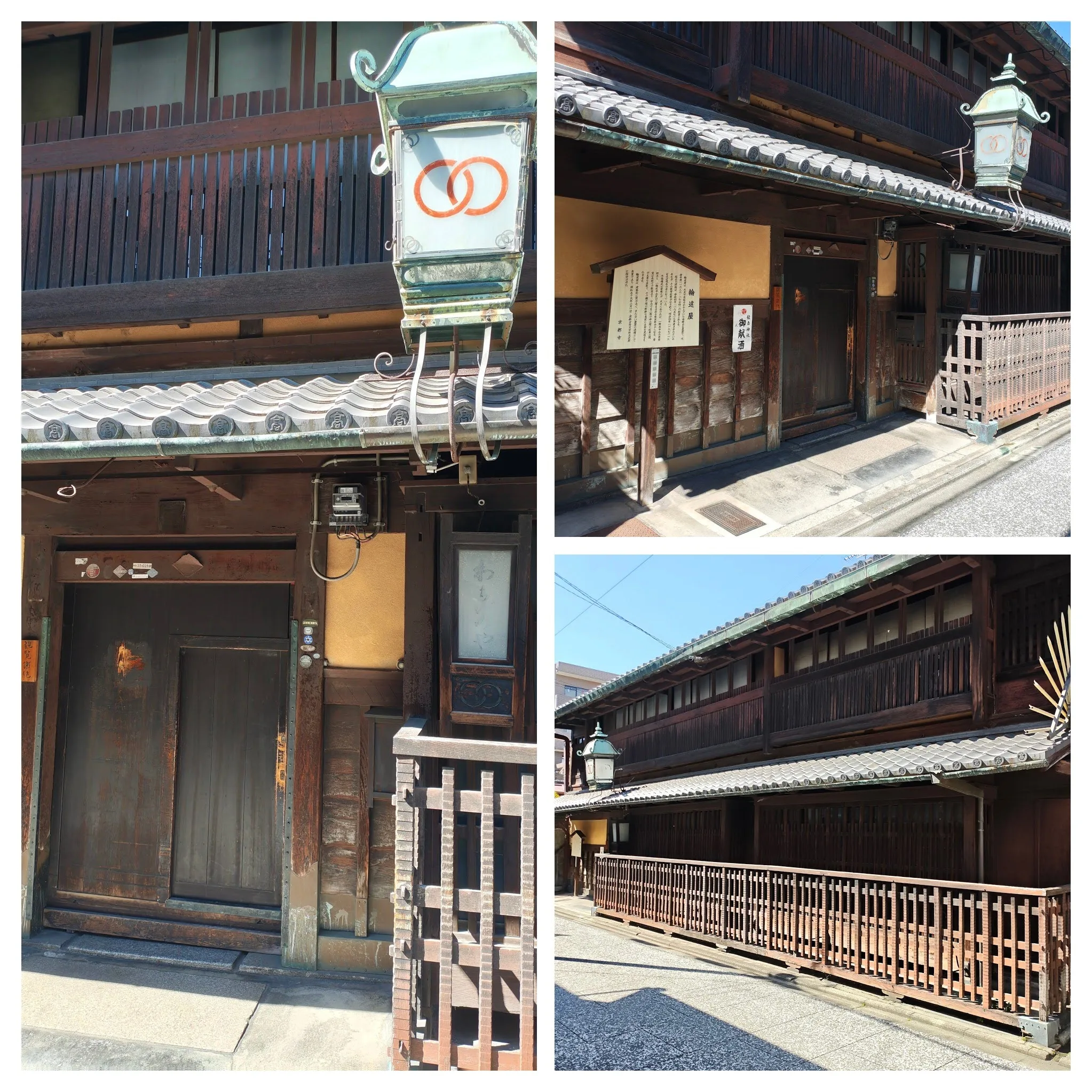
Down the lane sits Wachigaiya. Founded in 1688 as an okiya and operating as an ochaya (teahouse) since 1872, it’s still an active, private establishment today. You’ll recognize it by its lantern marked with interlocking rings. Since it's strictly closed to the public, just admire the woodwork from the street without leaning on the lattice or blocking the narrow entry.
Further in stands Kadoya (also known as Sumiya), which served as a grand reception hall called an ageya. Unlike standard teahouses, an ageya was a massive venue where wealthy patrons rented entire private suites and hired their own caterers, musicians, and tayu. Naturally, it became a hotbed for clandestine political meetings. Kusaka Genzui and other radicals from the Choshu domain used these banquets to cut deals and raise cash from wealthy merchants for the sonno joi ("revere the Emperor, expel the barbarians") movement.
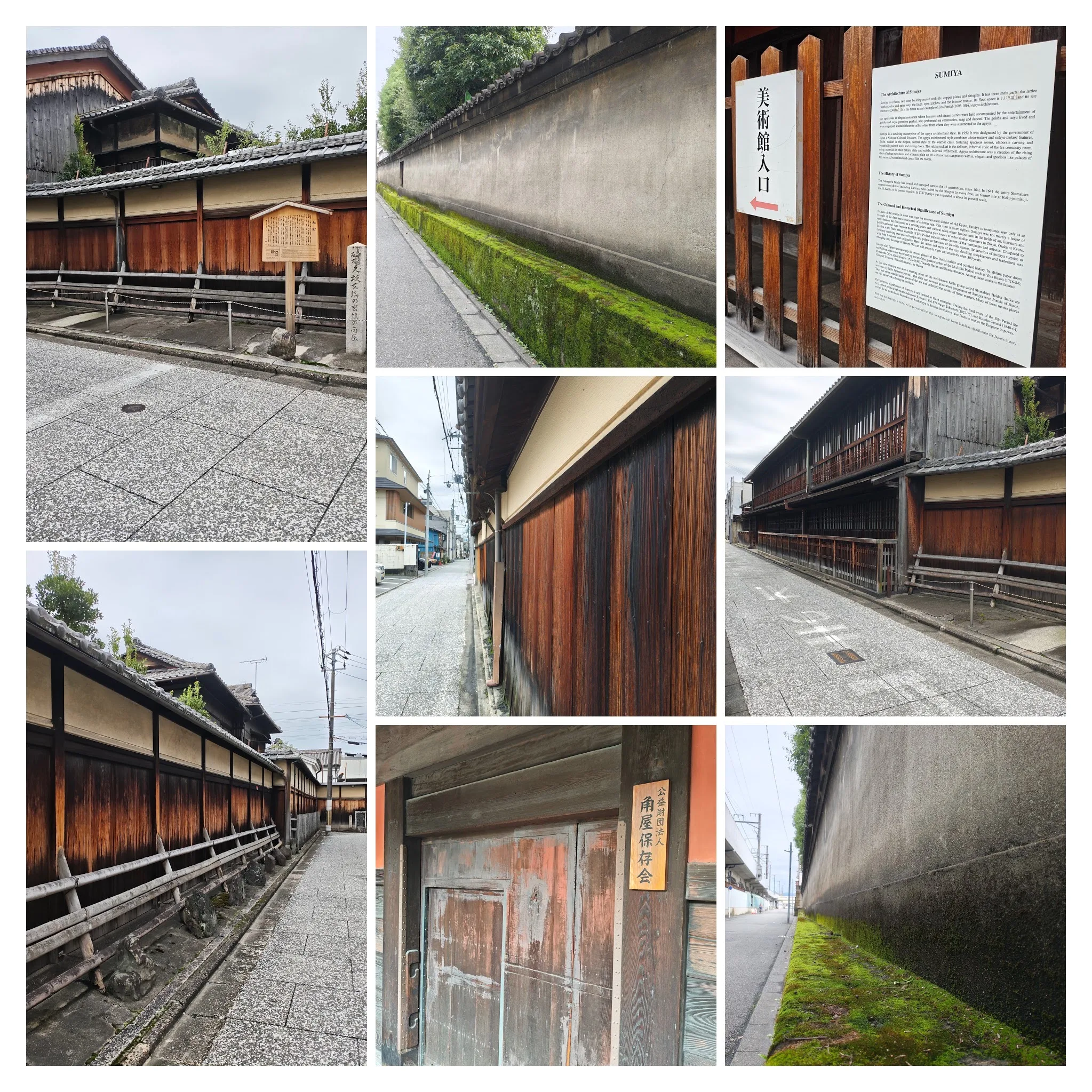
Today, it operates as the Sumiya Cultural Art Museum—the last surviving ageya in Japan. Inside, you can still see actual sword cuts left in the wooden pillars from drunken brawls between Shinsengumi members and samurai like Saigo Takamori or Ito Hirobumi.
Admission Fees: 1st Floor: 1,000 yen | 2nd Floor: 800 yen (requires advance telephone reservation in Japanese).
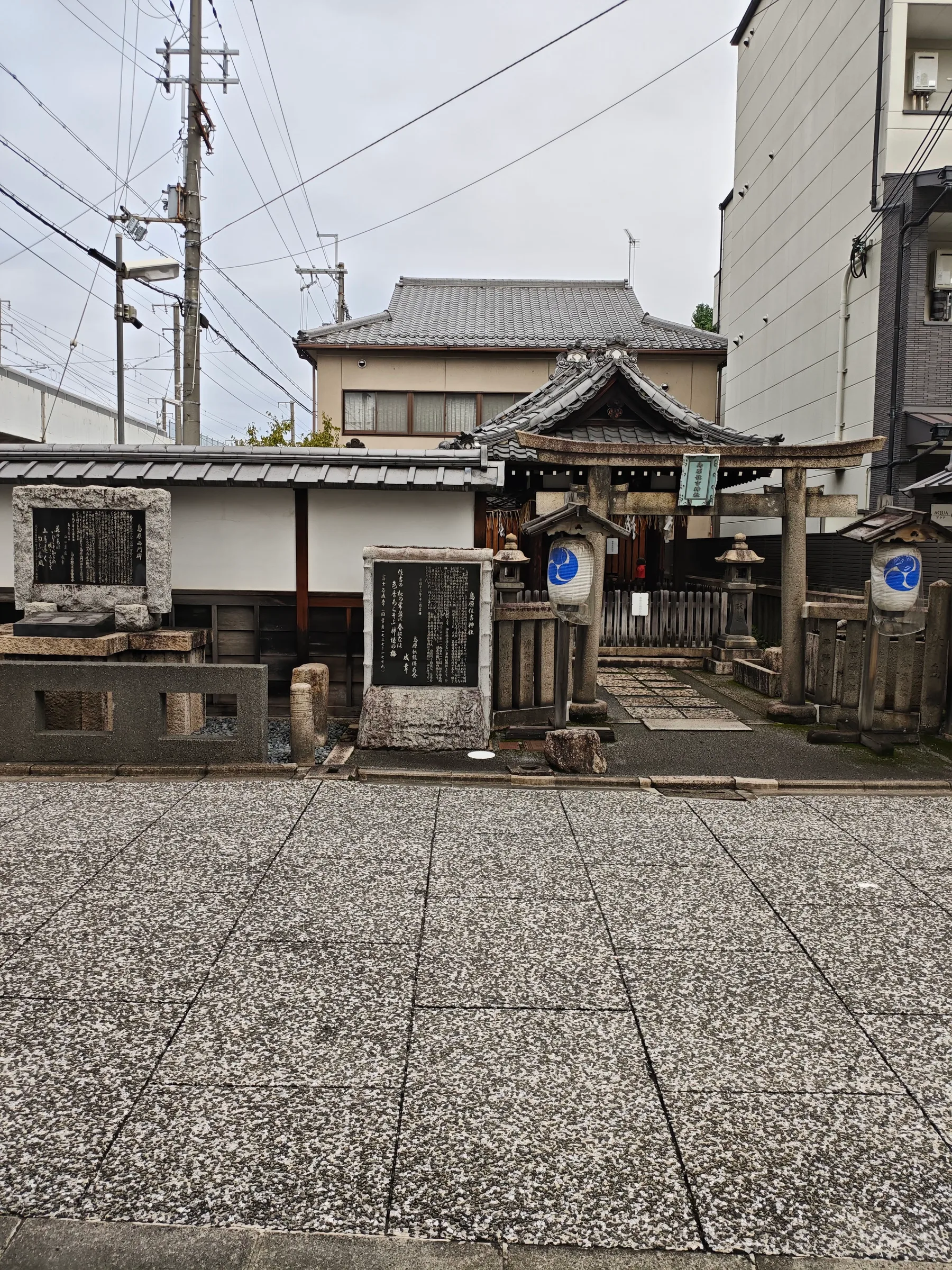
Before leaving Shimabara, take a quick detour to Shimabara Sumiyoshi-jinja, a small shrine tucked into the western corner of the quarter where tayu and venue owners have prayed for business success since 1641.
Local guide tip: Western Shimogyo has almost no English street signs, and its coolest history is hidden behind plain residential doors. Having a translation app ready to scan stone markers helps, but walking these backstreets with someone who knows the local stories makes a world of difference.
Crossing the Ancient Capital to Mibu Village
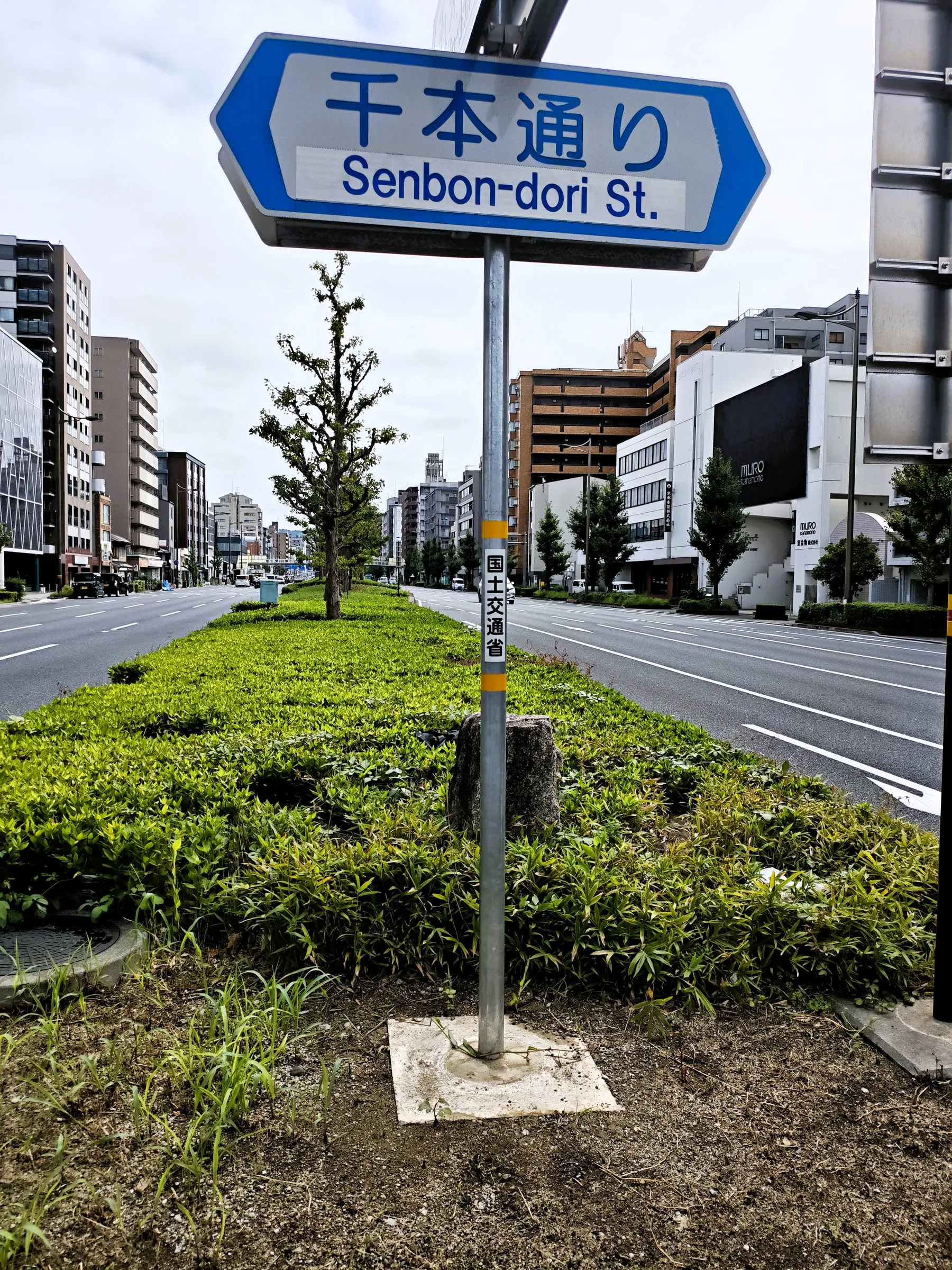
Leaving Shimabara behind, head north onto Senbon-dori. You're walking directly over the central axis of ancient Heian-kyo.
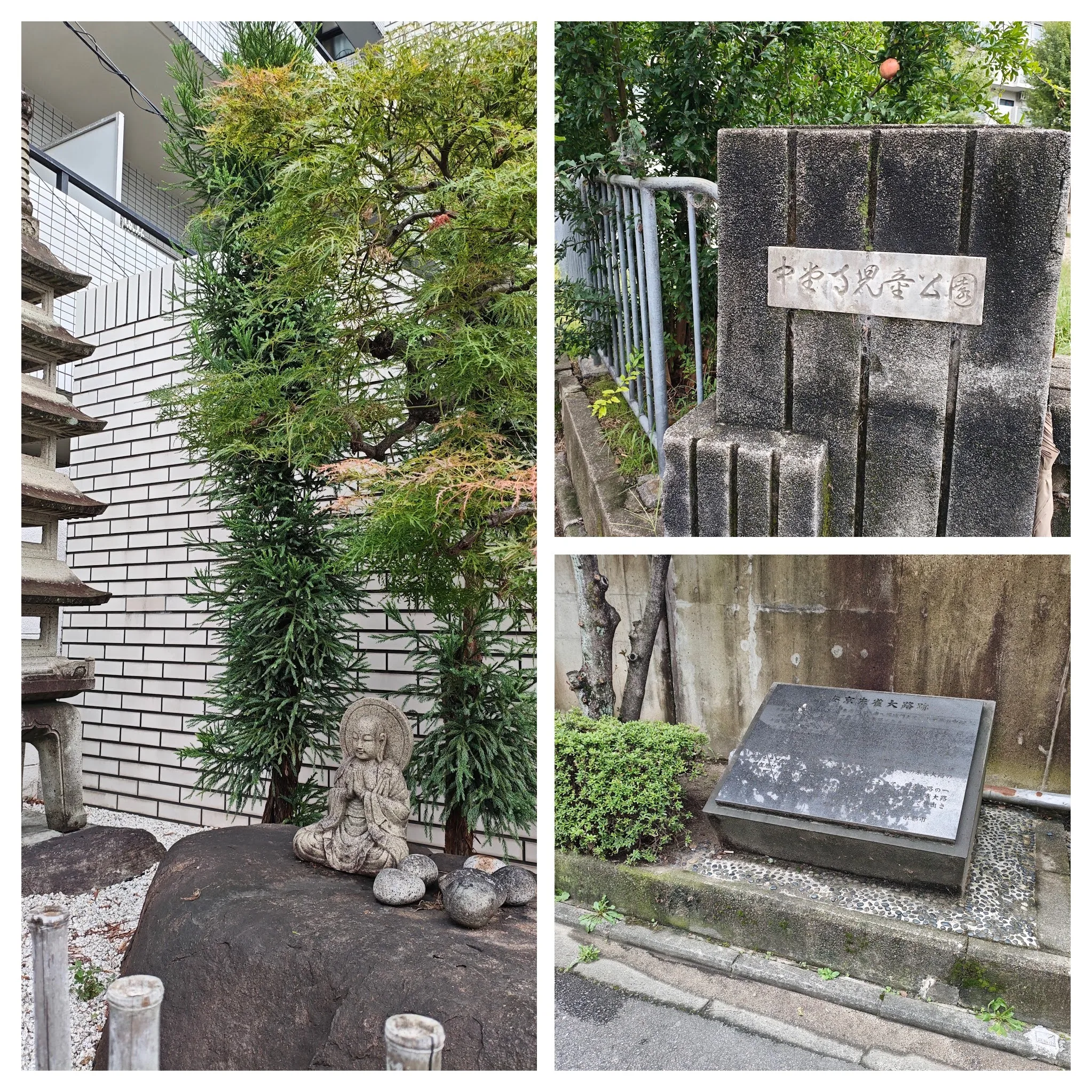
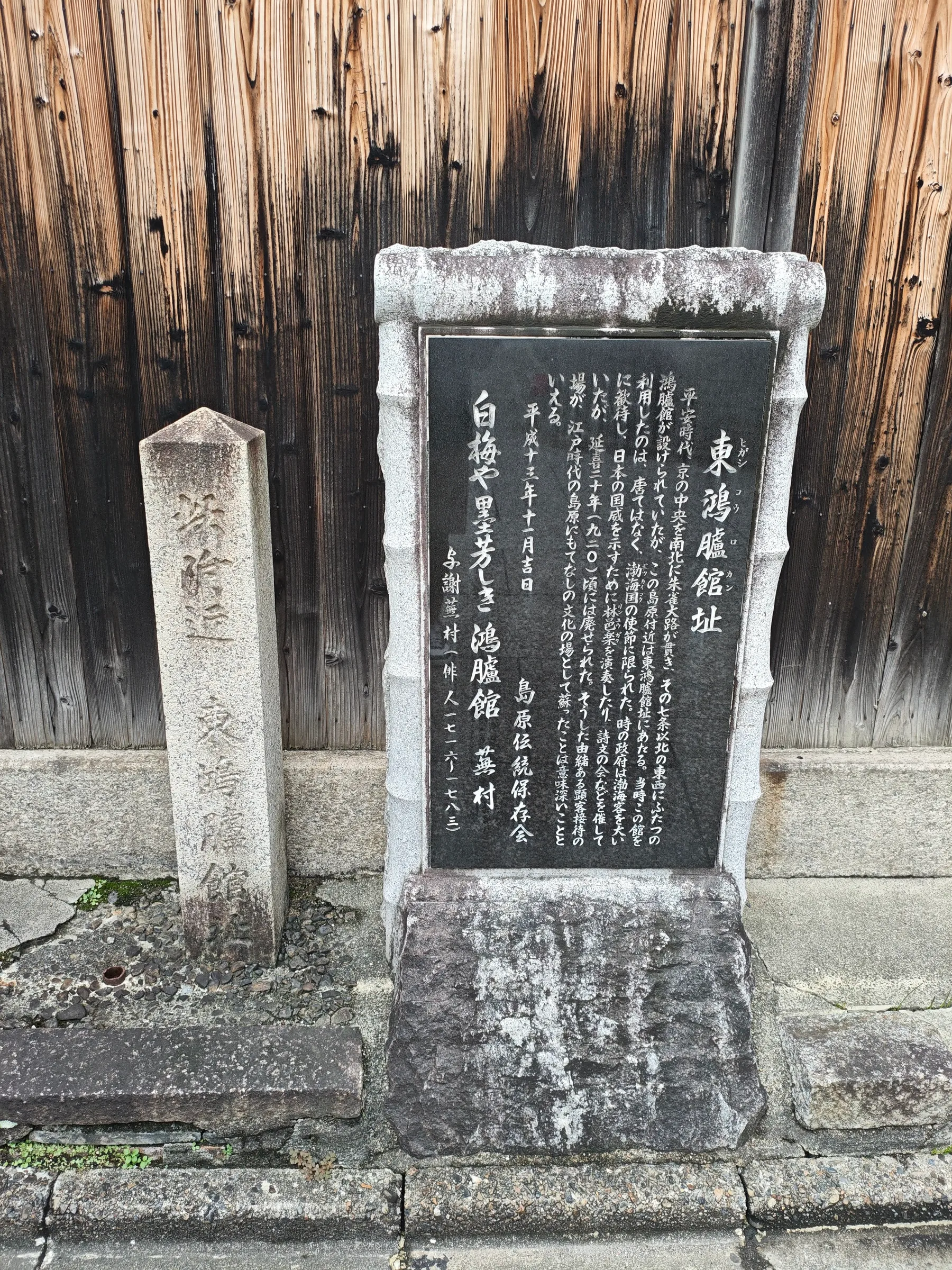
Stop by the stone plaque marking Suzaku Avenue (Heiankyo Suzaku Oji Ato Meiban). When Kyoto was laid out in 794, this was a massive, 84-meter-wide boulevard pointing straight to the Imperial Palace. Right around present-day JR Tanbaguchi Station and Chudoji Children's Park (Chudoji Jido Koen), sat the Higashi Korokan, the empire's official embassy for foreign guests. Today, it’s just quiet apartments, kids playing, and local life.
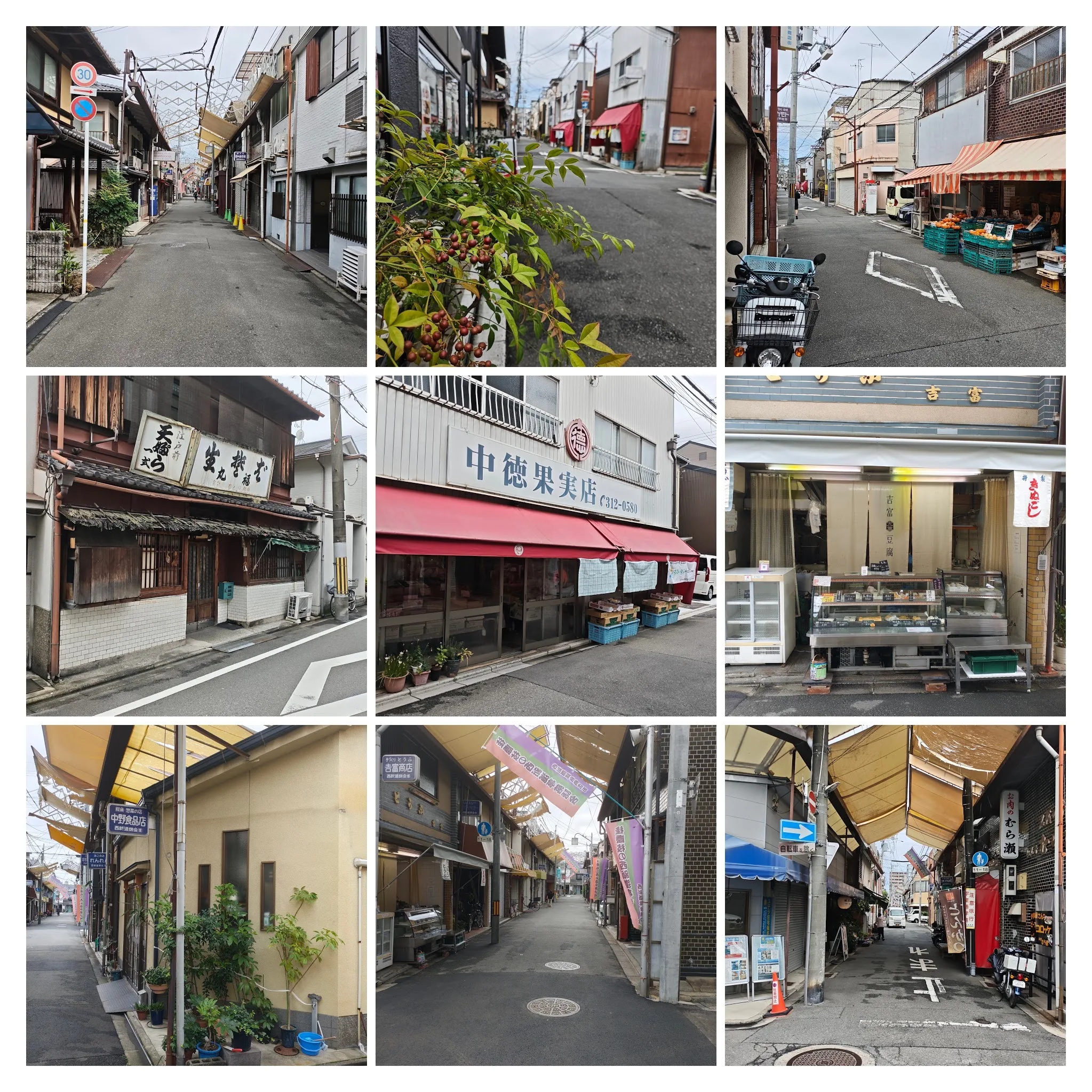
Keep moving north past Mibu Onsen Hanano-yu—a neighborhood bathhouse where locals go for the outdoor rotenburo—and swing into the Nishi-Shinmichi shopping street. This local shotengai is wonderfully ordinary: fishmongers, vegetable stalls, and small fry shops. On one of my walks through here, I picked up some freshly fried tofu right off the tray—piping hot, crispy on the outside, and ridiculously soft inside.
Nishi-Shinmichi leads you straight into Mibu. In the 1860s, this was a rural farming hamlet outside the city limits, chosen by the newly arrived Roshigumi fighters for its proximity to Nijo Castle. A core faction stayed behind here to form the "Mibu Roshigumi"—the precursor to the Shinsengumi. They commandeered local farmhouses as barracks and used nearby temple yards as training grounds.
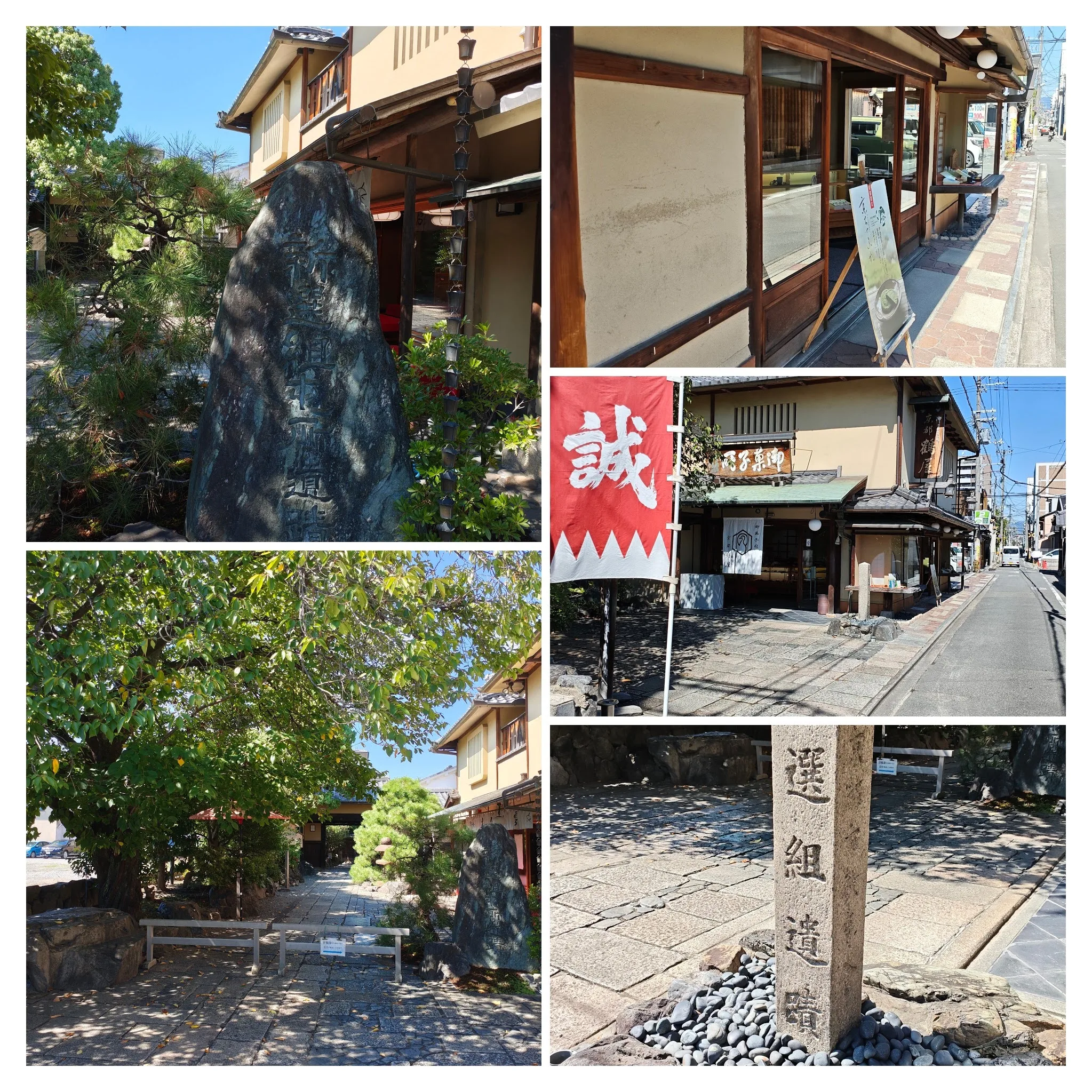
Your first stop in Mibu should be the Yagi Residence, the original headquarters (tonsho) where the unit forged its brutal reputation.
Admission: 1,100 yen (includes a 30-minute guided presentation, hot green tea, and a tonsho-mochi sweet from the adjoining Kyosen-do shop).
Highlights: In the low-ceilinged rear room, you can inspect deep, vivid blade cuts on the overhead wooden door frame left from the September 1863 assassination of rogue commander Serizawa Kamo by rival members of his own unit.
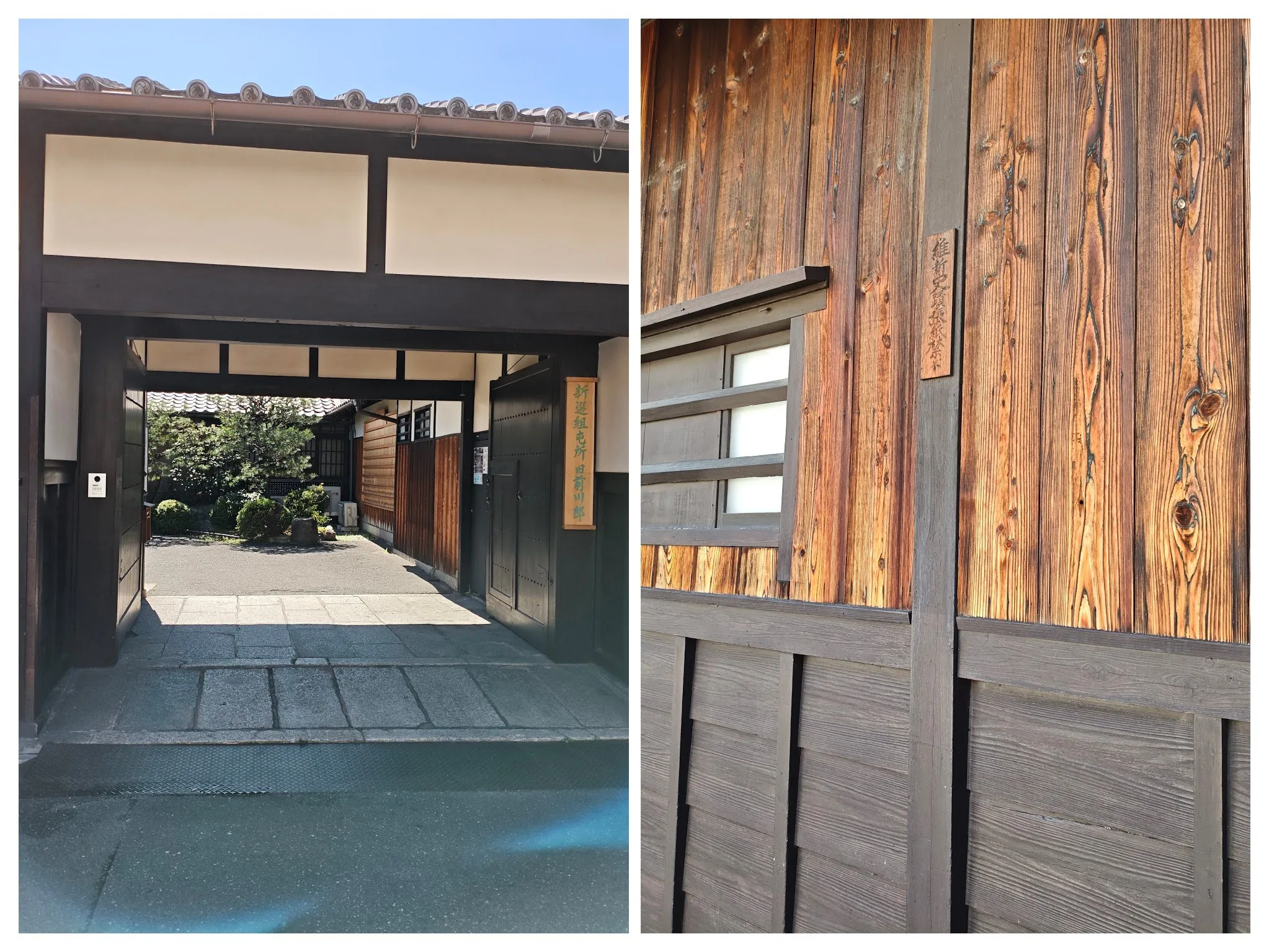
Directly across the lane is the former Maekawa Residence (Kyu-Maekawa-tei), another commandeered home. It was in an upstairs tatami room here that Vice-Commander Yamanami Keisuke committed seppuku after trying to desert, with his close friend Okita Soji serving as his kaishaku (second). The home itself is private, but the entryway opens on weekends and holidays to sell Shinsengumi goods.
Visitor Note: The residence is a private home and is generally closed to the public, but the entryway shop opens on weekends and holidays to sell Shinsengumi goods.
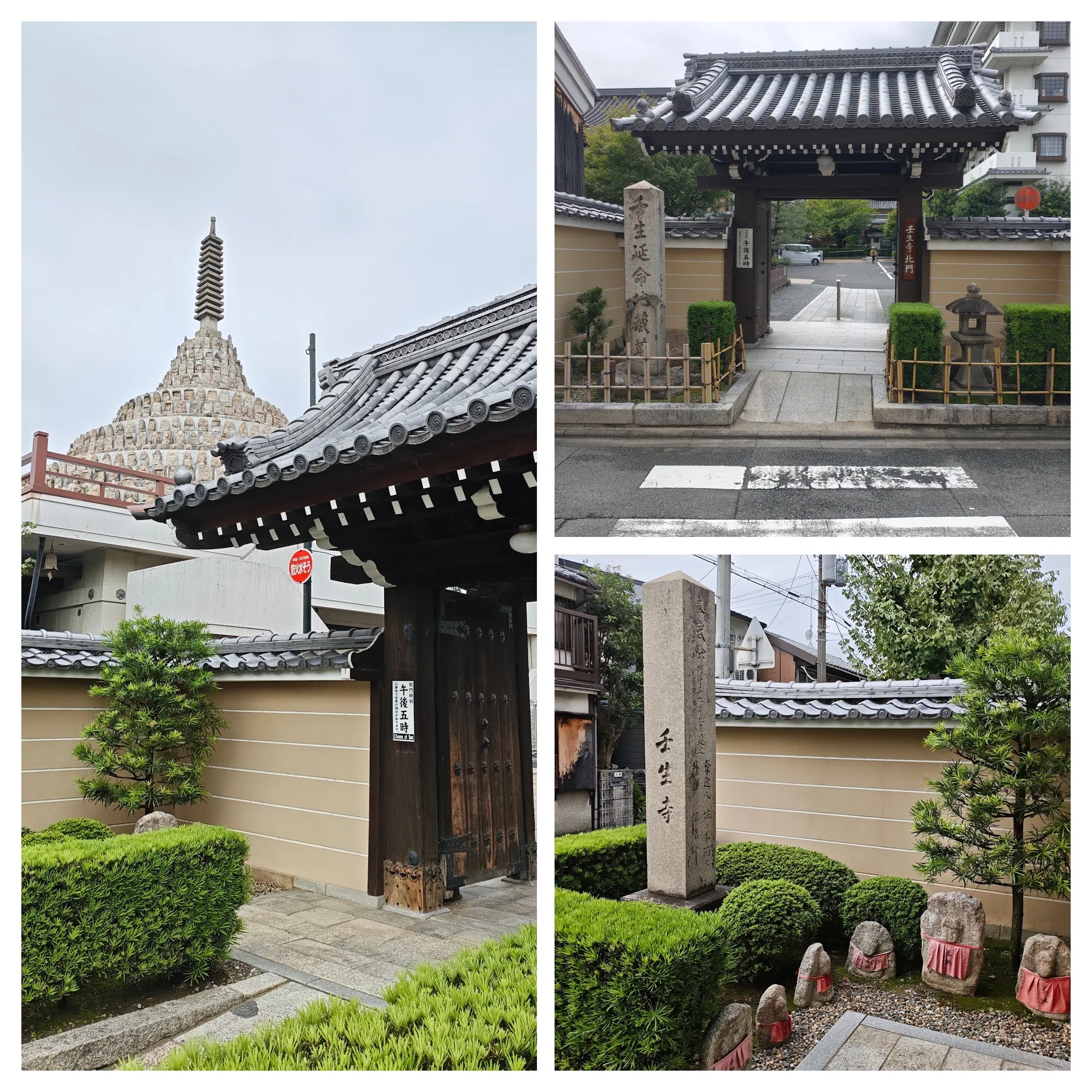
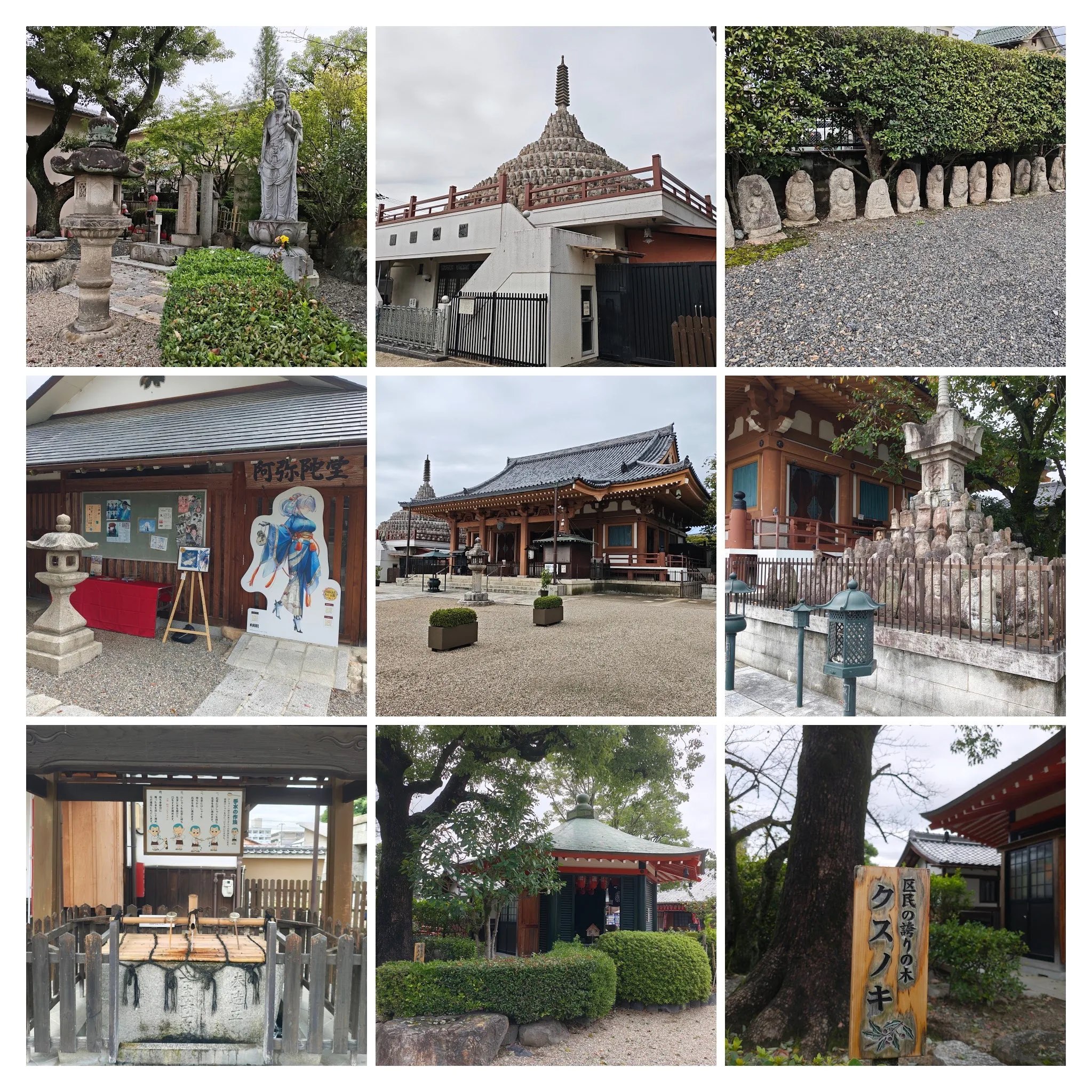
Right down the street is Mibu-dera, founded in 991 and famous for its silent Buddhist pantomime plays (Mibu Kyogen). Back in the 1860s, Kondo Isami used the temple courtyards to drill his troops in swordplay.
Hours: 9:00 AM – 4:00 PM
Admission (Mibuzuka Precinct): 300 yen
Highlights: The burial mound contains the graves of Serizawa Kamo and other members, a memorial pagoda holding a lock of Kondo Isami’s hair, and a bronze bust of Vice-Commander Hijikata Toshizo.
Extending the Walk: Shijo-dori and Station Extensions
If you still have some gas in the tank, you can easily tie in two additional historic stops:
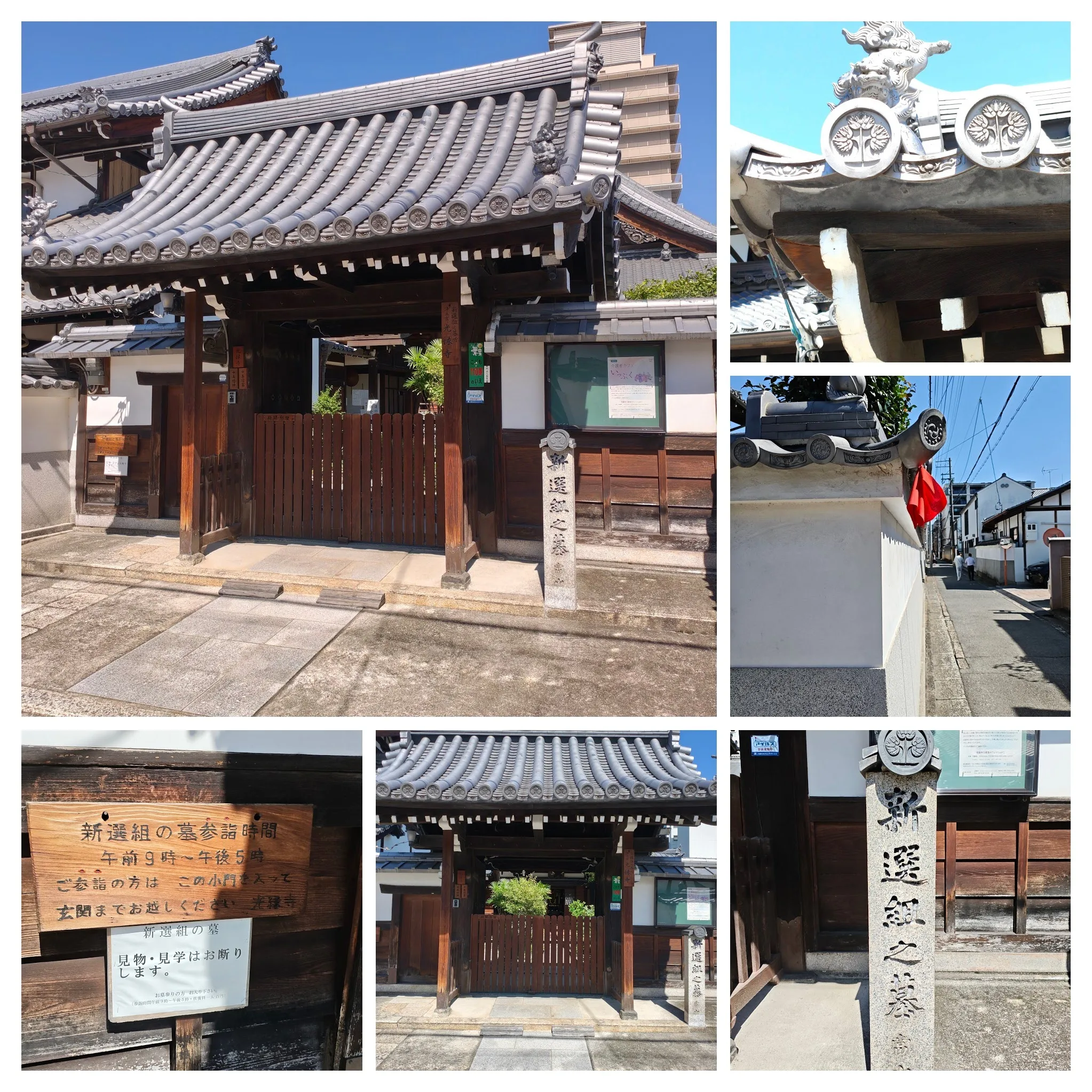
Koen-ji Temple: Walk a few minutes north of Mibu up to Shijo-dori. Vice-Commander Yamanami Keisuke famously noticed that the crest carved into Koen-ji's roof tiles matched his own family crest (Maru ni migi-hanare mitsuba tateaoi). He struck up a close friendship with the head priest, and after his forced suicide, he was laid to rest here alongside other fallen members. To visit the cemetery at the back, ring the doorbell at the entrance and leave a 100 yen donation.
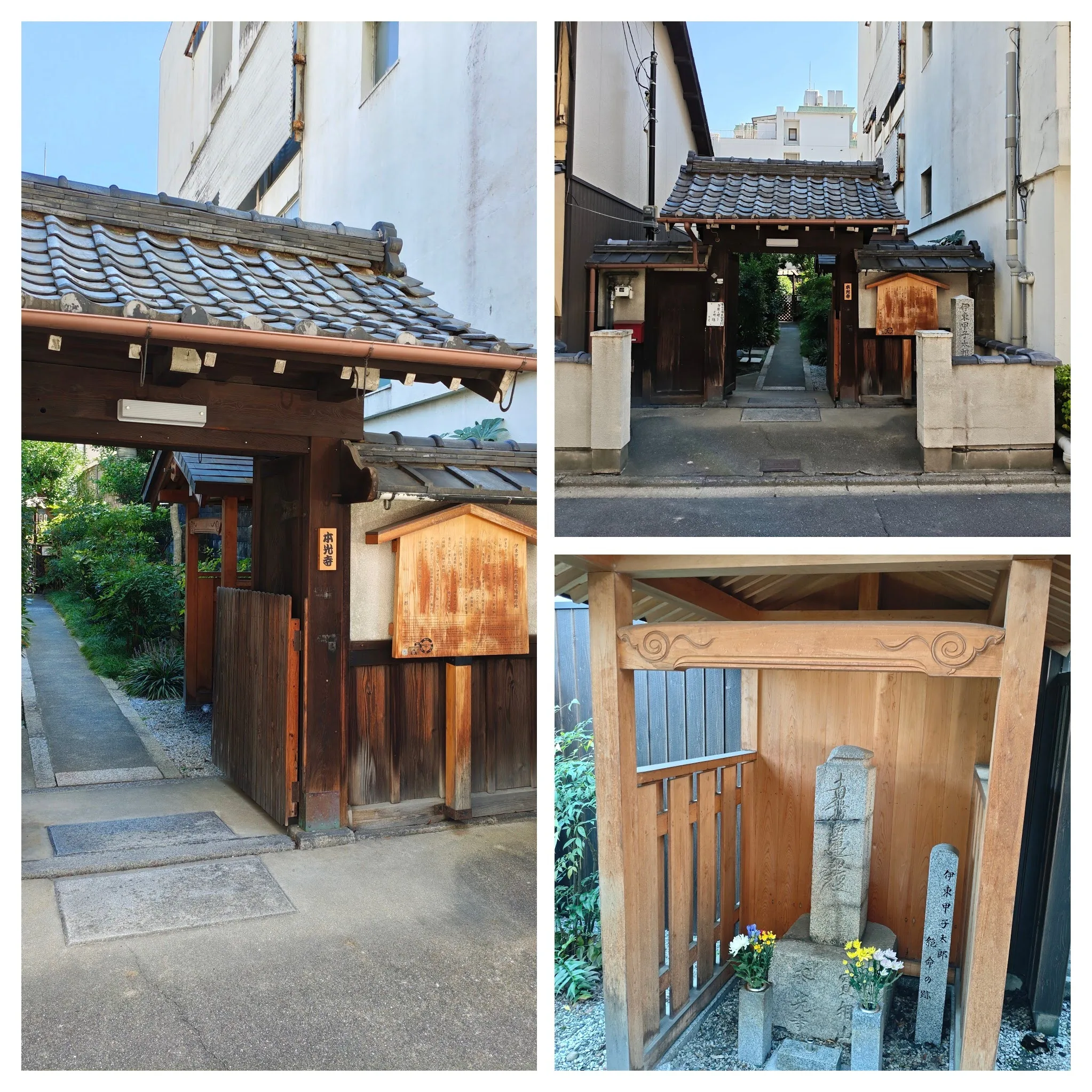
Honko-ji Temple (Aburanokoji Incident): Located slightly northwest of Kyoto Station, this small temple was the site of a bloody internal purge on November 18, 1867. Kondo Isami invited Ito Kashitaro—leader of a breakaway faction—over for drinks, got him thoroughly drunk, and had his squad ambush and kill Ito right outside Honko-ji's front gates as he stumbled home.
Route Breakdown
The walking route from Nishi Hongan-ji to Mibu-dera through Shimabara and Nishi-Shinmichi covers about 3.5 km (2.2 miles). Factoring in indoor visits and a stroll along the shopping street, the complete itinerary takes between 3.5 and 4.5 hours on foot.
Nishi Hongan-ji (45 mins): Take off your shoes, walk through Goei-do and Amida-do, and check out the 400-year-old ginkgo tree.
Dendo-in & Shimabara Walk (20 mins): Walk east along Shomen-dori past the red-brick Dendo-in, then head west on Hanayacho-dori through the Shimabara Omon gate.
Shimabara Exploration (45 mins): Check out the Wachigaiya facade, visit Sumiya (if open seasonally), and stop by Shimabara Sumiyoshi Shrine.
Senbon-dori & Nishi-Shinmichi (30 mins): Walk north past the Suzaku Avenue marker and grab a local snack on the Nishi-Shinmichi shopping street.
Mibu Core Sites (60–90 mins): Tour the Yagi Residence (1,100 yen), explore the Mibu-dera burial mound (300 yen), and finish up at Koen-ji Temple to the north.
Seasonal schedules and practical visitor rules
Sumiya Seasonal Opening: The Sumiya Museum is open only twice a year: in spring (March 15 to July 18) and in autumn (September 15 to December 15). Closed weekly on Mondays (or Tuesdays if Monday is a national holiday).
Mibu-dera Grounds Hours: Daily from 9:00 AM to 4:00 PM.
Maekawa Residence: Shop open on weekends and national holidays only.
Local Life & Neighborhood Etiquette: The Wachigaiya house, the area surrounding Sumiyoshi Shrine, and the neighboring traditional townhouses (machiya) are situated in the heart of quiet residential alleys. Please refrain from touching wooden structures, entering private courtyards, or photographing the interiors of private residences.
Beyond the Loop: More to Explore Nearby
If you're wrapping up near JR Tanbaguchi Station and have extra time before heading back to Kyoto Station, check out these spots just south around Umekoji Park:
Kyoto Food Culture Museum (Ajiwai-kan): Tucked inside the central wholesale market near Tanbaguchi Station, this free museum offers a fun look into traditional washoku cooking, complete with dashi broth tastings and ingredient displays.
https://www.kyo-ajiwaikan.com/pdf/english.pdfUmekoji Park & Kyoto Aquarium: A great green space to stretch your legs. The aquarium inside is famous for its massive native Japanese giant salamander exhibit.
https://en.kyoto-aquarium.com/?stt_lang=enKyoto Railway Museum: Located at the west end of the park, this is a massive facility showcasing real steam engines, vintage sleeper cars, and bullet trains.
https://www.kyotorailwaymuseum.jp/en/Future Train Kyoto Dinner: Located right inside JR Umekoji-Kyotonishi Station, this unique spot serves meals inside a retrofitted vintage train car using projection mapping, light effects, and sound to simulate a journey through seasonal landscapes. It’s a huge hit if you’re traveling with kids.
https://www.futuretrain.jp/en