
FAQ
Frequently asked questions
Everything you need to know before booking.
Why a private guide?
Why book a guided tour rather than visiting on your own?
Kyoto is a city of incredible richness — it is home to more historical and cultural sites than anywhere else in Japan. Yet the majority of these places remain invisible at first glance. Visiting alone too often means ticking off sights by following your phone, or standing in front of monuments without understanding what they mean. Hiring a professional guide means grasping the symbolism of a Zen garden or the rituals of a shrine, decoding the behavior of the Japanese people, and uncovering all the subtleties that took us years to discover, understand, and truly absorb.
Above all, we decode Japan for you through comparisons that use cultural references you can relate to — answering precisely the questions we ourselves asked when we first arrived. It also means complete comfort: we optimize your itinerary to save you time on public transport and craft seamless routes that cleverly sidestep the crowds of mass tourism.
Why choose Kimasu over a large booking platform?
On large booking platforms, reserving a tour is a lottery: you buy a standardized itinerary from an algorithmic middleman who assigns a guide at random — sometimes the night before your visit, sometimes a passing student or a recent expat reading from a script.
Kimasu was founded by Nicolas and Terence, two experienced professional guides who live in Japan and have made the Kansai their specialty. When we organize tours beyond the Kansai, we work with guides who share the same profile and the same standards as us. All our tours are designed, tested, and refined directly in the field. We categorically reject mass tourism — the kind where you follow a flag in the middle of a 30-person bus, at a set pace, with no room for real conversation. With Kimasu, you live a fully personalized and private experience: we move at your pace, adapt the route to your immediate wishes, and answer every question in the spirit of a genuine, friendly exchange.
Who are your guides?
Kimasu was founded by Nicolas and Terence, two professional bilingual guides based in Japan, embedded in their local community, with a combined experience of over 10 years. Beyond the monuments, what drives us is the exchange: listening to you, understanding what brought you to Japan, and above all — making you love your trip and come away with memories that last a lifetime.
Every tour is carefully crafted — designed, tested, and refined in the field — because we refuse the kind of standardized tour that suits everyone and moves no one.
Our ambition is not to scale at any cost. Kimasu is deliberately built to stay human-sized. To cover other regions, we partner with fellow guides — not employees, not freelancers — but professionals who share our values, invest personally in this adventure, and make it their own. The same standards, the same closeness, wherever we take you.
In which languages do you guide?
We guide primarily in French and English, and also in Spanish upon request. On the ground, we speak Japanese — ensuring a seamless experience from start to finish.
Cycling or walking?
Why do you recommand cycling tours ?
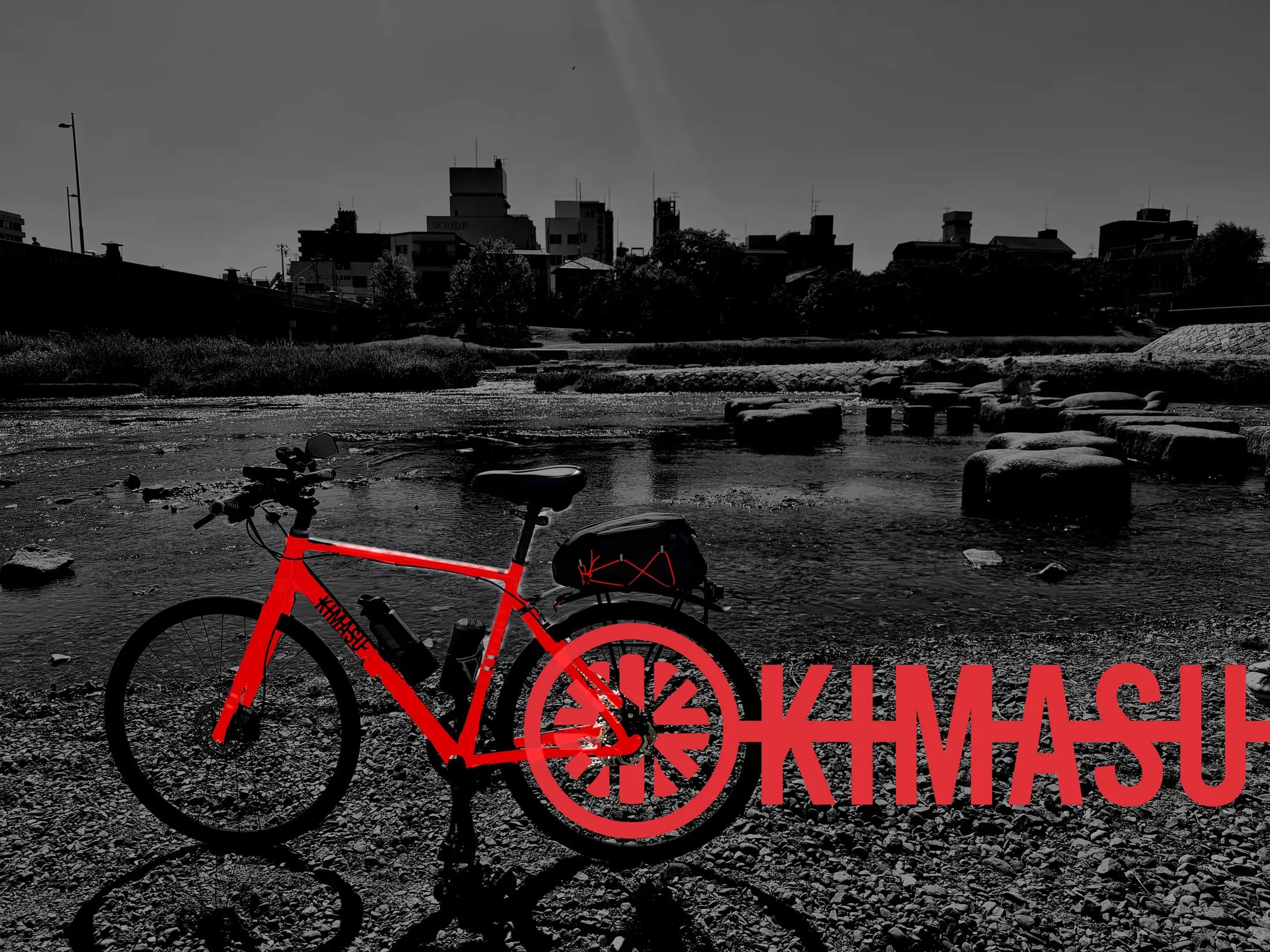
Yes, cycling is our specialty and by far the absolute favorite of our travelers! We consider it the ideal first activity to kick off your stay. For now, we offer our cycling tours exclusively in Kyoto — and for good reason: it is the most bike-friendly city in Japan. Hopping on a bike from your very first days allows you to instantly get your bearings while covering several very different neighborhoods in a single day.
It's enjoyable, fun, and saves you precious time. For example, crossing the city by bus or taxi from the Golden Pavilion to the Arashiyama Bamboo Grove can quickly become a logistical nightmare during rush hour. Thanks to our various cycling tours, we cut through local backstreets, avoid the crowds and traffic jams, and access hidden temples completely off the beaten tourist track.
Do I need to be in top shape to join a bike tour?
Not at all—if you know how to ride a bike, you are ready to go!
Our tours are run at a leisurely pace, mostly on flat ground with frequent stops. Electric-assist bikes smooth out any gentle slopes and long stretches effortlessly.
Best of all, all our tours are 100% private, meaning we tailor the tempo entirely to you on the day. Each tour page lists the total distance and terrain details, and we are always happy to chat if you want to double-check before booking.
Standard bicycle or or E-Bike?
Electric-assist bikes are our default standard across all tours, and required on select itineraries with longer distances or elevation:
Comfort & Ease: E-bikes smooth out inclines and distance, ensuring a relaxed, effortless ride compared to heavier traditional city bikes.
Beating the Heat: During warmer months, electric assistance lets you enjoy the ride without straining under the heat and humidity.
If you prefer a standard bike on routes where it is suitable, you are more than welcome to choose one—we always adapt the pace to you.
Note for younger riders: Rental e-bikes require a minimum height of 140 cm (4'7") to guarantee safety and proper fit.
Can children participate in the bike tours?
Absolutely, our bike tours are designed for the whole family! For children up to age 6, we provide bikes fitted with comfortable child seats. Confident young riders aged 6 to 8 and up are welcome on our half-day routes. For full-day rides, our electric-assist bikes require a minimum height of 140 cm (4'7") for safety and ease. Since every young rider is unique, reach out to us so we can tailor the best setup for your family.
Approximately what distance do we cover?
It depends on the tour format: expect roughly 10 to 18 km (6–11 miles) for a half-day ride, and up to 25–30 km (15–18 miles) on a full-day itinerary. Exact distances and terrain details are clearly listed on each tour page.
Because our tours are 100% private, we continuously adjust the pace, stops, and route to match your energy, preferences, and the day's weather.
Getting around Kyoto
Where can I cycle in Kyoto?
While Kyoto's grid layout makes navigation straightforward, don't be fooled: the city is definitely not flat! It features a continuous, subtle uphill slope from south to north, and reaching the famous temples on the surrounding hillsides requires some real legwork. To avoid heavy traffic and find the best riding conditions, look for these areas:
- The banks of the Kamo River (Kamogawa): Perfect for crossing the city away from traffic on dedicated pathways, with beautiful open views.
- The Miyagawacho district: A much quieter and more peaceful alternative to Gion, ideal for admiring traditional machiya townhouses at a leisurely pace.
- The Okazaki Canal: A stunning, spacious route that becomes absolutely magical under the cherry blossoms in spring.
💡 The Kimasu Advantage: Planning the perfect cycling route in Kyoto on your own can be tricky. Between unexpected slopes, hidden one-way streets, and strictly enforced pedestrian-only zones where bikes are banned, it's easy to get stressed. On a Kimasu bike tour, you can just enjoy the ride. Your guide handles the relief, manages the pace, and takes you through secret local shortcuts you won't find on any map.
Culture & etiquette
What are the essential rules of behavior and etiquette to know?
Japanese society places immense value on the concept of "Kuuki Yomu" (literally: reading the air) — the art of sensing the atmosphere and showing consideration to maintain social harmony. It's this mutual respect that makes traveling here so peaceful! While locals are very forgiving with tourists, here are a few golden rules to follow:
• On the street: Do not eat, drink, or smoke while walking (enjoy your snacks right outside the shop where you bought them). Keep your trash with you, as public trash cans are virtually non-existent.
• On public transport: Silence is golden. Keep your voice down, avoid phone calls completely, and take off your backpack so you don't bump into other passengers.
• At temples and shrines: These are sacred spaces. Never sit on the ground, on temple steps, or on the stone walls of private properties.
• Photography in Gion (Geisha district): Strictly respect all no-photography signs. Taking photos in private alleys is illegal and subject to a heavy fine.
• At the table: Never stick your chopsticks vertically into your bowl of rice (this mimics a funeral rite) and never pass food directly from chopsticks to chopsticks.
Don't worry: Your guides will be right by your side throughout your tours to give you a friendly heads-up and explain the meaning and history behind these customs!
Should you leave a tip?
In daily life (restaurants, taxis, hotels): No. Tipping is not part of Japanese culture and can even cause awkwardness. Exceptional service is simply the standard here. The best way to show your appreciation is with a warm smile and a sincere "arigatō gozaimasu."
For your private guides: Tipping is never mandatory or expected. However, if you loved your tour and wish to show extra appreciation to your guide, it is accepted and appreciated.
Local Etiquette: If you do decide to tip, it is customary in Japan to place the cash inside a small envelope rather than handing the bare bills directly to your guide.
Do we really need to take our shoes off often?
Yes, it happens quite often: at the entrance of certain temples, tea rooms, traditional tatami restaurants, or some shops. Wear shoes that are easy to slip off and make sure your socks are clean and hole-free — it's one of those small details that really matters.
What to know in Japan
Cash or card in Japan?
Japan is modernizing quickly, but cash remains essential for travelers.
• Where can you use cards? Most hotels, department stores, modern restaurants, and konbini (convenience stores) readily accept international credit cards.
• Why do you need cash? Cash is still strictly required for temple and shrine entrance fees, local bus/train tickets, and traditional street food stalls or markets.
Pro Tip: Don't worry about carrying large amounts of cash from home. You can easily withdraw Yen at ATM machines inside convenience stores (7-Eleven, Lawson, FamilyMart). They are open 24/7 and work perfectly with foreign cards.
How do I stay connected (internet / SIM)?
Having a reliable data connection is essential in Japan for navigating with maps, translating signs, and staying in touch with us on WhatsApp during your tours. You have two main options:
• eSIM (The easiest and most affordable way): A virtual SIM card activated directly on your smartphone before you leave. We highly recommend Saily — it's quick to set up and works flawlessly across Japan. 🎁 Kimasu Perks: Get a 10% discount on your data plan by using our exclusive partner link: https://go.saily.site/aff_c?offer_id=101&aff_id=14543
• Pocket WiFi (Best for groups or multiple devices): A small, portable Wi-Fi router that you pick up at your arrival airport in Japan. It's a great option if you are traveling with family or if your phone is not eSIM-compatible.
Pro Tip: Set this up a few days before your flight so you can stay connected the moment you touch down.
When to visit & seasons
What is the best time to visit Kyoto?
Kyoto is breathtaking year-round, and each season offers a completely unique experience. There is no wrong time to visit. It simply depends on what you are looking for:
• Spring (Sakura) & Autumn (Momiji): These are the most popular seasons, and naturally so! The weather is perfect and the scenery is spectacular, from the cherry blossoms in early April to the fiery red maple leaves in November.
• Summer: While the weather is hot and humid, it is the best time to catch the traditional summer festivals (Matsuri) and lively night atmosphere.
• Winter: Temperatures remain relatively mild, and the city becomes wonderfully peaceful. It is a highly photogenic and intimate time to explore the temples without the crowds.
The Kimasu Advantage: Spring and autumn draw large crowds to the city. Fortunately, our tours are specifically designed to bypass the tourist hubs and show you the Kyoto people actually live in, no matter when you visit.
How much time should I allow in Kyoto and the surrounding area?
This depends on the overall length of your trip to Japan. For a well-paced itinerary, here is the ideal breakdown we recommend for exploring the Kansai region:
• Kyoto (2 to 3 days): The bare minimum to absorb the ancient capital, from must-see temples and historic alleys to scenic bike rides.
• Nara (1 day): To meet the famous free-roaming sacred deer and marvel at the Giant Buddha at Todai-ji.
• Osaka (1 day): To dive into a vibrant neon-lit city, experience incredible street food, and explore its historic castle.
• Himeji (1 day): Perfect for a day trip to witness Japan's most spectacular and original feudal castle.
Insider Tip: Book a tour with us on your first or second day in Kyoto. It will help you get your bearings immediately, understand the local culture, and gather personal recommendations to maximize the rest of your stay in the region!
Should I book my Kyoto activities far in advance?
Yes, it is highly recommended. Kyoto is one of the world's most popular destinations. For peak seasons (cherry blossoms from late March to April, and autumn leaves in November), spots fill up months ahead.
• Our Advice: To secure your private bilingual guide (French and English) with Kimasu, we recommend booking your dates 2 to 3 months in advance.
Beyond Kyoto
Is Nara worth visiting? How long should I spend there?
Yes, it's an absolute must. Less urban than Kyoto, Nara offers a uniquely mystical atmosphere with its giant wooden temples and hundreds of free-roaming sacred deer. A single full day is more than enough to see its greatest treasures, ideally as a day trip from your hotel in Kyoto or Osaka.
How to book?
How is our custom itinerary created?
Our process is simple, personal, and collaborative. It flows through 4 easy steps:
1. Initial Consultation: As soon as you submit your request via our "Traveler Profile" form, we will contact you directly (ideally via WhatsApp). This conversation helps us understand your preferences, group dynamic, and requirements, while locking in your dates.
2. Proposal & Confirmation: We design your 100% custom program and send over the detailed itinerary along with an itemized invoice. Once payment is completed, everything is officially locked in.
3. Final Adjustments before Day J: A few days before your tour, your dedicated guide will reach out personally to fine-tune the final details, adjust the itinerary if your interests have changed, and agree on the perfect meeting point.
4. Flexibility & Contingencies: Change of plans? We remain flexible to accommodate your needs. Please review our Terms and Conditions for more details: https://kimasu.jp/legal/terms
How far in advance should I book?
We generally require a minimum of 48 hours' notice before your desired date. That said, we can often be flexible if availability allows — in that case, please contact us directly via WhatsApp for a quick response.
What are the payment methods?
We accept two payment methods:
• By credit or debit card: via our secure payment platform Stripe (Visa, Mastercard, American Express). Payment is made online at the time of booking confirmation.
• By bank transfer: via Wise for international transfers (available in multiple currencies upon request).
All our prices are listed in euros (€). Your booking is officially confirmed once payment has been received.
Cancellation & changes
What is your cancellation policy?
Our policy is clear and fair: 100% refund of tour prices for any cancellation made more than 7 days in advance, 50% refund for cancellations made between 7 days and 48 hours in advance, and no refund for cancellations made less than 48 hours in advance — except in cases of force majeure. Booking fees are only refunded if the cancellation is our fault. In practice, we always look for a solution that suits you (rescheduling or an alternative).
Accessibility
Are your tours suitable for families, seniors, or people with reduced mobility?
Our walking and cycling tours are suitable for a wide range of abilities, and e-bikes are a great help for those seeking a more leisurely pace. For those with reduced mobility, we tailor the experience to your needs: contact us in advance and we'll create a personalized itinerary together.
Group size
What is the maximum number of people per group?
Our tours are 100% private, meaning you will never be paired with other travelers. We typically accommodate groups of up to 8 guests. For larger parties, please get in touch—we organize custom tours on request and will gladly provide a tailored quote.
Book
Ready to book your guided tour?
Private tours by bike, on foot or by car — Kyoto and the Kansai.