Yamanashi: the other side of Fuji-san
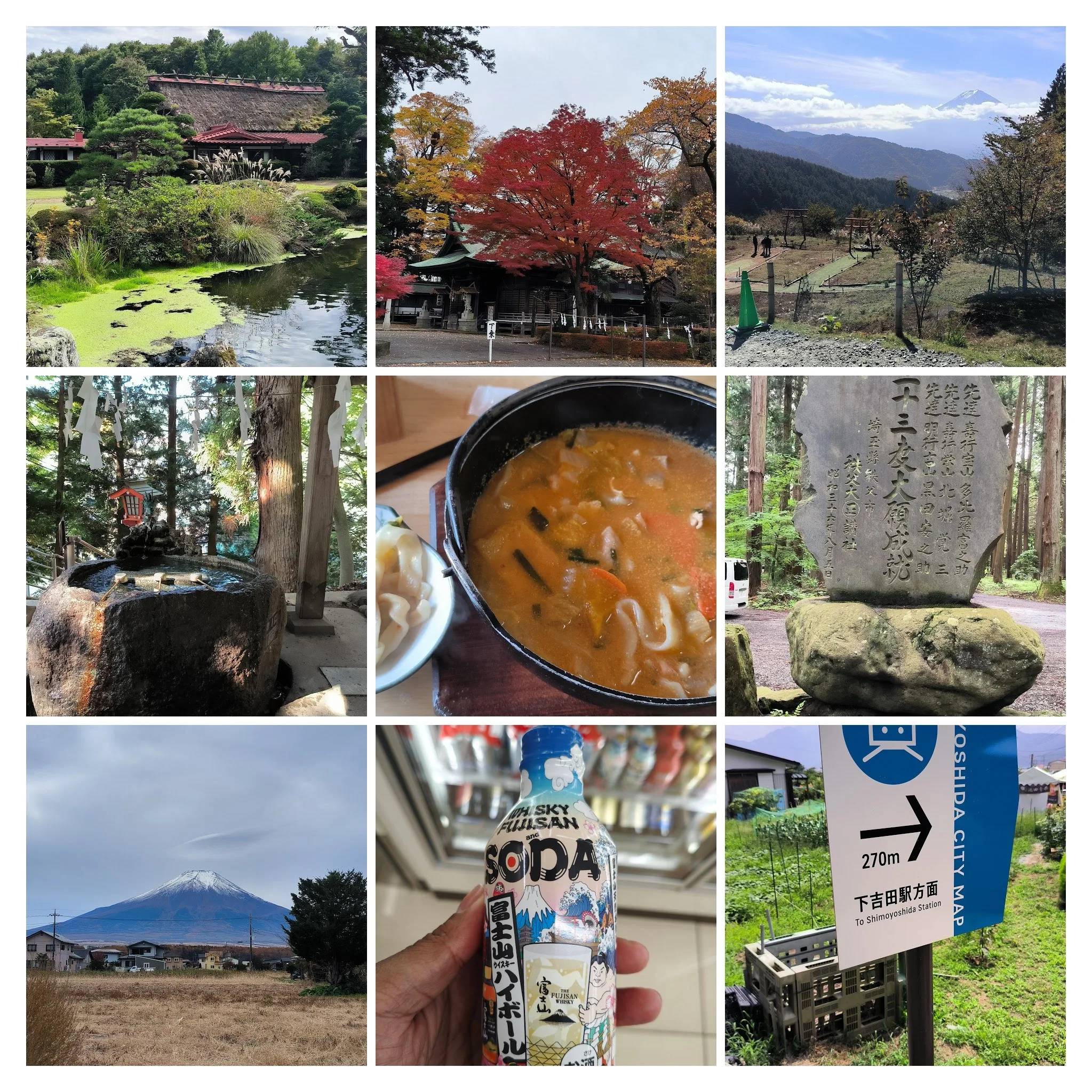
In central Honshu, Yamanashi Prefecture is known for its mountainous geography as one of Japan's few landlocked regions. It has long shared Mount Fuji with neighboring Shizuoka, claiming the volcano's northern face and the Five Lakes region below. Filtered through volcanic rock, the area produces famous mineral water that feeds orchard groves known for peaches and grapes. For a local meal, try houtou, a hearty dish of flat noodles simmered in miso broth with vegetables and pumpkin, once eaten by Takeda Shingen's samurai.
How to organize your trip from Shinjuku to Shimoyoshida
To reach Shimoyoshida from Tokyo in a single day, the fastest route is the direct JR Fuji Excursion train leaving from Shinjuku Station. The ride takes about 1 hour and 50 minutes without transfers. If seats are sold out, take the JR Chuo Limited Express to Otsuki Station and change to the local Fujikyu Line.
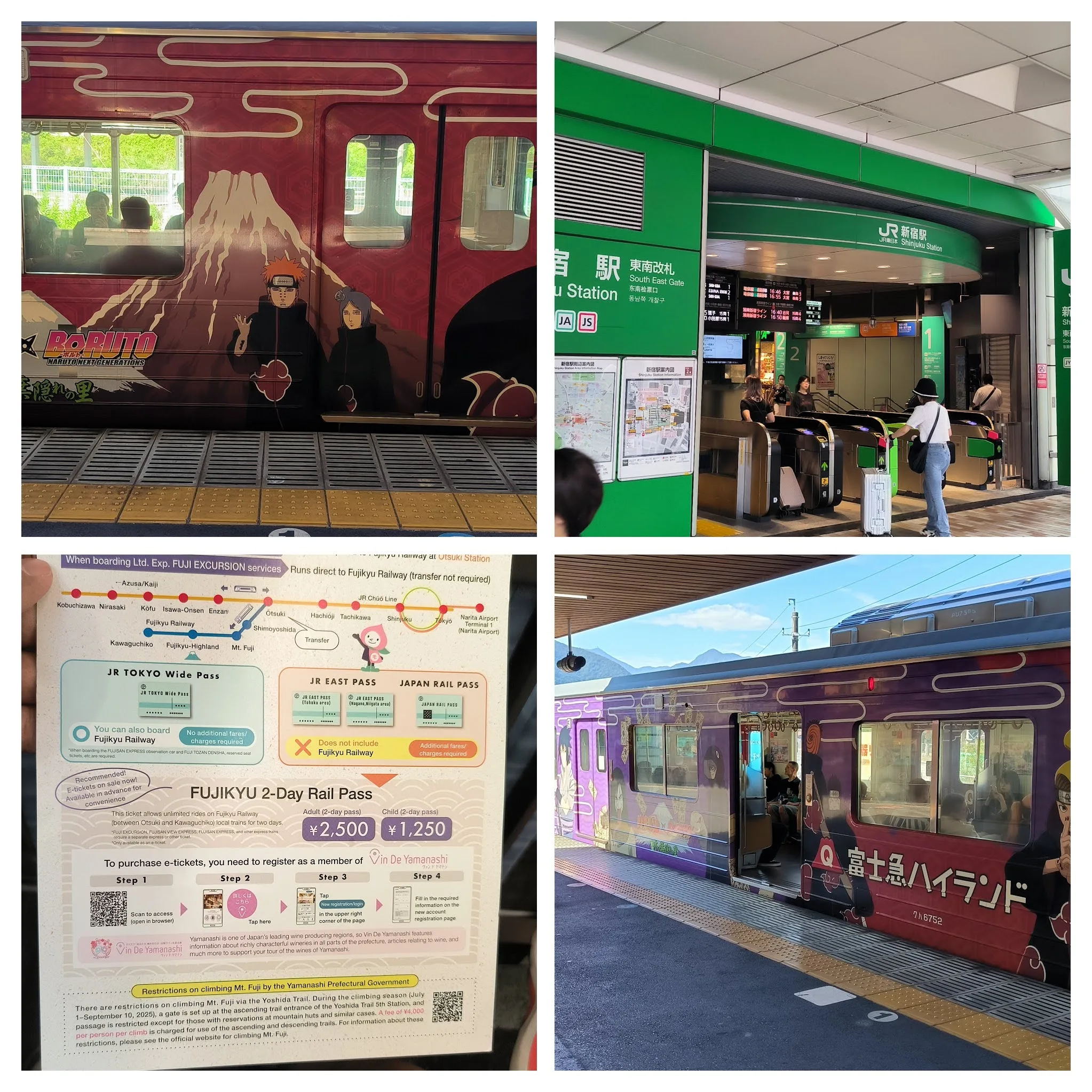
A departure around 7:30 AM from Shinjuku puts you in Shimoyoshida before 9:30 AM. This timing helps you beat the crowds and catch clear morning light on the mountain.
Fuji Excursion tickets go on sale exactly one month before departure on the JR East website, often selling out in minutes.
https://www.jreast.co.jp/en/multi/traininformation/azusa_kaiji/
If you transfer at Otsuki Station instead, you can simply tap an IC card such as Suica or Pasmo for seamless access onto the Fujikyu Line.
Chureito Pagoda and Arakura Fuji Sengen Shrine
From Shimoyoshida Station, a fifteen-minute walk past small shops brings you to Arakura Fuji Sengen Shrine, founded in 705. Along the path, you can pause for local snacks, including Fuji apples that are surprisingly large.
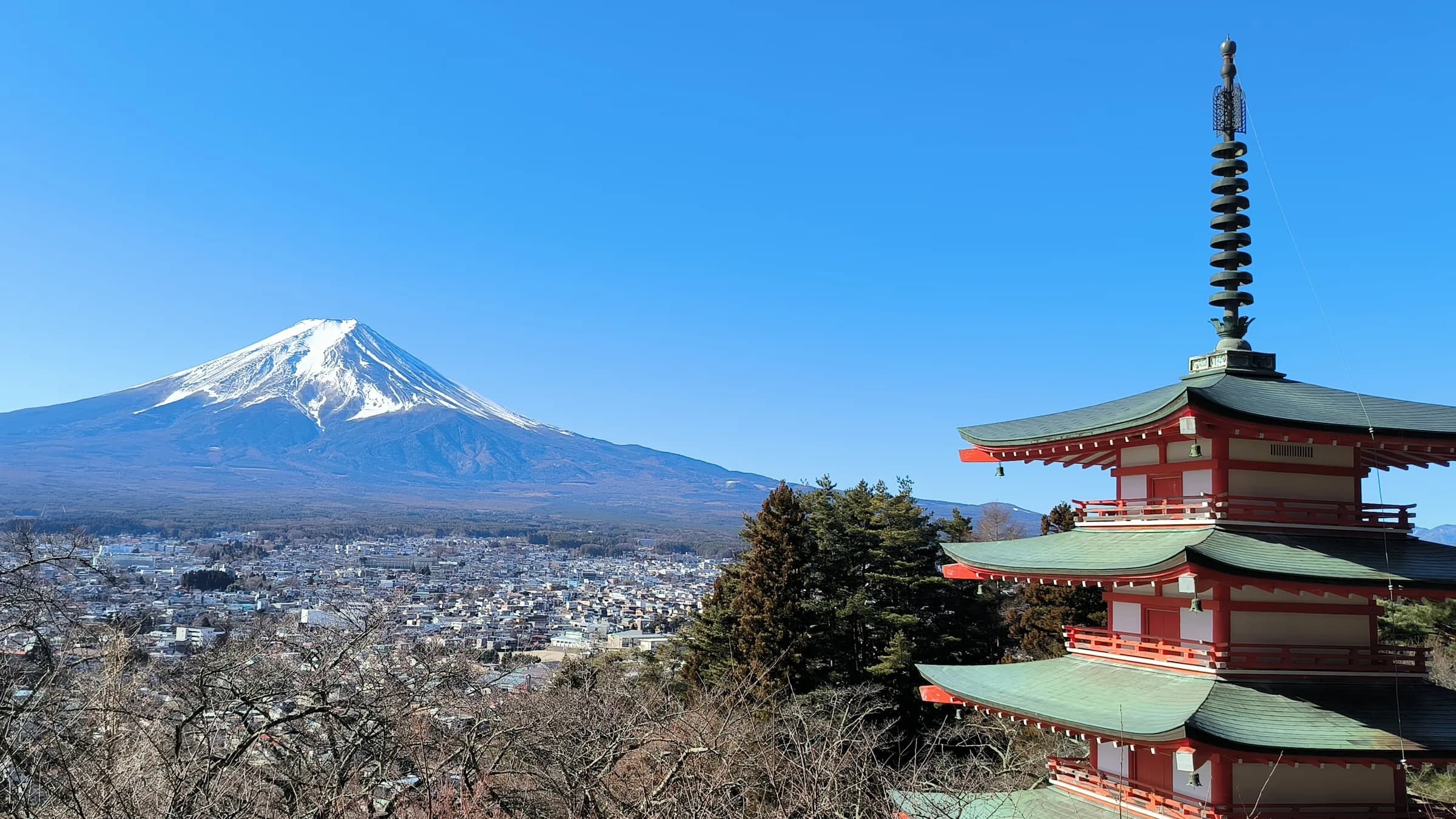
Local lore says that after a major eruption of Mount Fuji in 807, an imperial envoy came here to perform rituals and calm the mountain (its most recent eruption was in 1707, during the Hoei era). Reaching the observation deck means climbing the Sakuya-hime stairs, a stone flight of 398 steps. From the top, the view aligns the red five-story structure with Mount Fuji in the background. Spring brings hundreds of blooming cherry trees framing the scene, though the site gets packed with visitors during cherry blossom season, making wait times at the lookout long.
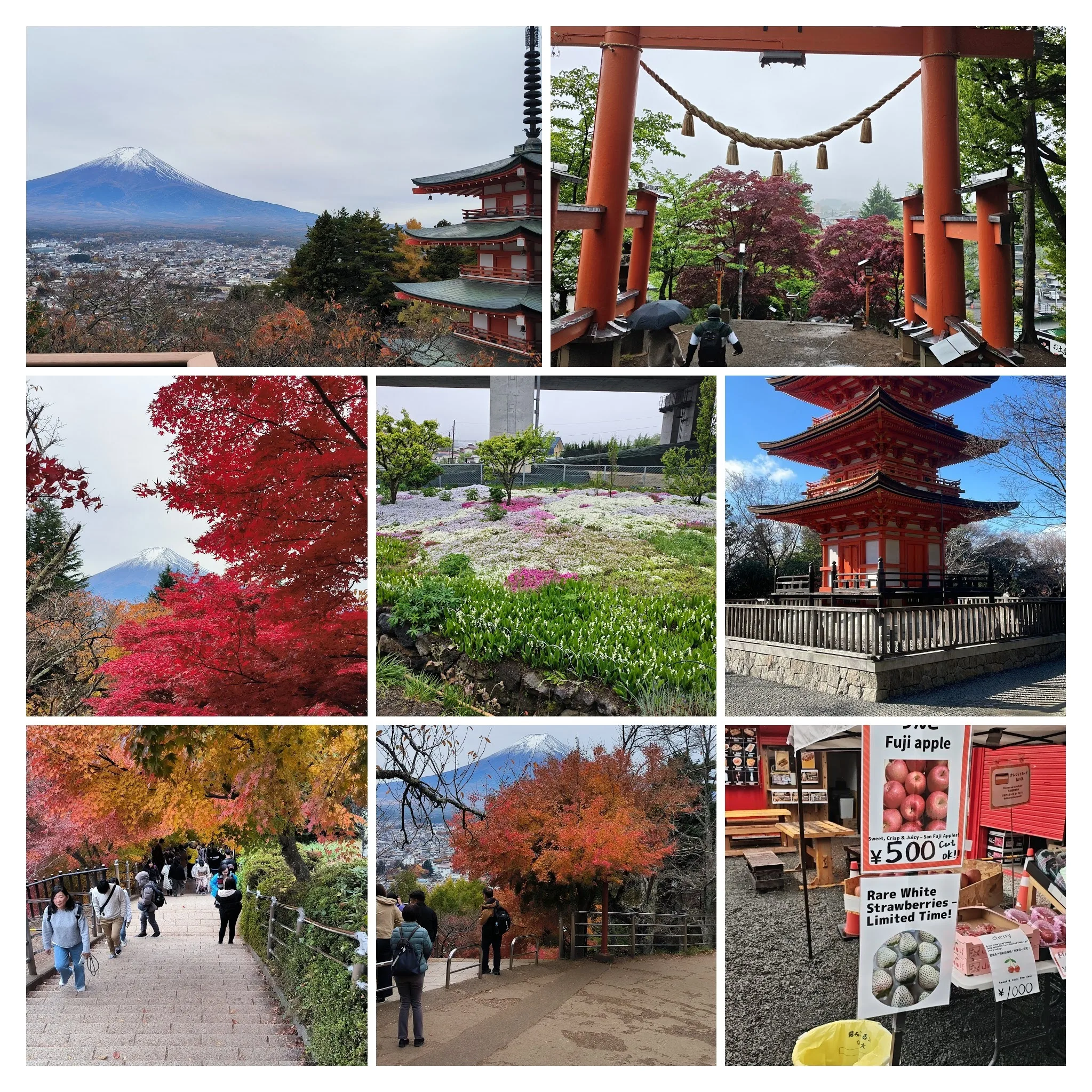
The climb takes roughly ten minutes, depending on your pace. While the stairs offer the quickest way up, a paved slope provides a gentler alternative. Visiting in the early morning rewards you with direct sunlight illuminating the northeast face of the mountain. Before making the ascent, take a moment to explore the main shrine building at the base, and use the water fountains at the bottom to refresh yourself after the climb.
Walking through Fujiyoshida Retro shopping street to Mt. Fuji Station
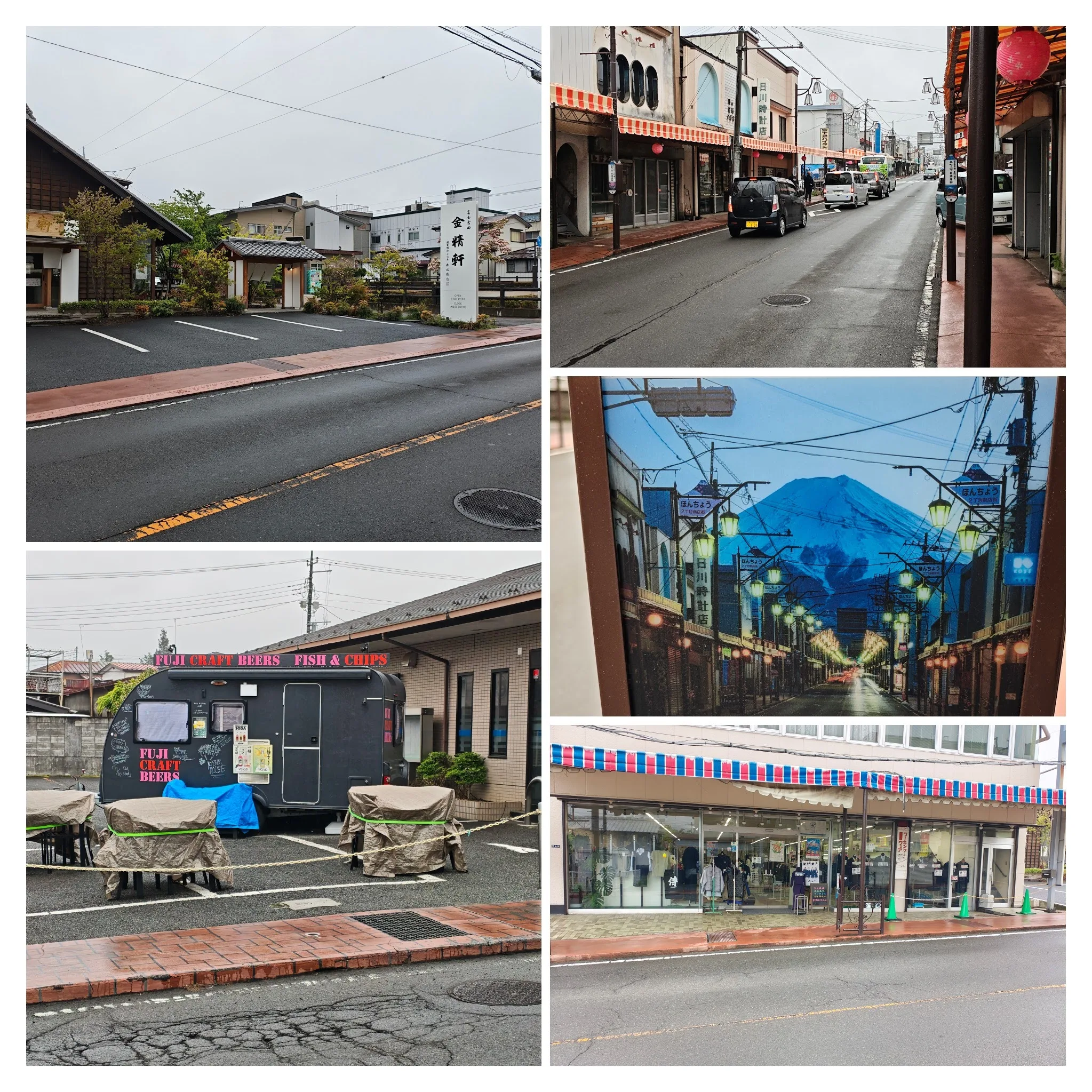
The two-kilometer walk along Honcho Street connects the lower shrine area to Mt. Fuji Station in about thirty minutes. Retro shop signs from the Showa era frame the mountain at the end of the road. On clear days, the straight avenue extending toward Mount Fuji offers a popular photo setup. If you prefer not to walk, local trains make the link quickly, but walking the street lets you catch the local atmosphere and find good angles. Watch your step while taking photos and stay on sidewalks so you do not block street traffic.
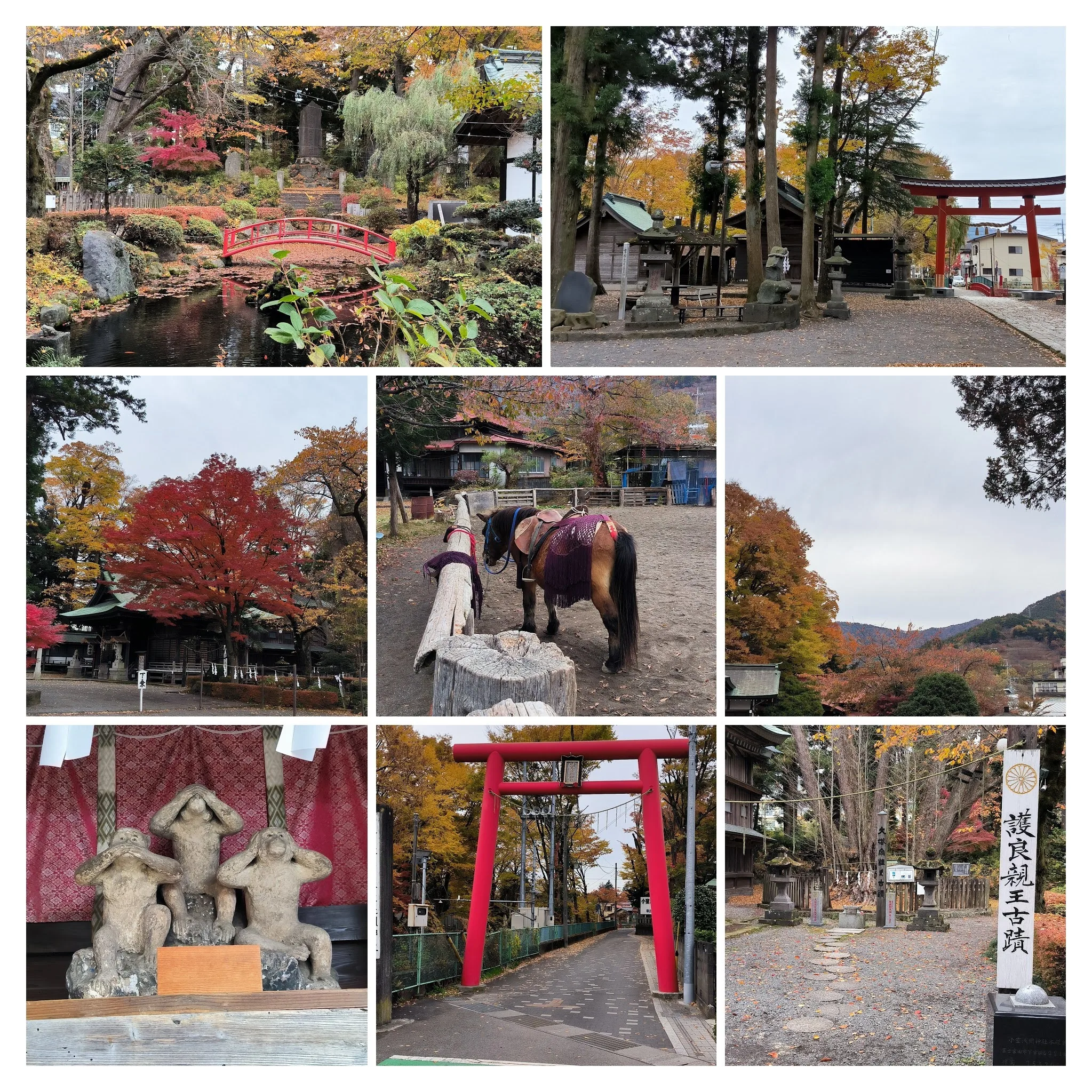
Along the way, Fujisan Shimomiya Omuro Sengen Shrine offers a quiet stop. Known for its stables housing sacred horses (shinme), this location also holds local devotion to Mount Fuji. It sees far fewer visitors than the headline stops nearby. From the grounds, you can look back toward the trail and hill leading to Arakura Sengen Shrine, home to Chureito Pagoda, built in 1958 as a peace memorial for local residents lost in modern wars.
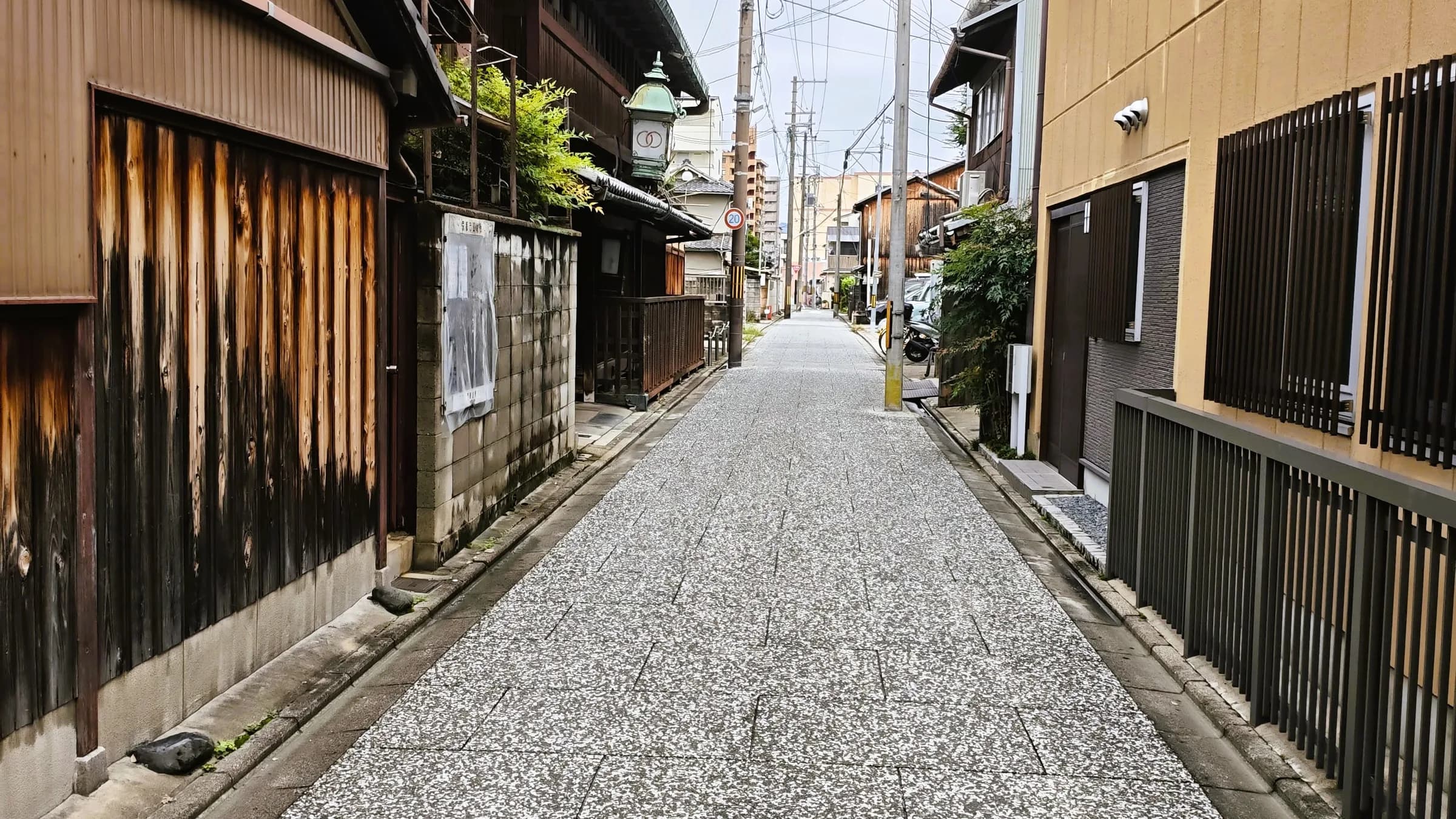
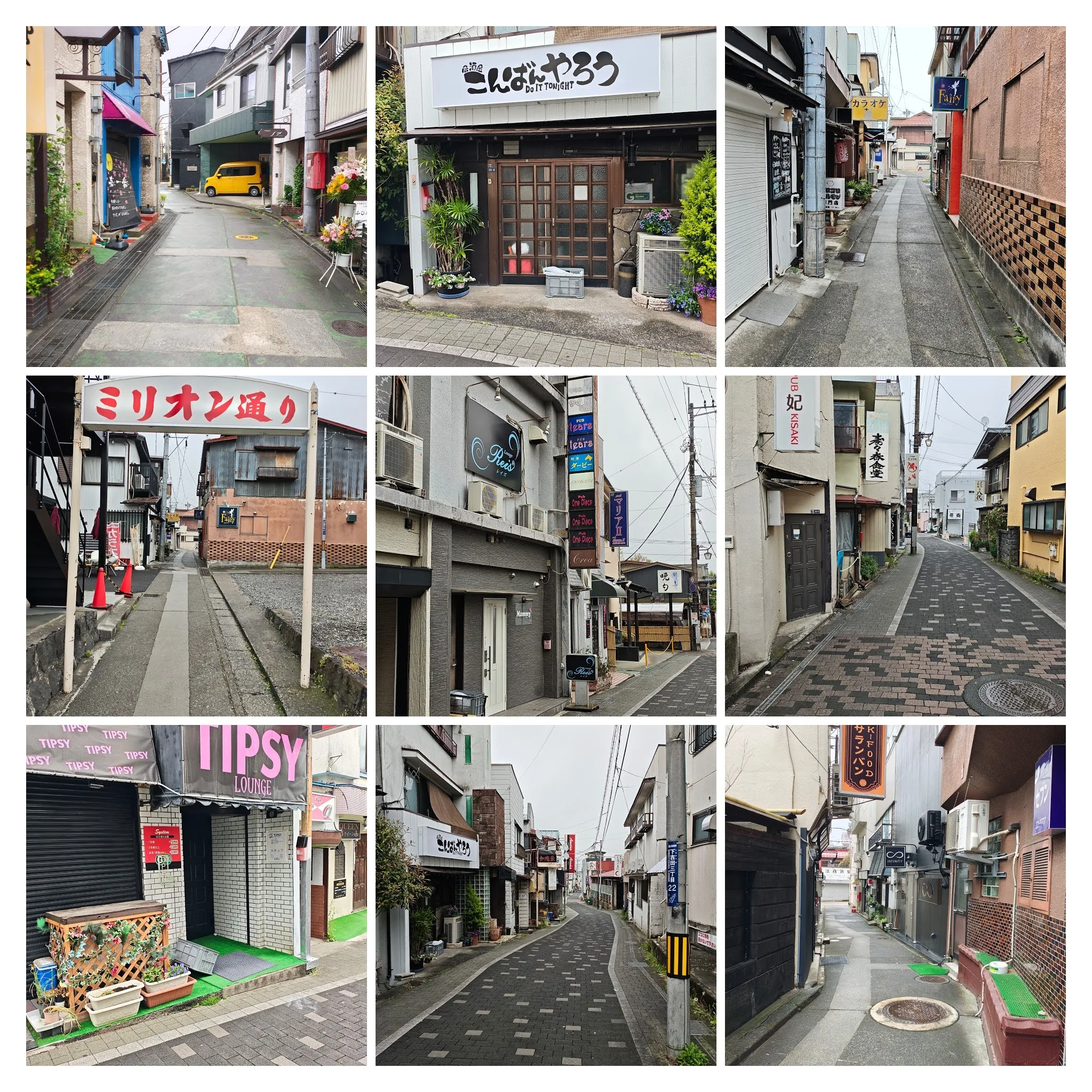
Walking a few blocks away, you wander into Nishiura, a historic retro district that traces its roots back to Japan's post-World War II textile boom, when it served as a sprawling entertainment quarter packed with over 200 bars and geisha houses for wealthy merchants and loom workers. Today, after years of quiet following the industry's decline, this maze of narrow alleyways around Million-dori street has experienced a vibrant revival driven by Showa-retro culture. Reminiscing Tokyo's Golden Gai with its glowing red lanterns, vintage signage, and tiny traditional snack bars, the district stays quiet during the day before coming alive after sunset as a bustling hotspot for bar-hopping (hashigo-zake), blending roughly 100 active tiny izakayas, jazz bars, and modern creative eateries tucked into renovated old buildings.
I later stumbled upon a piece of this local history woven straight into fashion while browsing in the Mt. Fuji Station Q-STA shopping mall: a great-looking Hawaiian shirt arboring sketches of the lively izakayas of the Nishiura district and the iconic entrance archway of Million-dori Street.

Lunch stop at Unagi Restaurant Sakuya
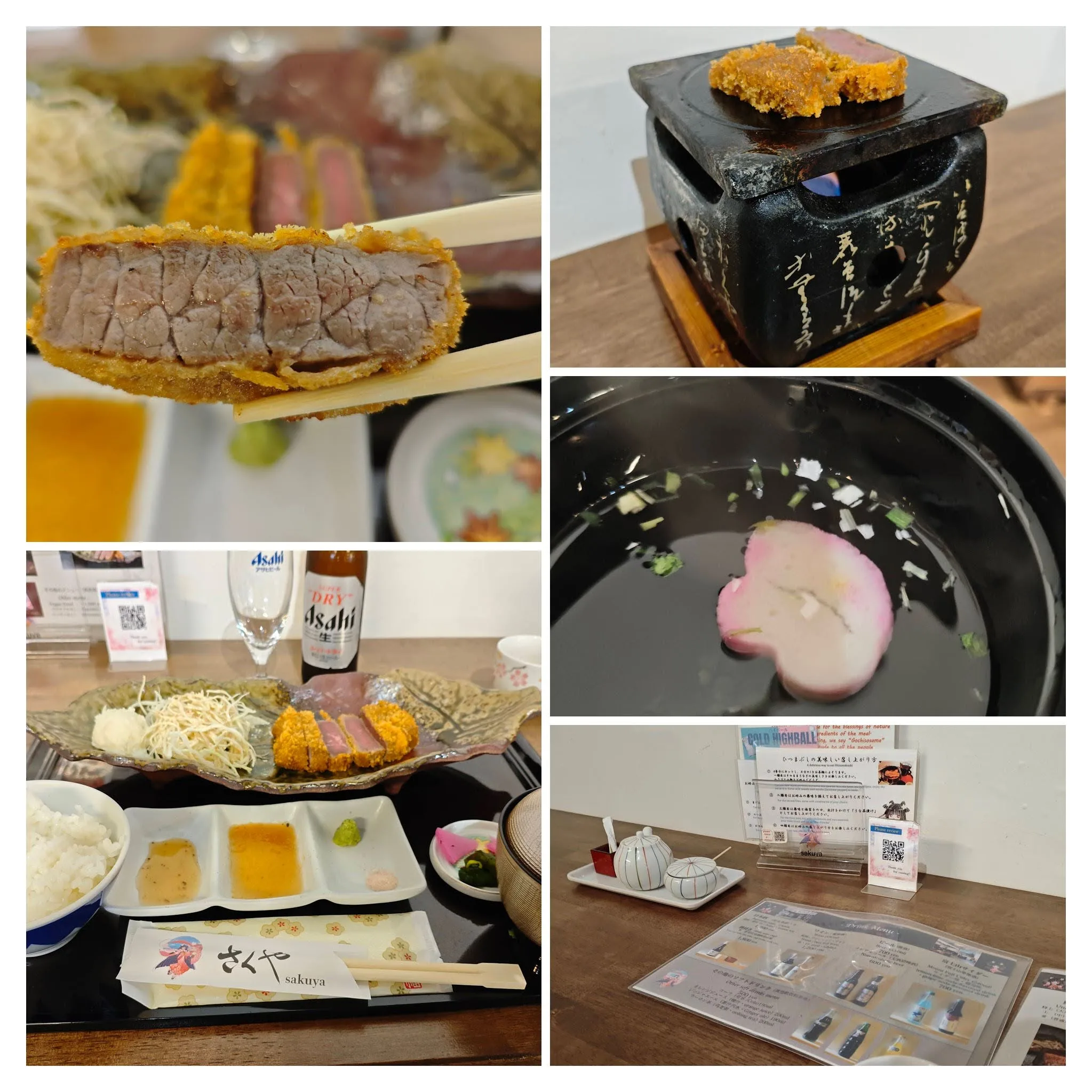
Restaurant Sakuya sits along the walking route and serves charcoal-grilled eel. A regular portion costs around 3,500 yen, served with rice and clear soup made with local spring water. They also prepare gyukatsu, a breaded beef sirloin cutlet that is crispy outside and tender inside. Served rare, you finish cooking it on an individual hot stone at your table. It opens at 11:00 AM and works well for an early lunch before heading to the lakes.
Coffee break at Cafe Gekkou
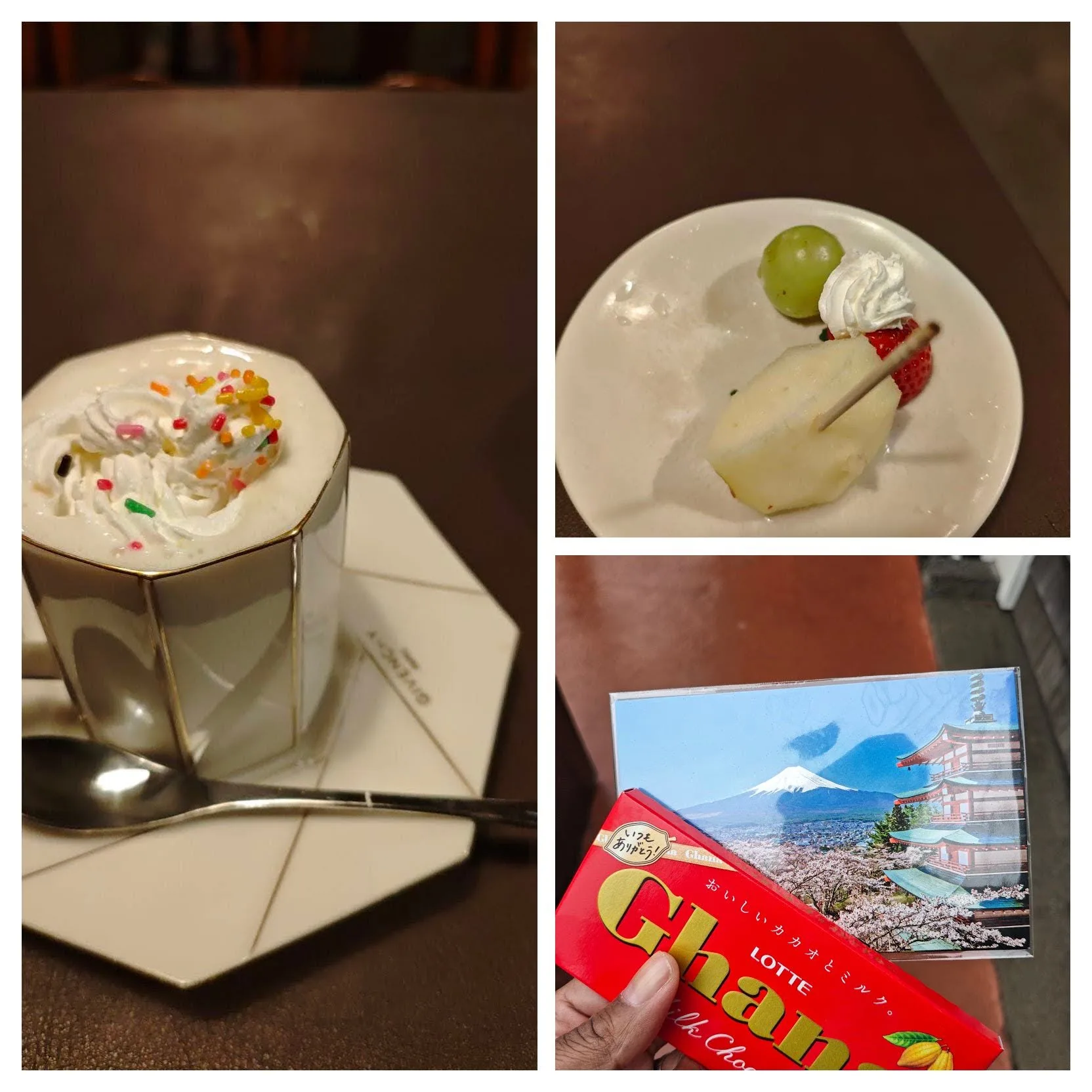
Tucked inside a renovated wooden building, Cafe Gekkou is a charming, independent coffee shop serving drip coffee, tea, and homemade pastries. It makes a perfect pit stop for a quiet twenty-minute breather. The welcoming staff add a lovely personal touch: during my visit, they sent me on my way with a complimentary postcard and a some Lotte chocolate.
Visiting Oshino Hakkai and Kitaguchi Hongu Fuji Sengen Shrine
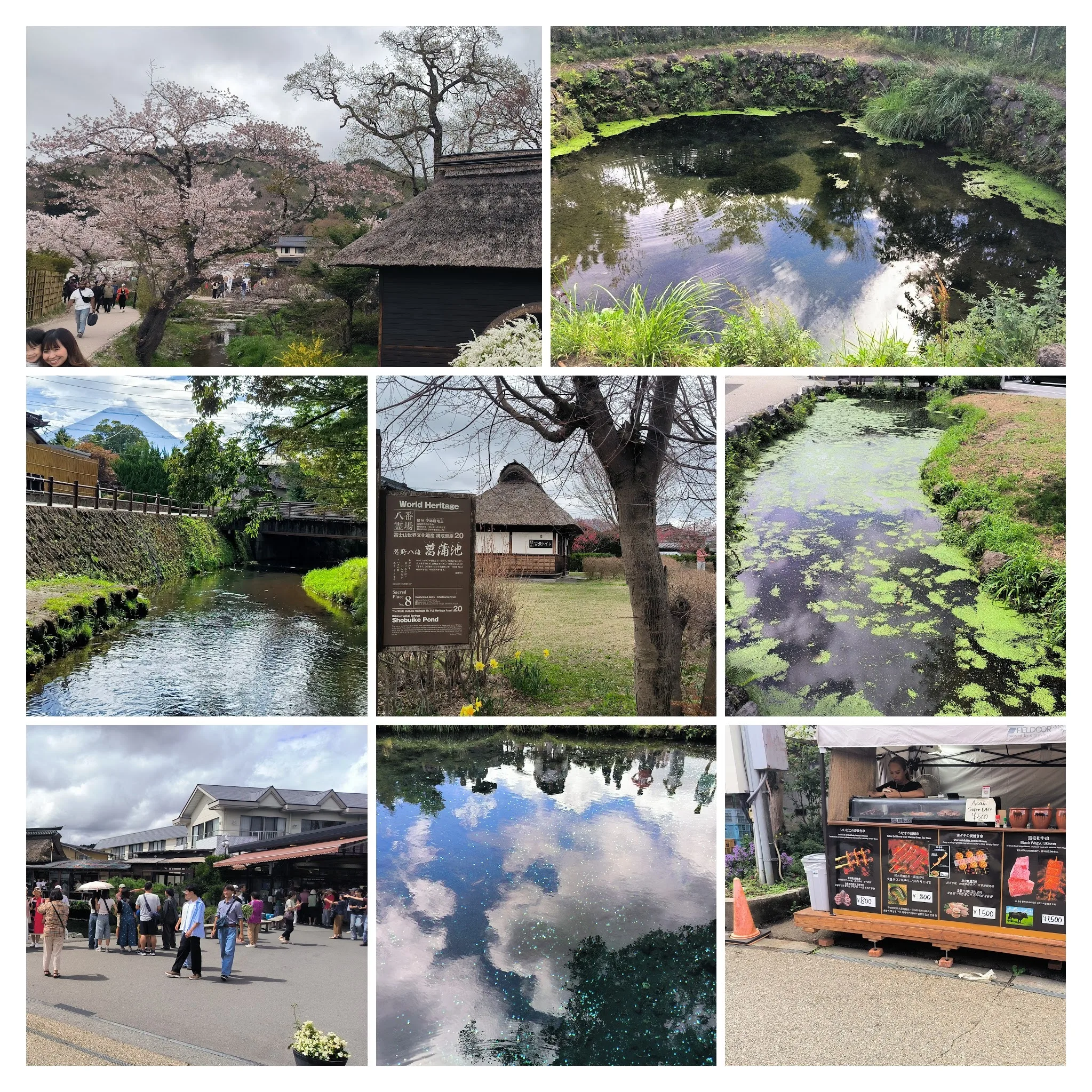
From Mt. Fuji Station, a Fujikyu shuttle bus reaches Oshino Hakkai village in twenty minutes for 420 yen. The area features eight ponds fed by snowmelt filtered through volcanic rock over several decades. While seven of the ponds are clustered together in the heart of the village—surrounded by thatch-roofed houses, a working waterwheel, and food stalls selling grilled skewers and dango—the eighth pond, Deguchi-ike (literally "Exit Pond"), sits slightly apart from the main group, offering a much quieter setting. The village center is also home to the open-air Hannokibayashi Folklore Museum (around 300 yen entry); set inside the area's oldest thatched farmhouse, it displays period agricultural tools and samurai armor while granting exclusive access to the Sokonashi-ike pond and a prime, uncrowded viewing spot of Mt. Fuji.
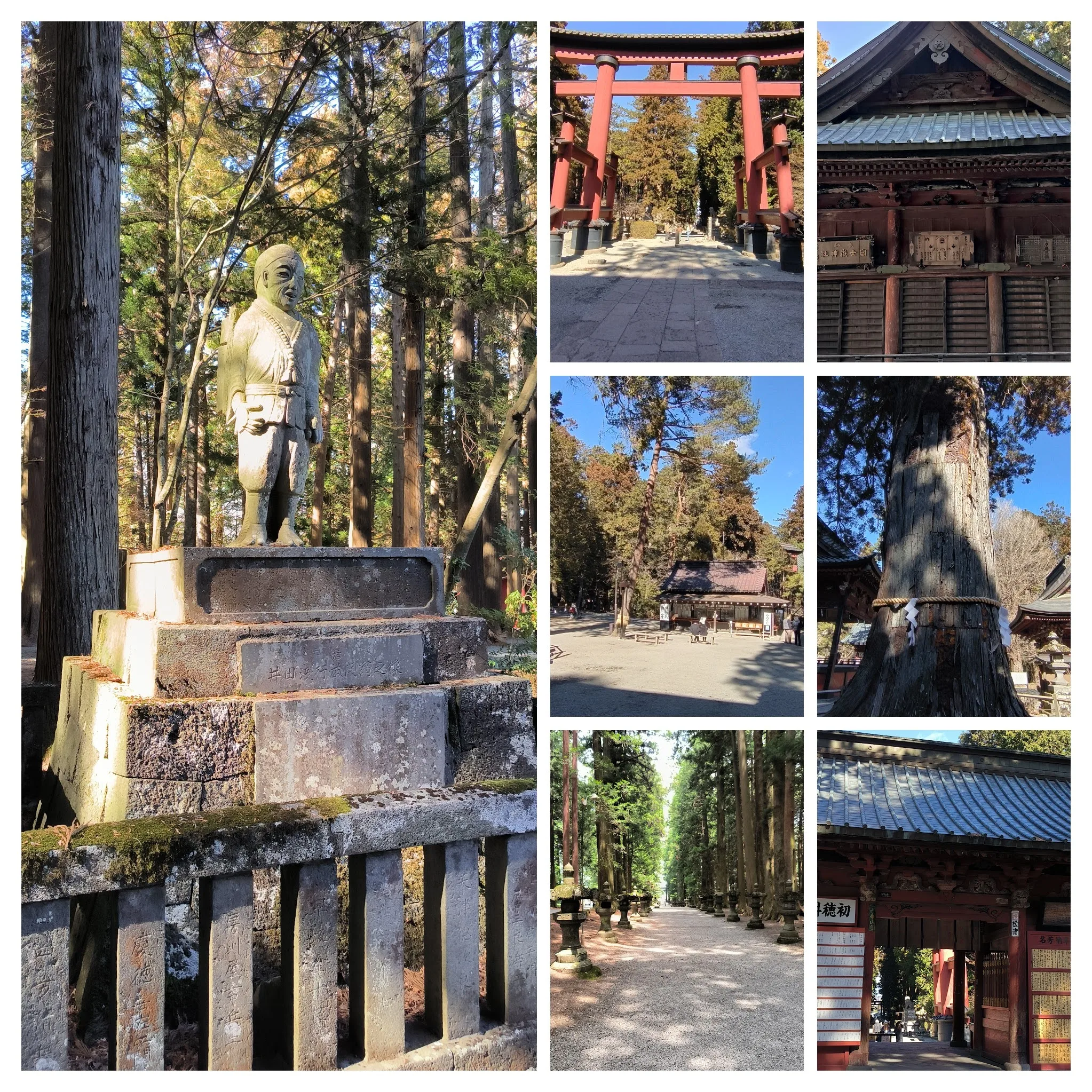
A five-minute bus ride back toward the station brings you to Kitaguchi Hongu Fuji Sengen Shrine, historically the starting point for the Yoshida climbing route up the mountain. Stone lanterns line the entry path beneath tall cedar trees leading to the dark wooden main hall, surrounded by massive centuries-old trees.
From Kawaguchi Asama Shrine to Haha-no-Shirataki waterfall
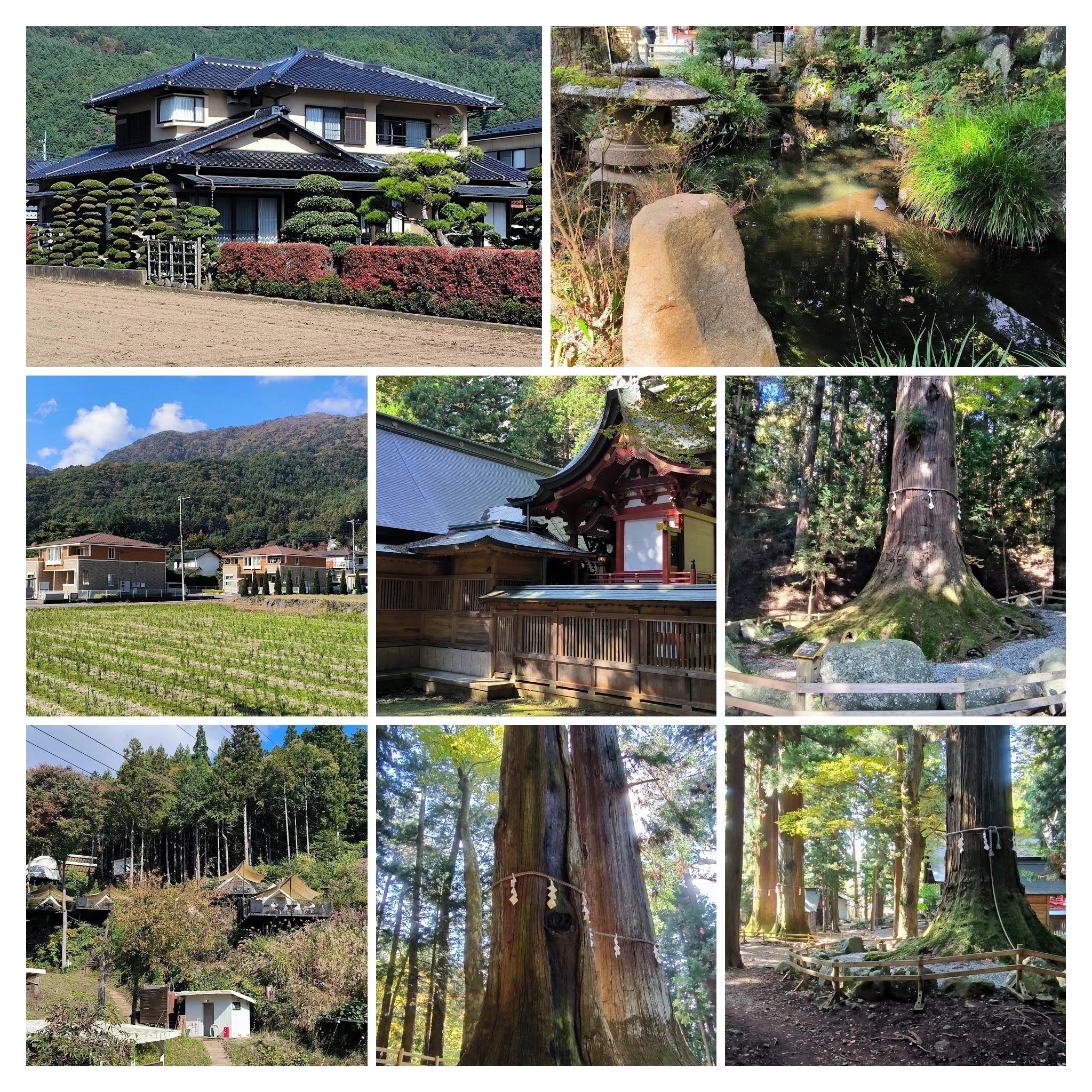
Kawaguchi Asama Shrine sits on the northern shore of Lake Kawaguchiko, fifteen minutes by bus from Kawaguchiko Station. Seven sacred cedar trees planted in the 9th century stand inside the grounds. A trail leads up behind the main shrine toward Tenku no Torii lookout, continuing into the forest toward Haha-no-Shirataki waterfall.
The cliffside Tenku no Torii gate
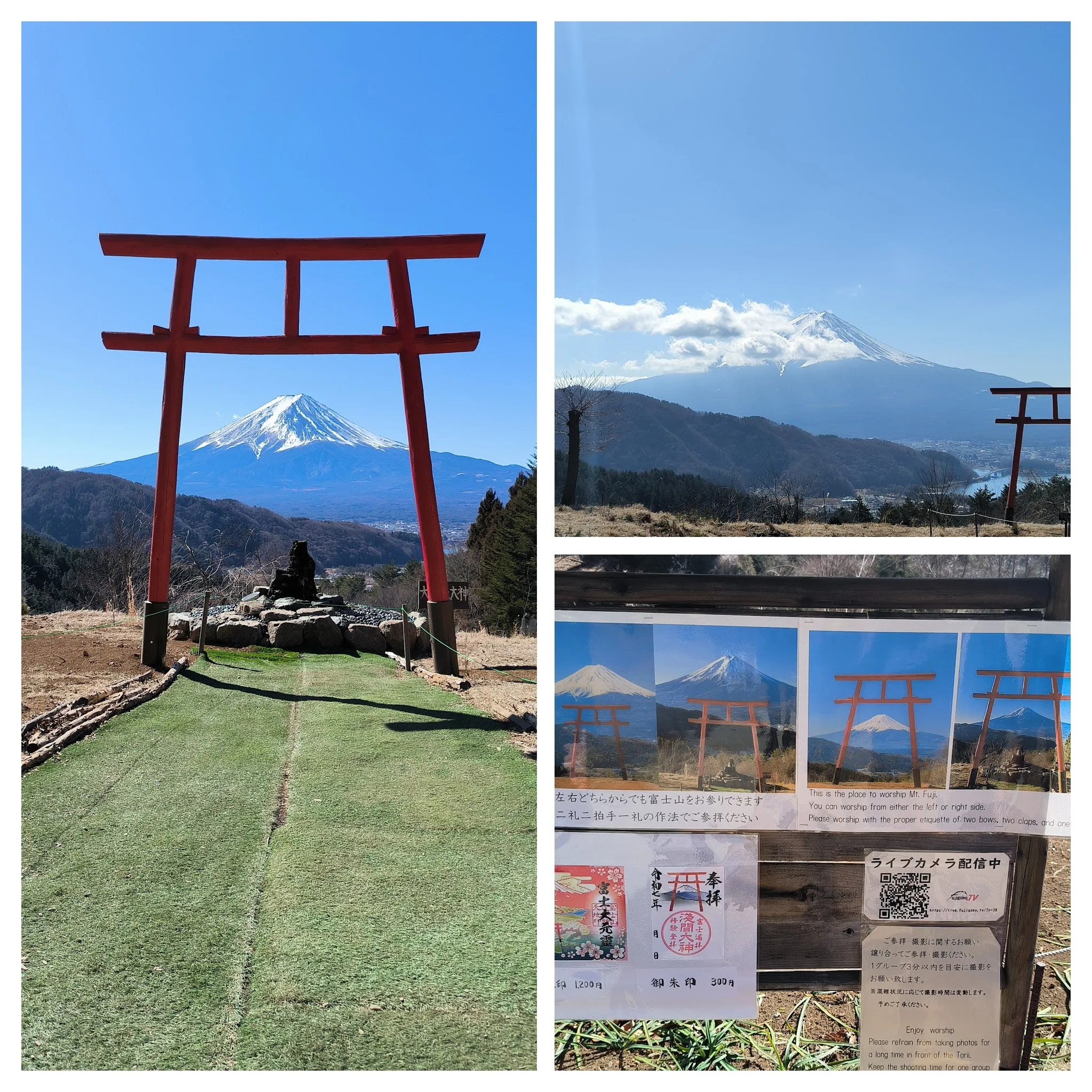
The Tenku no Torii lookout sits one kilometer above Kawaguchi Asama Shrine, a fifteen-minute walk up a paved road. Entry costs 200 yen per person to support site maintenance. The red wooden gate stands on the hillside facing the lake and Mount Fuji. A second torii gate was recently added alongside it to help manage visitor queues for photos.
The sacred waterfall of Haha-no-Shirataki
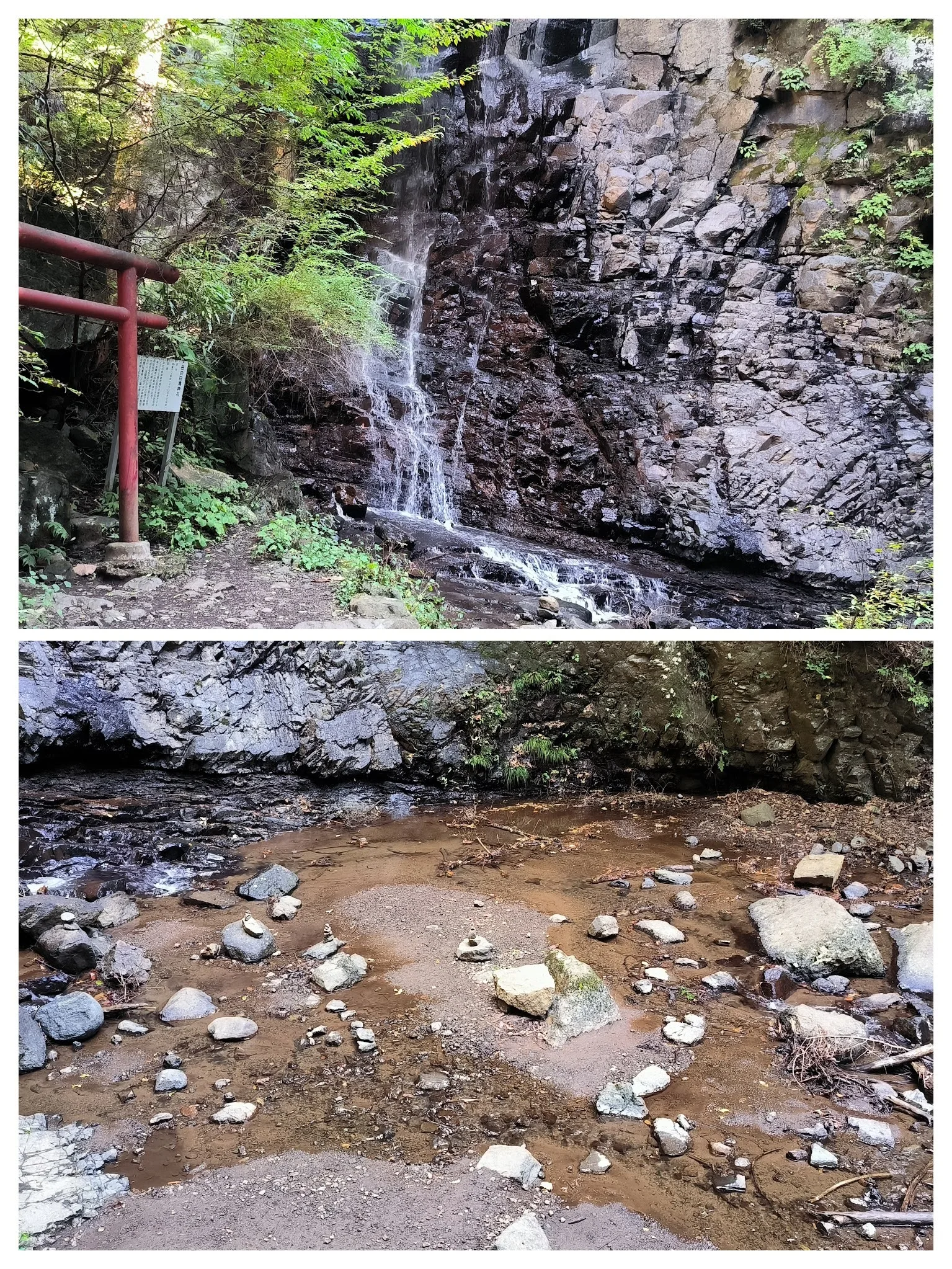
Set in the forest a twenty-minute walk along a dirt and stone path, Haha-no-Shirataki waterfall -literally "Mother's White Waterfall"- flows cool mountain air and water over volcanic rock. Dedicated to Takuhatachiji-hime, the mother-in-law of Mount Fuji's guardian goddess Konohanasakuya-hime, the cascade historically served as a sacred site where Heian-era pilgrims performed ritual cleansings (misogi) to purify themselves before attempting to climb the mountain.
For those looking to venture a bit further, continuing up the trail just past Mother’s Waterfall brings you to Chichi-no-Shirataki ("Father’s Waterfall"), a smaller, more intimate 5-meter cascade completing this sacred pairing.
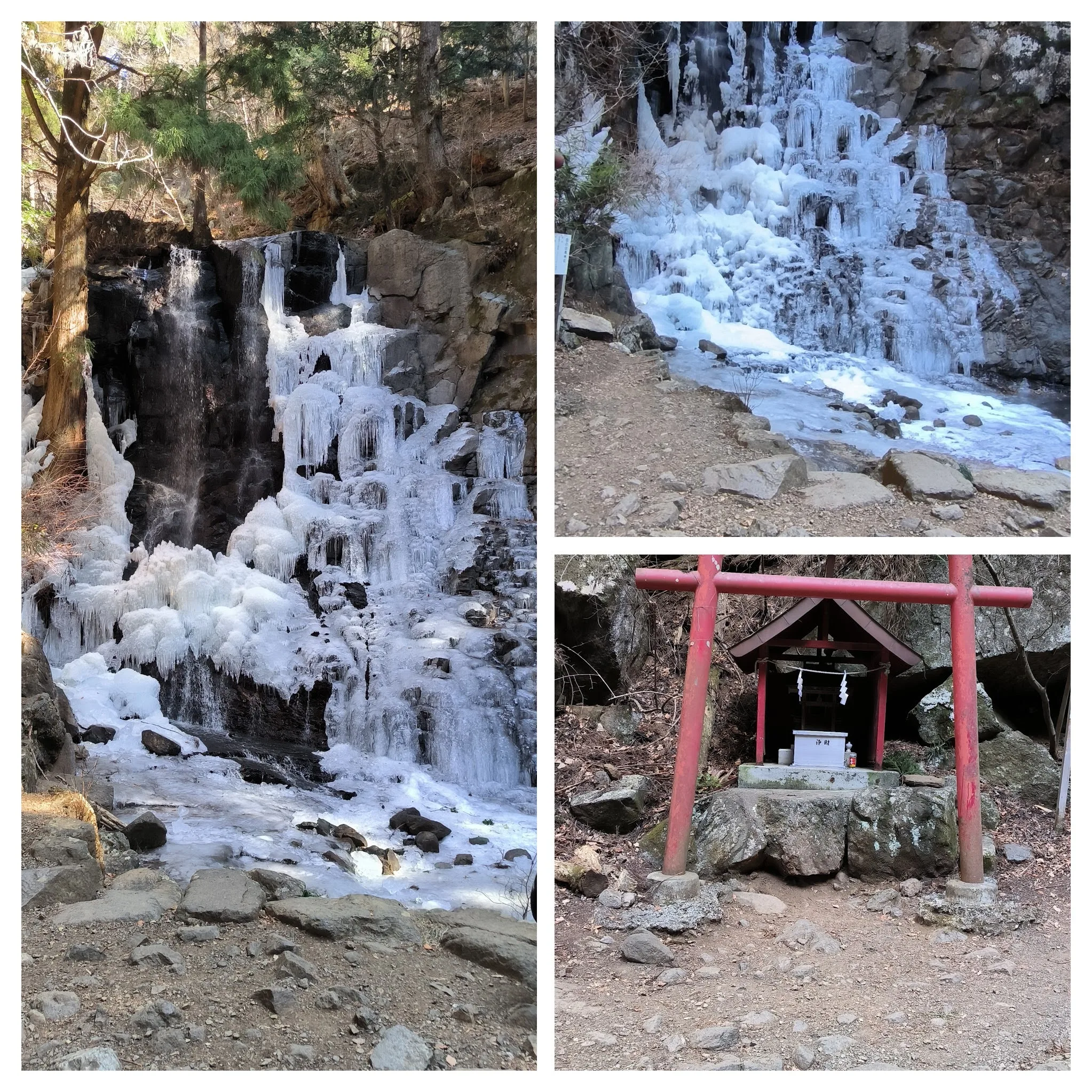
A winter visit shows a different side of the falls, as freezing temperatures turn the cascading water into ice formations.
Take a break at Tsunagaru Cafe
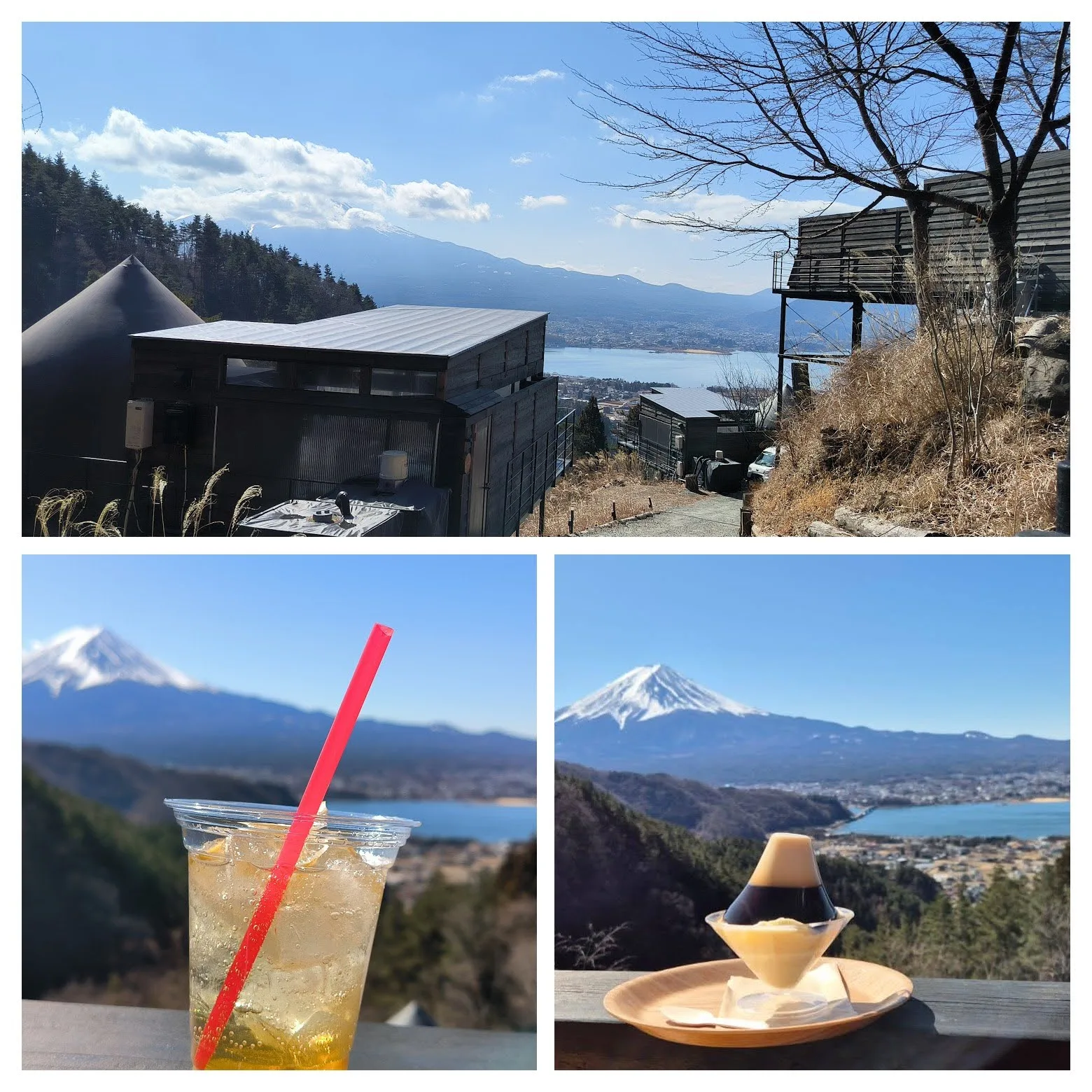
On the way down, stop by Cafe Tsunagaru. They serve a house pudding shaped like Mount Fuji. With the actual mountain visible through the window or from the patio, the presentation works well for a quick photo. They also serve coffee, chu-hi, and local soft drinks.
When is the best time to see Mount Fuji without clouds?
The highest chance of seeing Mount Fuji clear of clouds is between 7:00 AM and 10:00 AM. Thermal clouds build up along the slopes by late morning during spring and summer, whereas cold, dry winter air keeps visibility clear throughout the day.
Local lore links these shifting clouds to Konohanasakuya-hime, the female deity of the volcano, whose shyness supposedly makes her hide behind mist. Catching a clear view feels like a bonus. To maximize your chances of admiring the volcano's majesty in a peaceful setting, the region is full of exceptional spots and spectacular vantage points that make it easy to escape the few overcrowded viewpoints.
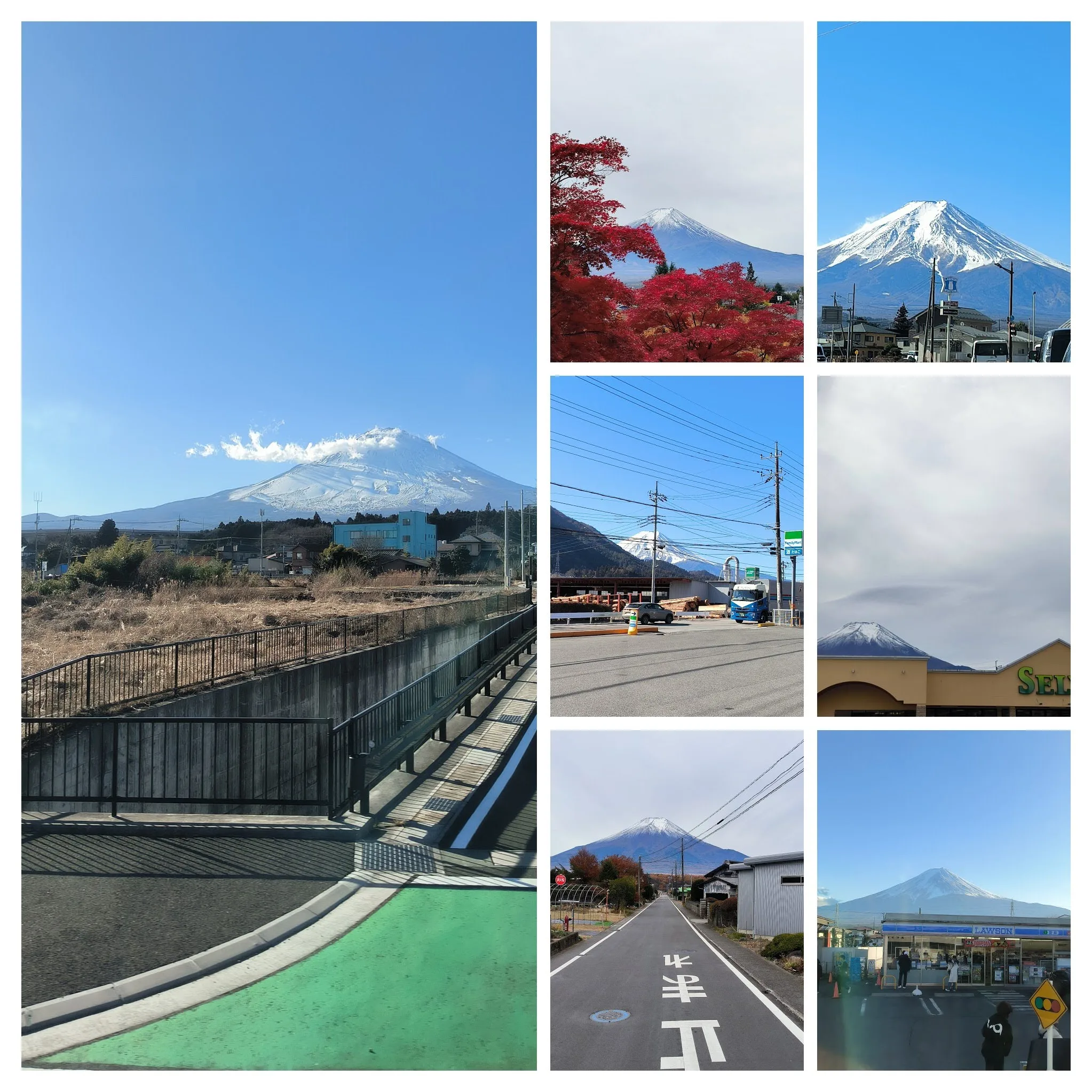
Here are practical weather notes for planning your travel:
- From November to February, the mountain remains visible nearly 80 percent of the time all day.
- From May to August, rising heat creates mist by 10:30 AM, often blocking the summit.
- Checking the live webcam of Mt. Fuji when you wake up in Tokyo helps confirm conditions before heading out on your day trip.