Who Was Abe no Seimei? The Real Heian Onmyoji Behind the Anime Legend
Abe no Seimei (921–1005 CE) was far more than a legendary figure; he was a key imperial court astrologer and civil official practicing Onmyodo—the official state discipline blending astronomy, calendar tracking, and geomancy. Advising six emperors alongside court regent Fujiwara no Michinaga, Seimei spent decades navigating directional taboos (kata-imi) and celestial signs to protect the realm.
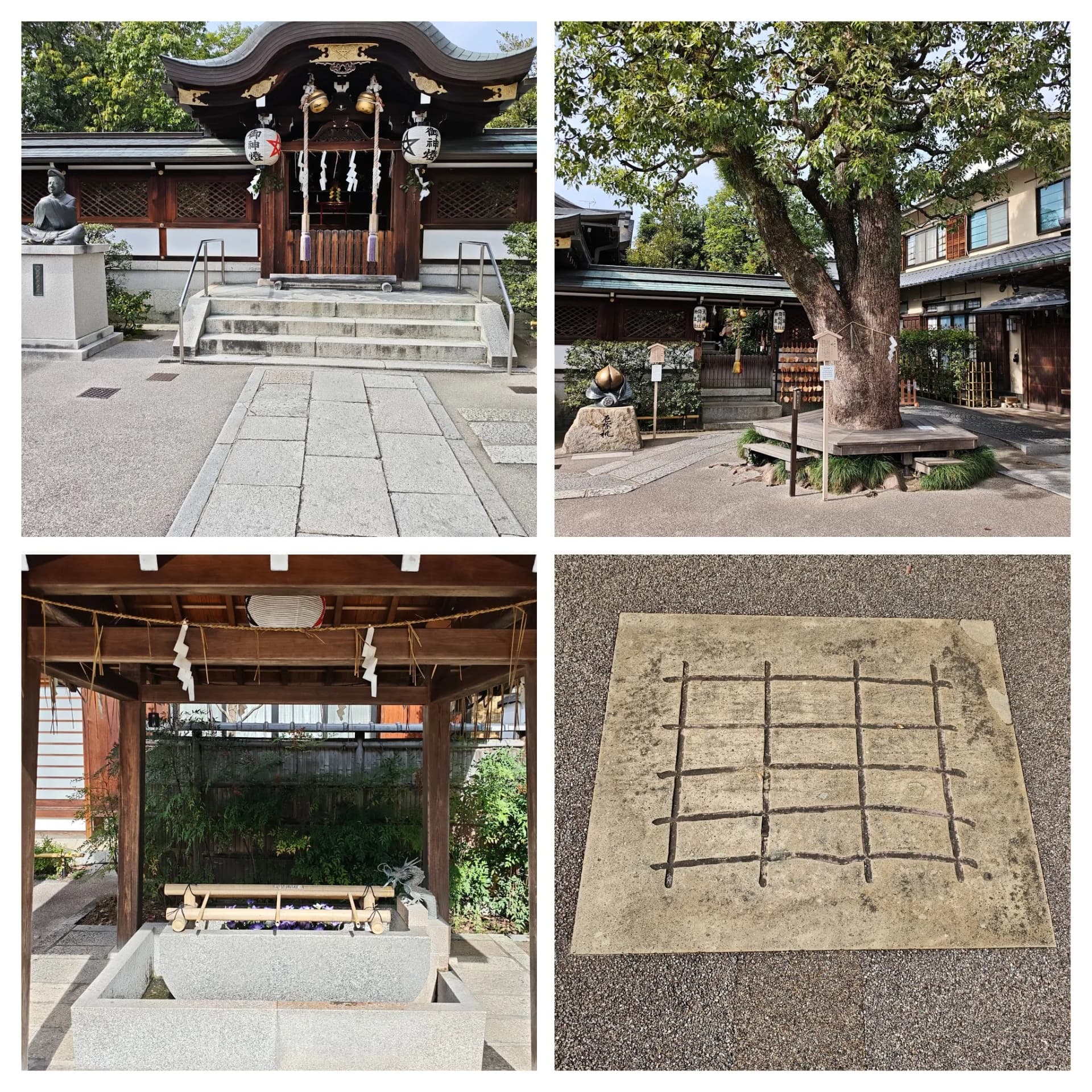
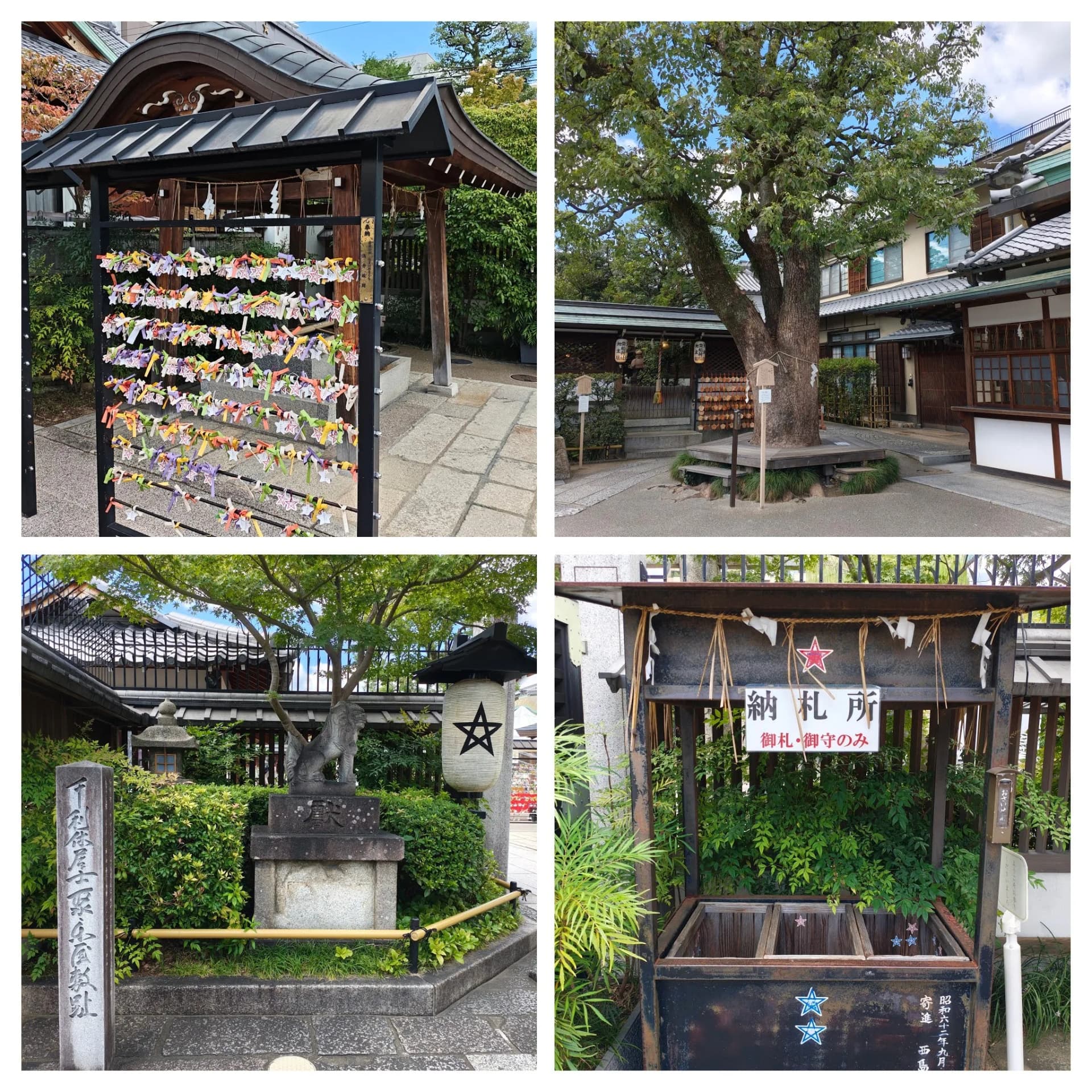
That protective craft is still carved directly into the grounds of Kyoto’s Seimei Shrine. Standing beside a massive 300-year-old sacred camphor tree lies the Kuji-kiri grid: nine slashed lines in stone symbolizing the ritual hand signs onmyoji used to slice through evil energy and fortify space. It serves as the perfect doorway into understanding how Seimei’s world operated—where even the smallest details, from symbols carved into stone to markings on the ground, reflected the belief that unseen forces could influence the safety and harmony of the capital.
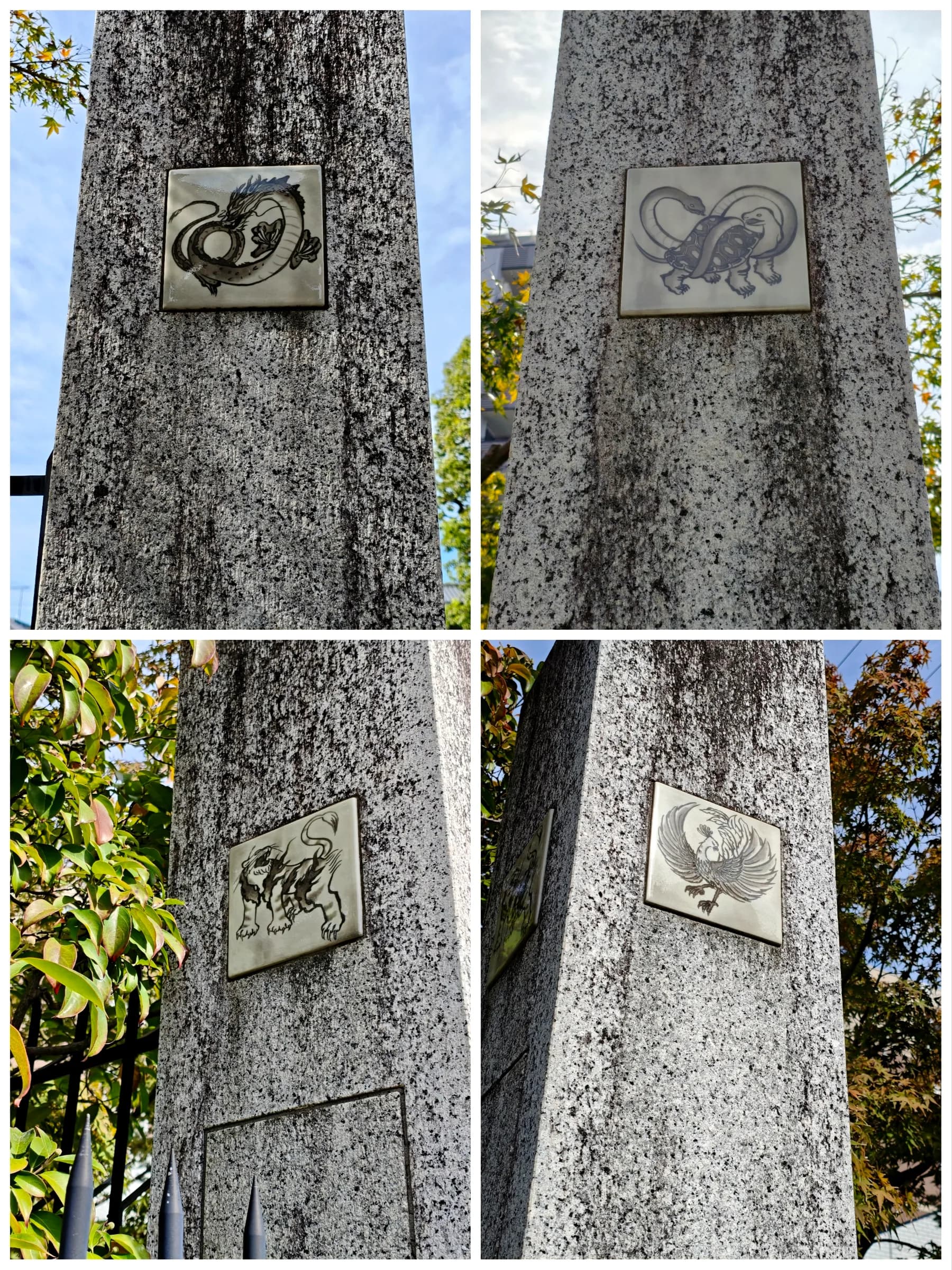
While temporary taboos like kata-imi could dictate which direction a noble should avoid on a given day, Kyoto's spiritual geography extended far beyond individual movements. According to traditional beliefs rooted in Chinese geomancy, an ideal capital was surrounded by natural features associated with four celestial guardians, each protecting a cardinal direction: Genbu (the Black Tortoise-Snake) to the north, represented by Funaokayama Hill; Seiryu (the Azure Dragon) to the east, associated with the Kamo River; Suzaku (the Vermilion Bird) to the south, linked to the former Ogura Pond; and Byakko (the White Tiger) to the west, represented by the ancient San'in Road. Over time, these guardians also became associated with four Kyoto shrines: Kamigamo, Yasaka, Jōnangū, and Matsunoo-taisha, respectively.
These beliefs also influenced the design of individual buildings. The northeast was considered particularly vulnerable to evil spirits, a direction known as the kimon, or "Demon's Gate."
One example can still be seen at the Kyoto Imperial Palace, where the northeast corner of the surrounding wall has an unusual indentation known as Sarugatsuji. Beneath its roof sits a small wooden monkey, traditionally believed to ward off evil. The choice of a monkey is no coincidence: in Japanese, saru (monkey) sounds like saru (to leave), making it a symbolic way of encouraging unwanted spirits to go away.
From Imperial Bureaucrat to Pop Culture Icon
During his lifetime, Seimei worked within the Ministry of the Center (Nakatsukasa-sho) inside the Bureau of Divination, known as the Onmyo-ryo. His daily duties involved calculating astronomical calendars, maintaining water clocks, and choosing auspicious dates for imperial ceremonies and city construction projects. He held high civil rank because Heian governance relied heavily on accurate tracking of seasons and celestial portents.
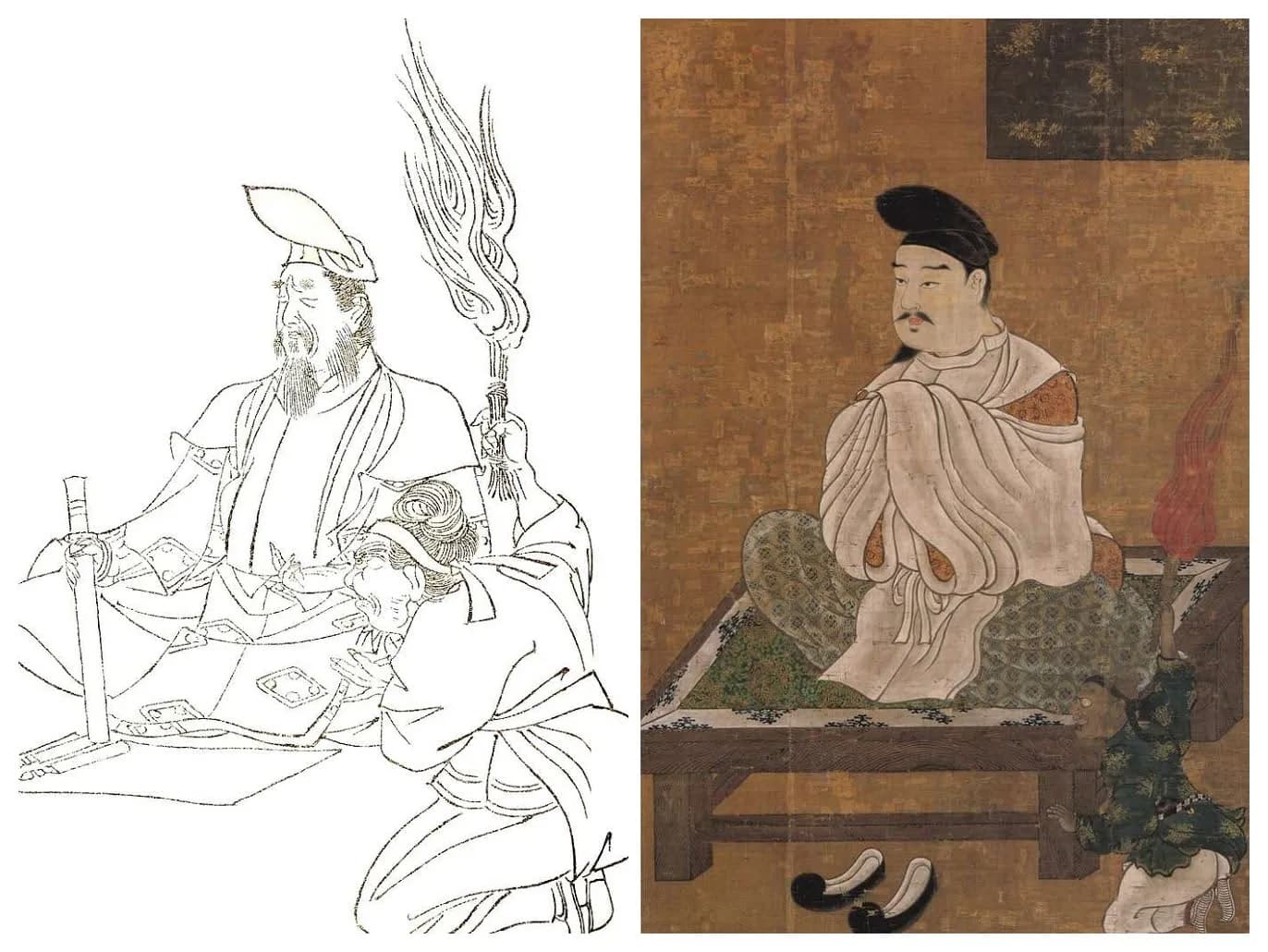
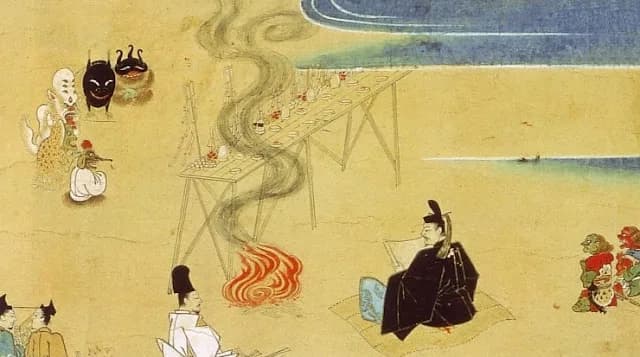
Centuries after his death, medieval literature transformed his practical knowledge of natural science into tales of the supernatural. Popular collections like the Konjaku Monogatarishu depicted him controlling spirit familiars called shikigami and using magic to defeat rival diviners like Ashiya Doman.
Seimei in Modern Anime, Gaming & Pop Culture
Abe no Seimei remains one of Japan's best-known historical figures associated with the supernatural. His reputation has inspired novels, films, manga, anime, and video games, particularly through the popular Onmyoji series. More broadly, the traditions of Onmyodo and its spirit-summoning practitioners continue to influence Japanese fantasy, even when Seimei himself does not appear directly.
Manga & Anime: Abe no Seimei continues to appear in Japanese popular culture, notably in Fate/Grand Order and the Onmyōji franchise. Beyond these direct portrayals, the traditions of Onmyodo, including protective charms, spirit familiars (shikigami), and ritual techniques, have helped shape the supernatural worlds of series such as Twin Star Exorcists and Jujutsu Kaisen. These works draw on a wider range of Japanese religious and folkloric traditions rather than on Seimei alone.
Cinema & Figure Skating: Baku Yumemakura's popular Onmyoji novels inspired a series of live-action films, beginning with Onmyoji (2001) and its 2003 sequel. Seimei returned to the big screen in The Yin-Yang Master Zero (2024), which explores his younger years. His influence even extends to figure skating: two-time Olympic champion Yuzuru Hanyu performed his celebrated SEIMEI program at the 2018 Winter Olympics, drawing on the character's imagery and movements to bring this legendary figure to an international audience.

Seimei Shrine: pentagrams, healing water, and court land
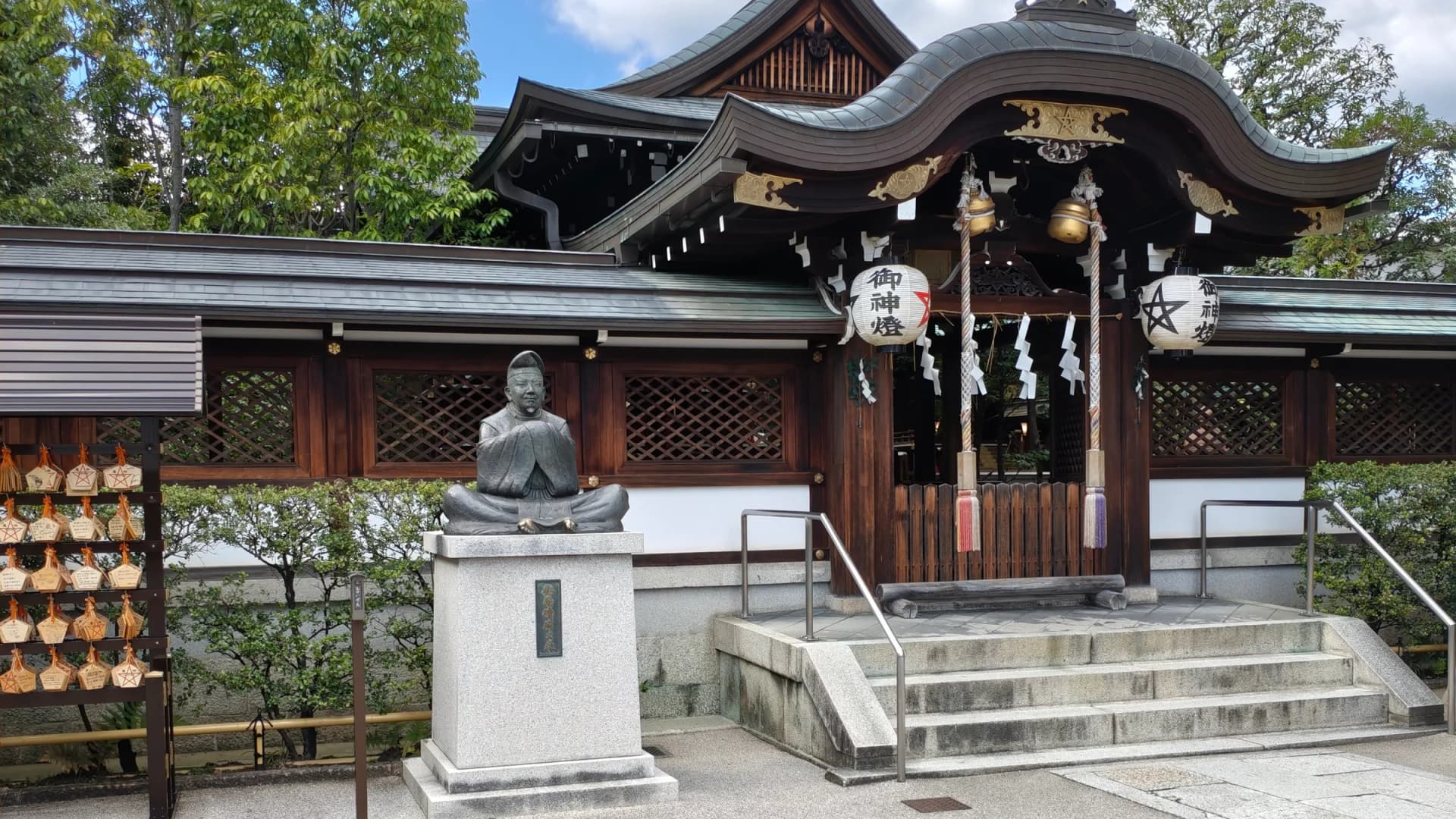
Seimei Shrine is a Shinto shrine in Kyoto's Kamigyo Ward, established in 1007 by order of Emperor Ichijo on the site traditionally associated with Abe no Seimei's former residence.
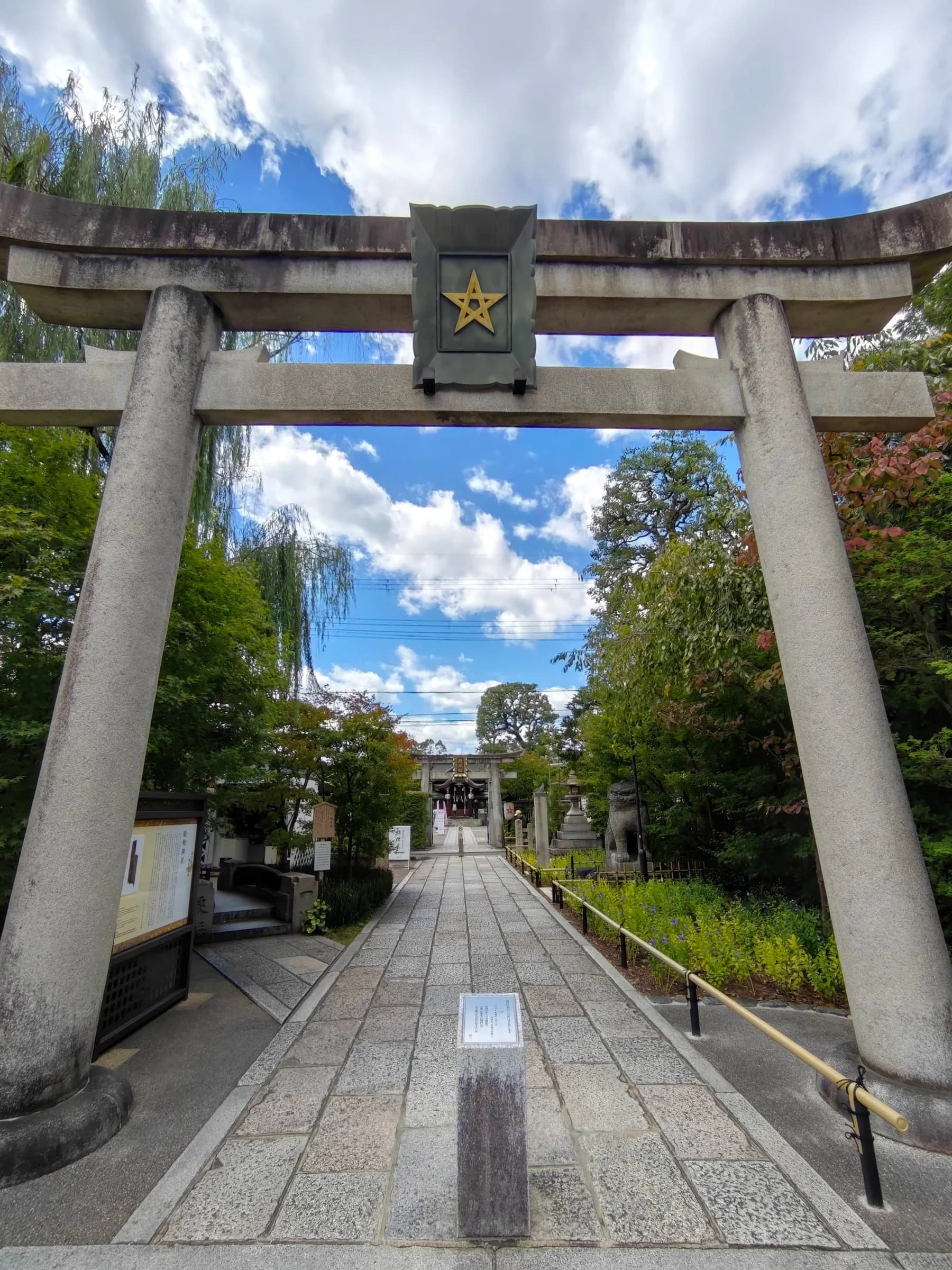
Admission to the shrine grounds is free, with the main grounds open daily from 9:00 AM to 5:00 PM (the amulet office and goshuin counter close at 4:30 PM).
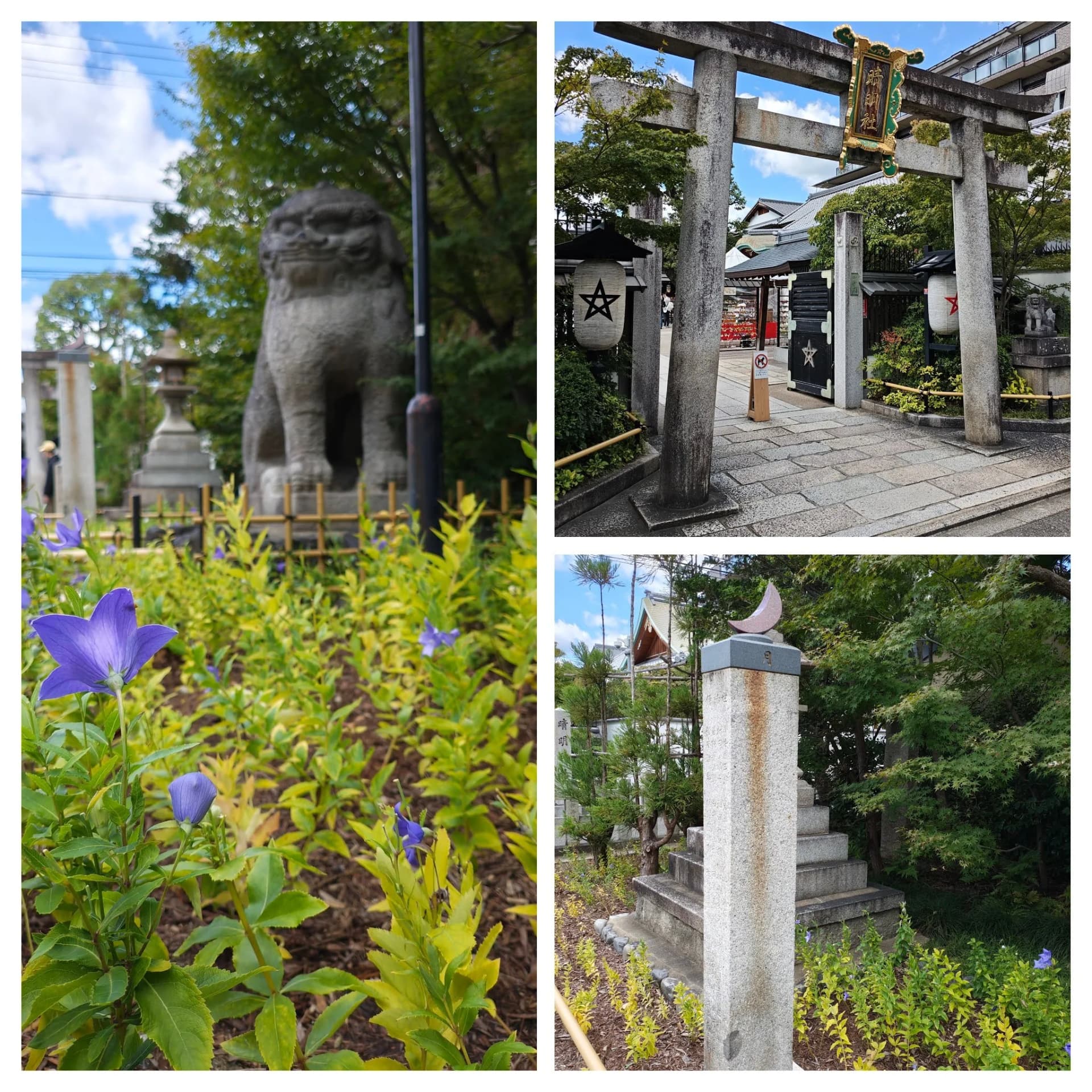
The meaning of the Seiman crest
The five-pointed star displayed on the torii gate, lanterns, and roof tiles is the emblem of the Seiman, also known as the Gobosei.
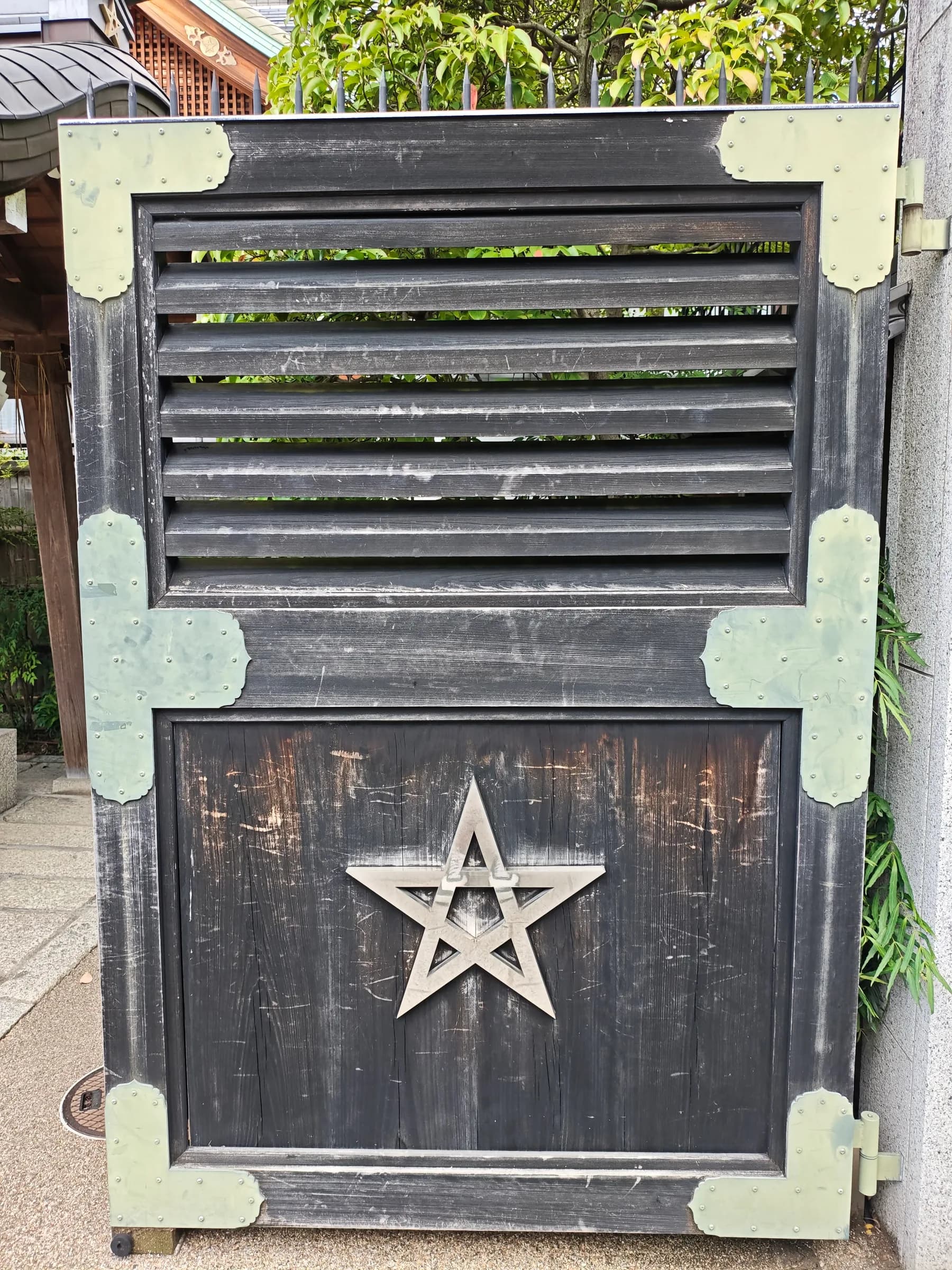
Closely associated with Abe no Seimei and the traditions of Onmyodo, this symbol represents the five elements: wood, fire, earth, metal, and water. According to traditional beliefs, their interactions influenced the natural world. Used as a protective talisman against evil spirits and misfortune, it held an important place in the divinatory practices of the time.
The five elements of Onmyodo that form the Seiman are directly reflected in the modern Japanese weekly calendar :
Day | Japanese | Kanji | Element / Celestial Body |
|---|---|---|---|
Monday | Getsuyobi | 月曜日 | Moon |
Tuesday | Kayobi | 火曜日 | Fire (Mars) |
Wednesday | Suiyobi | 水曜日 | Water (Mercury) |
Thursday | Mokuyobi | 木曜日 | Wood (Jupiter) |
Friday | Kinyobi | 金曜日 | Metal (Venus) |
Saturday | Doyobi | 土曜日 | Earth (Saturn) |
Sunday | Nichiyobi | 日曜日 | Sun |
Clearing up a common misconception: Abe no Seimei did not invent the days of the week! Japan relies on an ancient system—imported from China and influenced by Hellenistic astronomy via Esoteric Buddhism—that connects each day of the week to a celestial body and a natural element. While court astrologers during the Heian period used this cycle exclusively for horoscopes and esoteric calculations, it was officially adopted as the civil calendar in 1876 (Meiji Era).
The bronze peach and the seasonal well
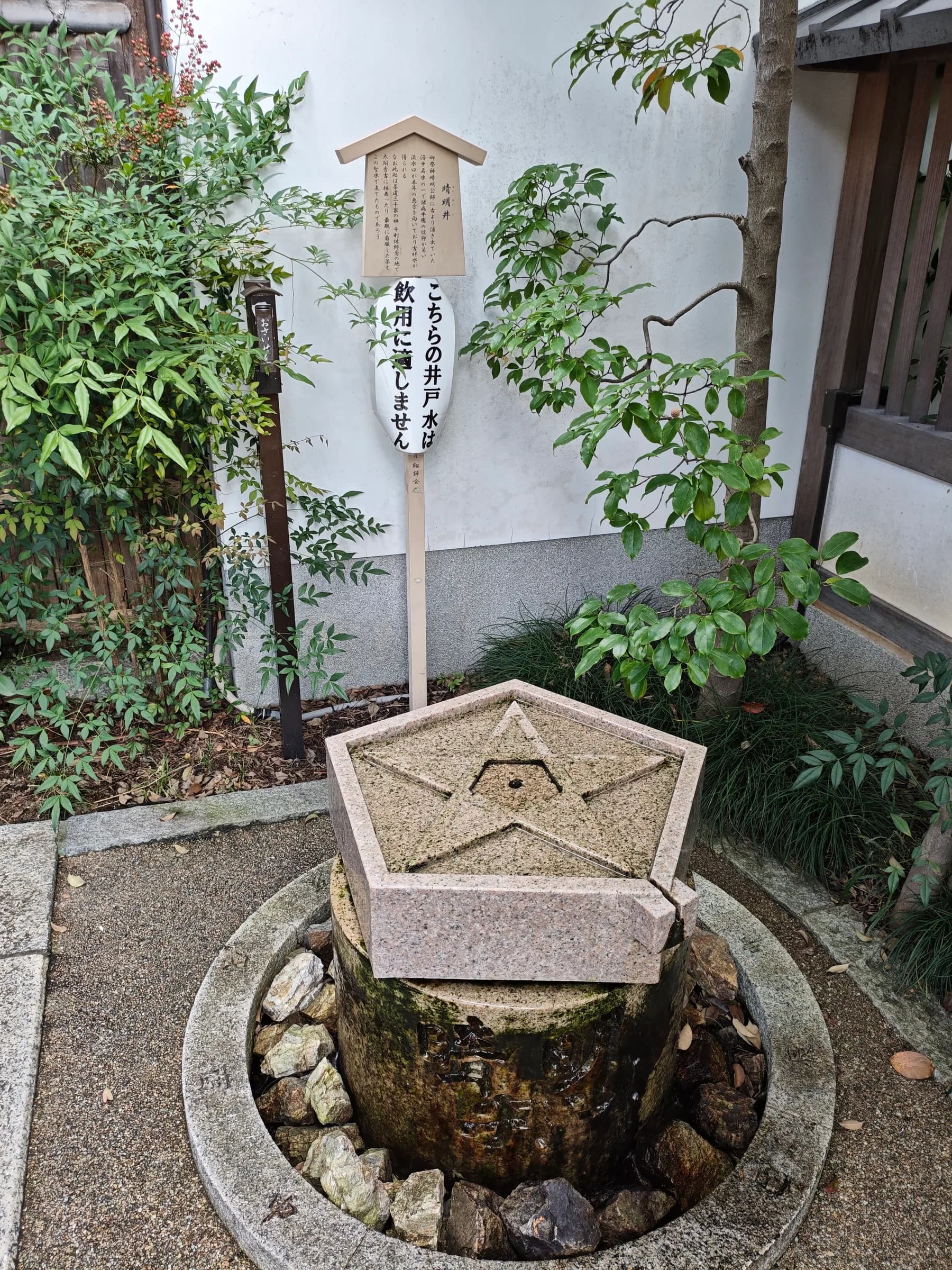
The shrine grounds house a sacred water well known as the Seimei Well and a large bronze peach statue used in purification rituals. Water from the well runs from an underground spring that Seimei is said to have drawn up through spiritual intuition and natural observation. Every year on Risshun, the traditional beginning of spring in early February, the shrine's priests turn the stone spout so that the water flows toward the year's auspicious direction, known as eho.
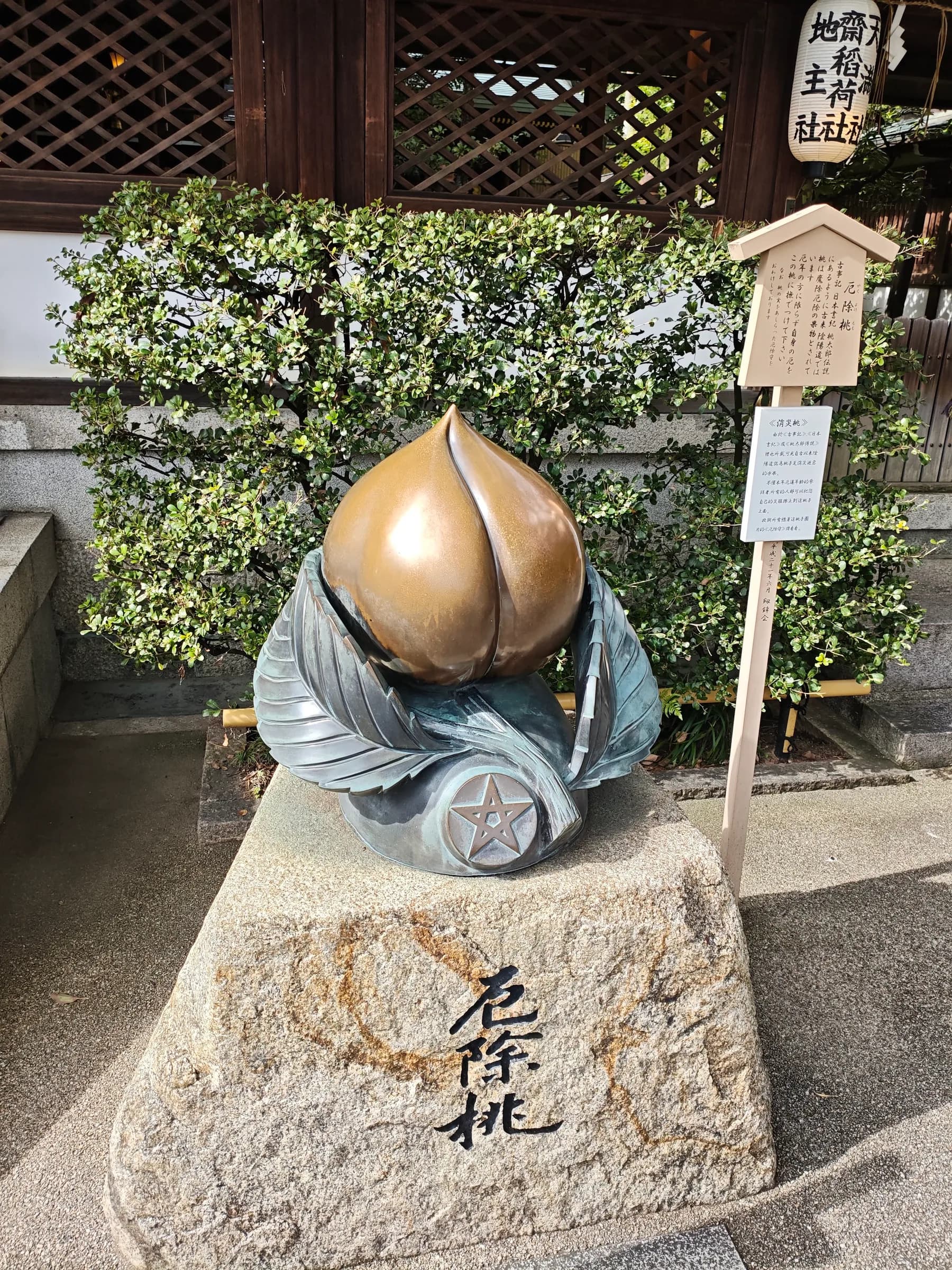
Visitors rub the bronze Talismanic Peach beside the main hall to transfer personal burdens, since peaches traditionally represent the cleansing of bad fortune in classical Chinese and Japanese lore.
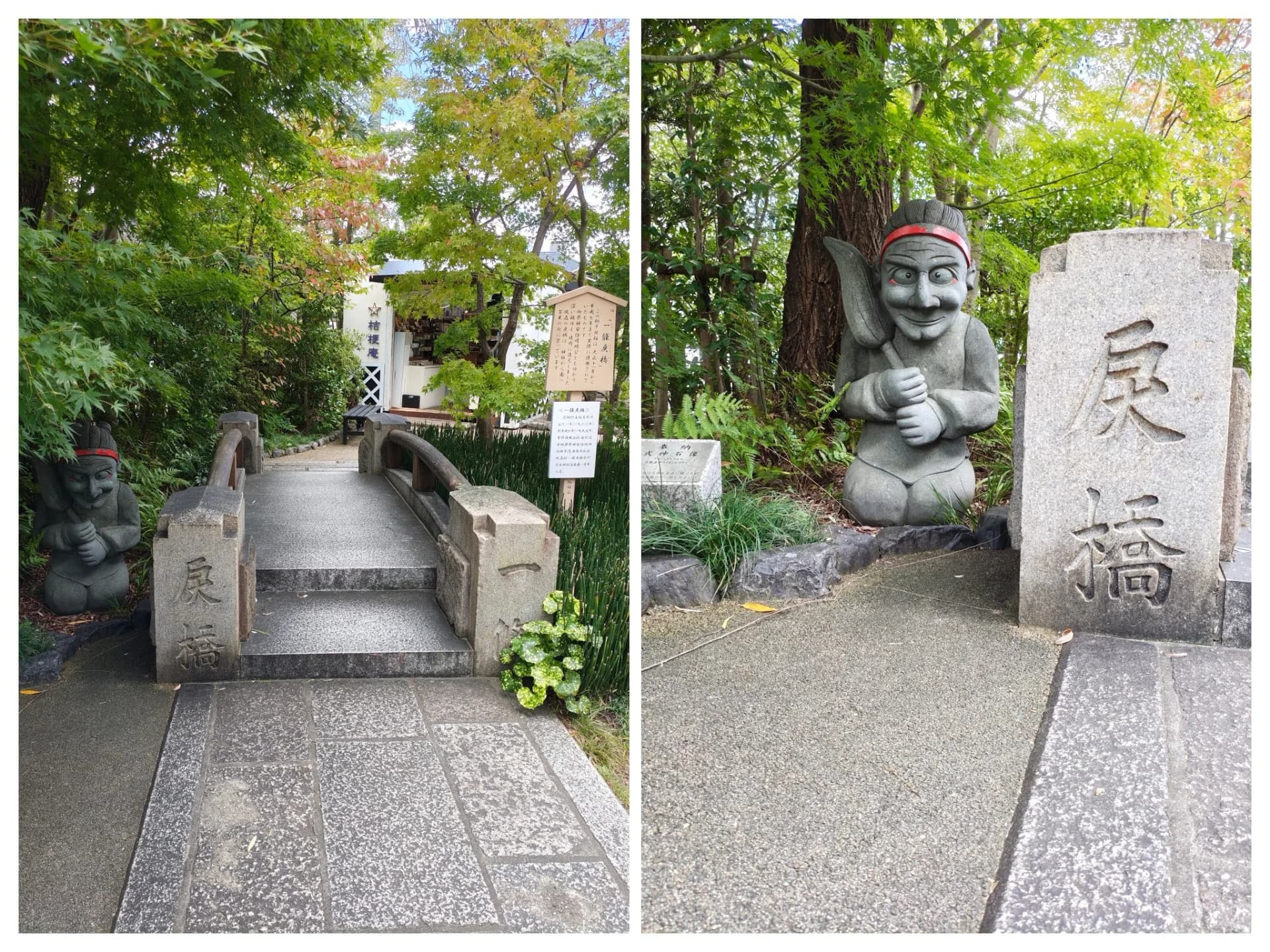
The bridge of return: Ichijo Modoribashi
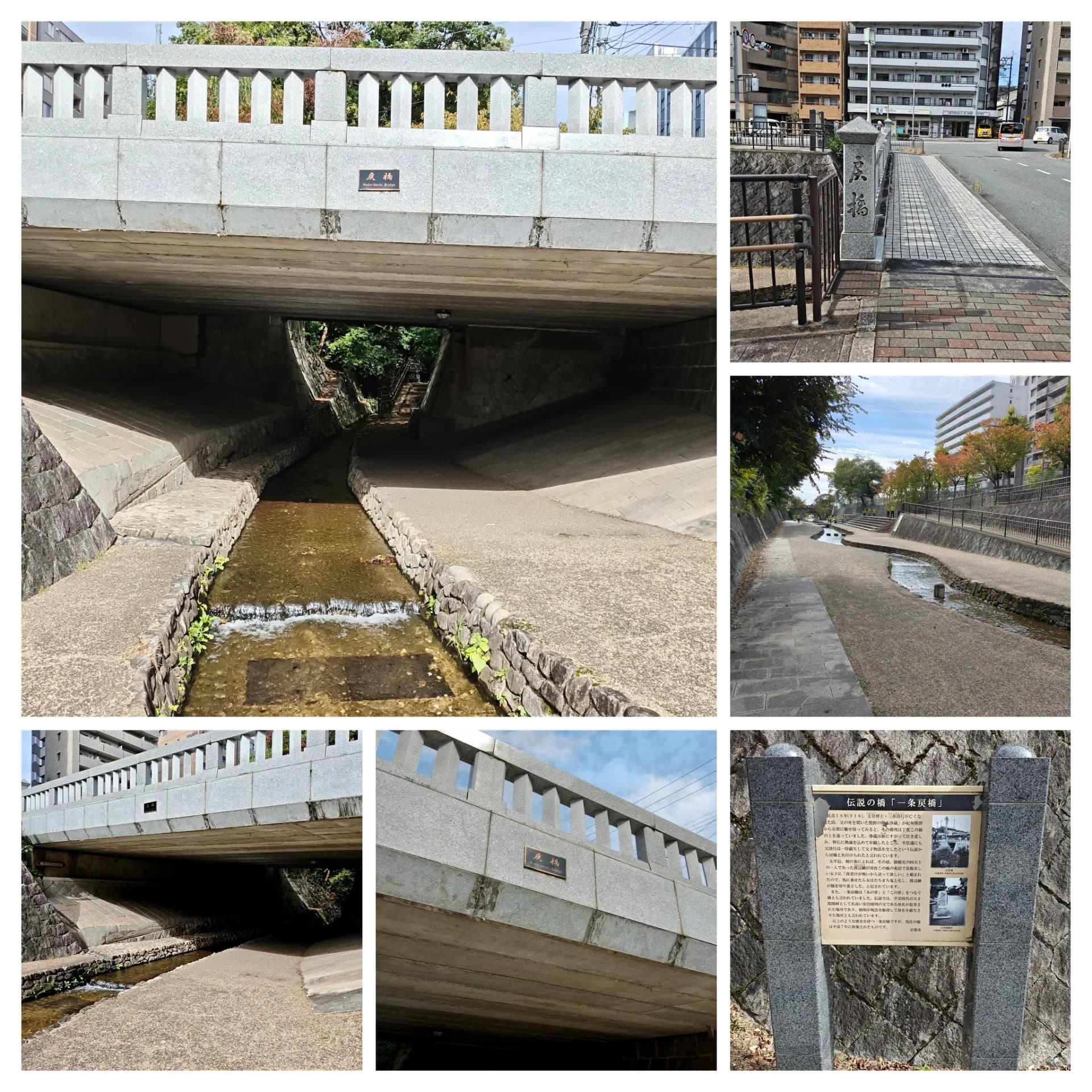
Ichijo Modoribashi is a stone and concrete bridge over the Horikawa River situated 100 meters south of Seimei Shrine along Horikawa-dori. While a small stone replica rests inside the shrine precinct beside a statue of a spirit familiar, the actual street bridge carries modern road traffic. In folklore, Seimei kept his shikigami spirit servants hidden beneath the bridge planks so their unusual, terrifying faces would not frighten visitors at his nearby home.
Its name translates as the "Bridge of Return," giving it a strong cultural presence in Kyoto wedding traditions. Local families still instruct wedding cars and bridal parties to bypass the crossing entirely, avoiding any symbolic suggestion that a bride will return to her maternal family after marrying. By contrast, soldiers departing for war historically walked across the bridge with the hope of returning safely home.
Finding the grave of Abe no Seimei in Saga-Arashiyama
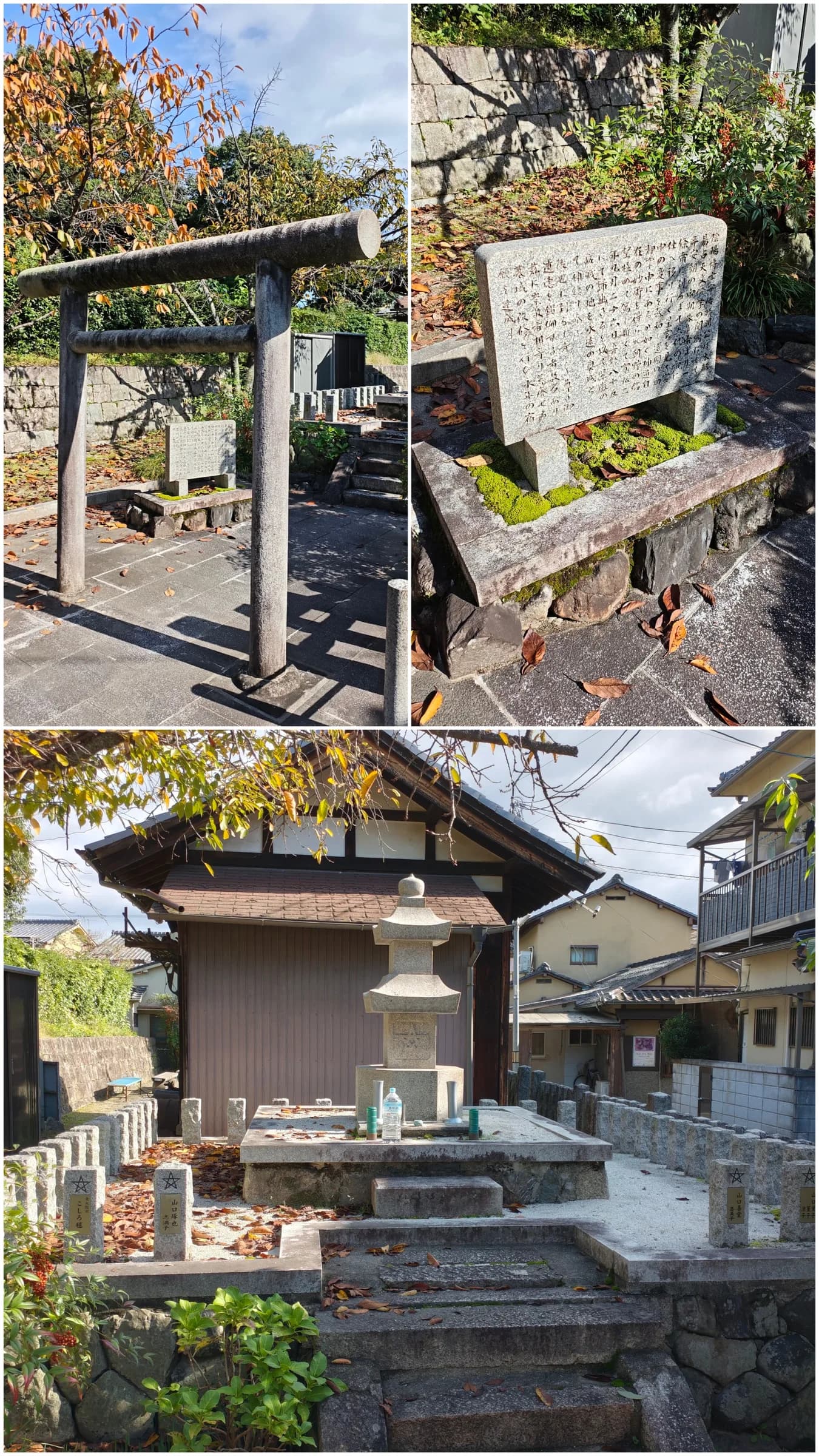
The traditional gravesite of Abe no Seimei is tucked away in a quiet residential neighborhood of Saga-Arashiyama, about five minutes on foot from Randen Arashiyama Station. The small burial site lies near the mausoleum of Emperor Chokei, away from the area's main tourist streets. According to tradition, Abe no Seimei died on the 26th day of the ninth lunar month in 1005. Seimei Shrine commemorates his death each year on September 26 with a ceremony at his Saga gravesite.
How to reach the Saga grave from the station
Reaching the burial spot requires navigating narrow neighborhood roads without standard tourist signposts:
Exit Randen-Saga Station to the south and walk down the alley running parallel to the train tracks.
Turn left into the residential street at the small intersection, follow the lane for two minutes, and look for the low granite gateposts marked with the familiar five-pointed star.
The site features a small stone torii, a paved perimeter, and a central stone monument resting behind iron fencing. Because there are no ticket booths or staff on site, the grave is open for respectful visits during daylight hours at no charge.
Visiting Seimei Shrine and His Grave in One Day
Central Kyoto and Saga-Arashiyama feel like two disconnected worlds on a tourist map, but riding between them through the quiet residential streets north of Marutamachi avoids both crowded municipal buses and heavy traffic. Navigating these narrow backstreets on two wheels connects Seimei Shrine to his quiet Saga grave in roughly 40 minutes, passing neighborhood temple walls and garden lanes that big tour groups never see.
How to Visit Both Sites in One Day
Visiting both Seimei Shrine and his Saga grave in one day covers a distance of roughly eight kilometers across Kyoto.
By Cycling (Recommended): From Seimei Shrine, we head west through Kyoto's quieter residential streets, passing through the area around Myoshin-ji Temple before continuing toward Saga-Arashiyama. Along the way, the busy city streets gradually give way to more peaceful neighborhoods. Allow around 35–45 minutes for the ride, depending on your pace and the route you take.
By Public Transit: Board Kyoto City Bus 203 heading west from the Horikawa Imadegawa stop near Seimei Shrine to Kitano-Hakubaicho Station. Transfer to the Keifuku Electric Railroad (the local Randen tram). Take the tram to Katabiranotsuji, switch across the platform to the Arashiyama Line, and get off at Randen-Saga Station for the 5-minute walk to the grave.