Pharmacies and drugstores: how it works in Japan
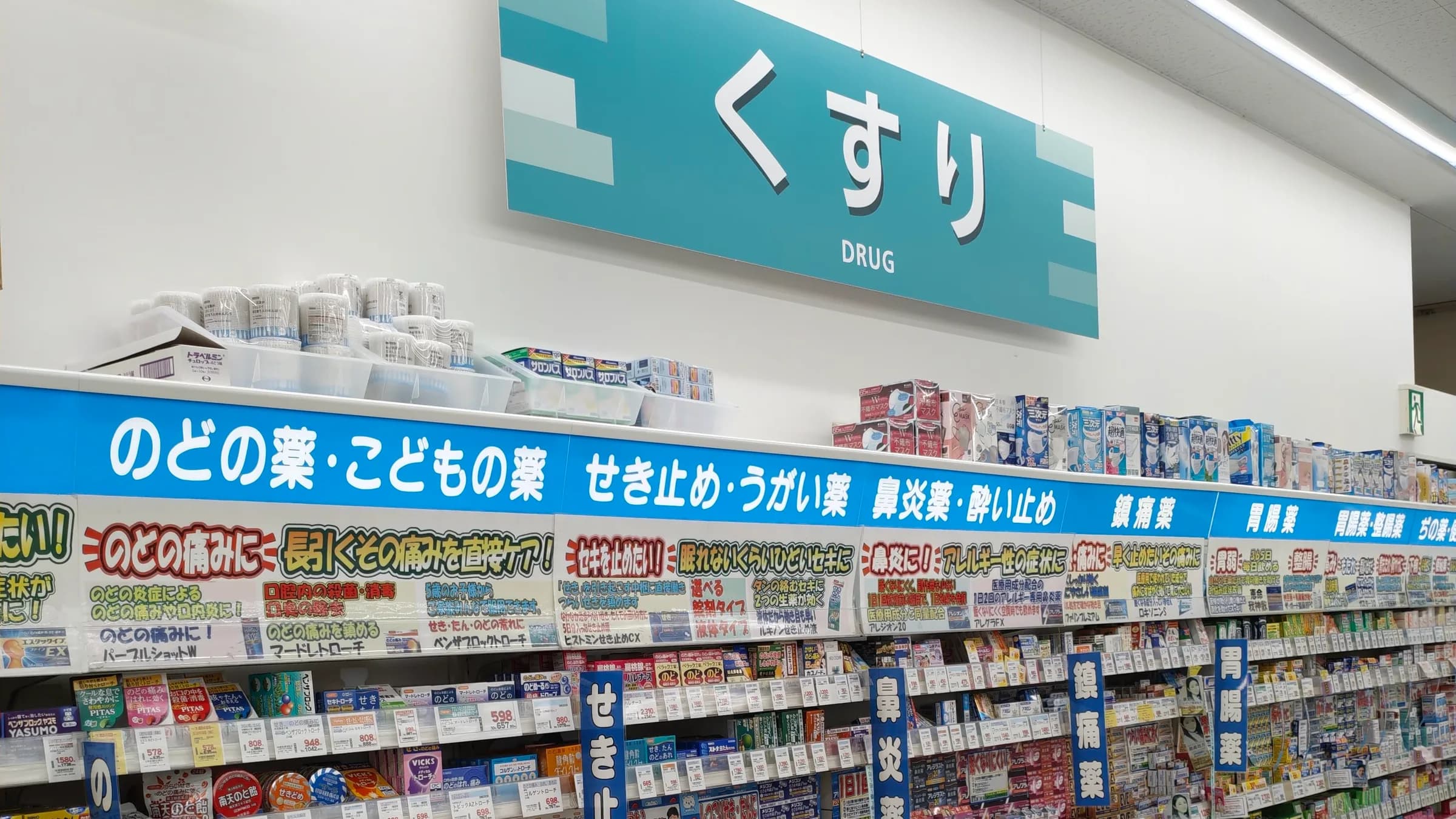
In Japan, there is a clear difference between drugstores like Matsumoto Kiyoshi, Sundrug, or Daikoku, and yakkyoku, which are prescription pharmacies. Drugstores carry most basic over-the-counter treatments. For certain Class 1 medications, a licensed pharmacist must be present in the store, typically between 9:00 AM and 6:00 PM.
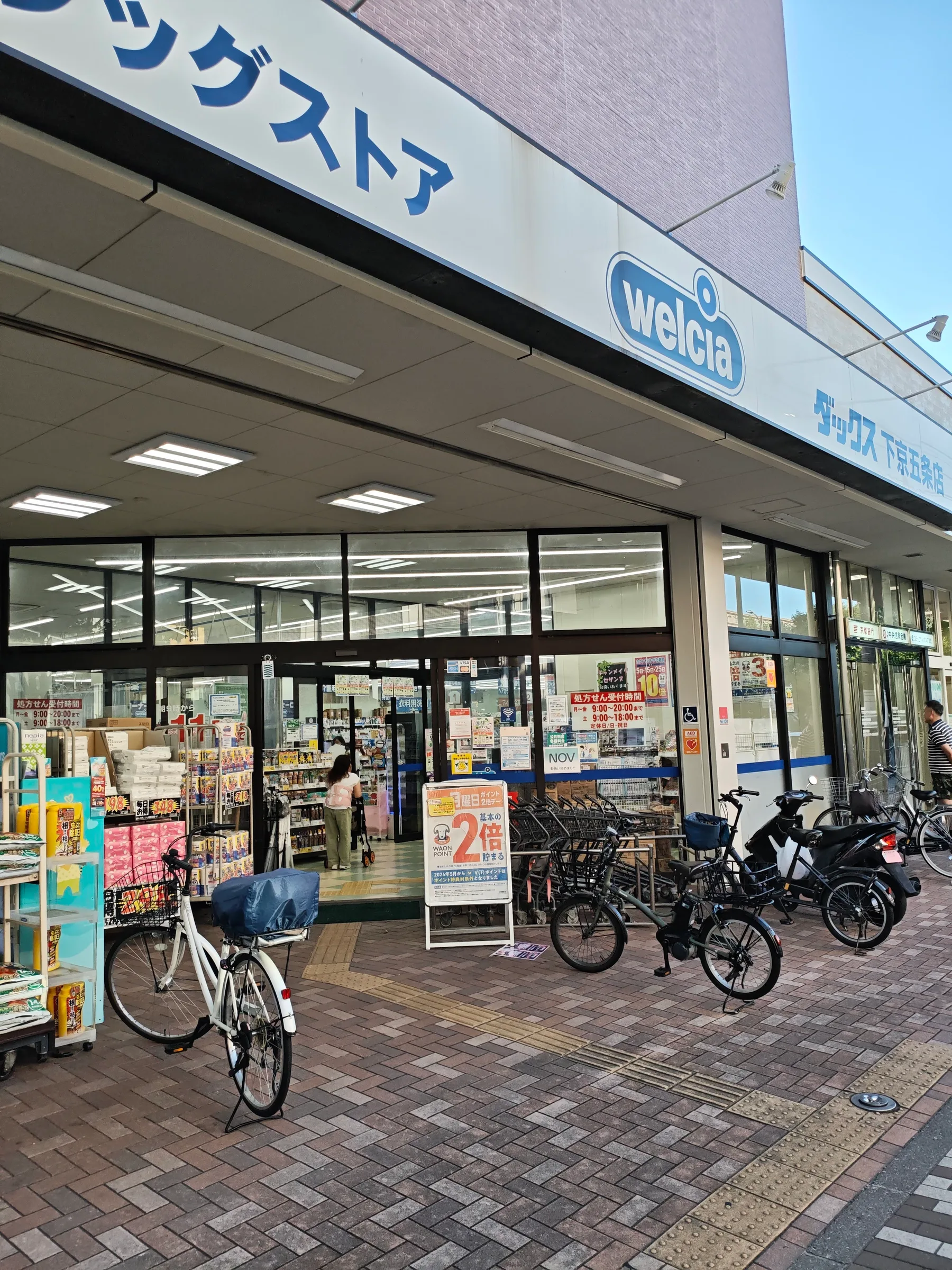
Drugstores stock everything from painkillers to cosmetics. If you need a specific product, show a photo or the name written in the Latin alphabet (romaji) on your phone to a staff member, and they will lead you to the right shelf.
Keep this in mind if you ask for tax-free shopping: staff will seal your items in a plastic bag that must remain unopened until you leave Japan. If you need to take a tablet immediately for a headache, decline tax-free processing for that item and pay the 10% tax.
Everyday medicines to look for in local stores
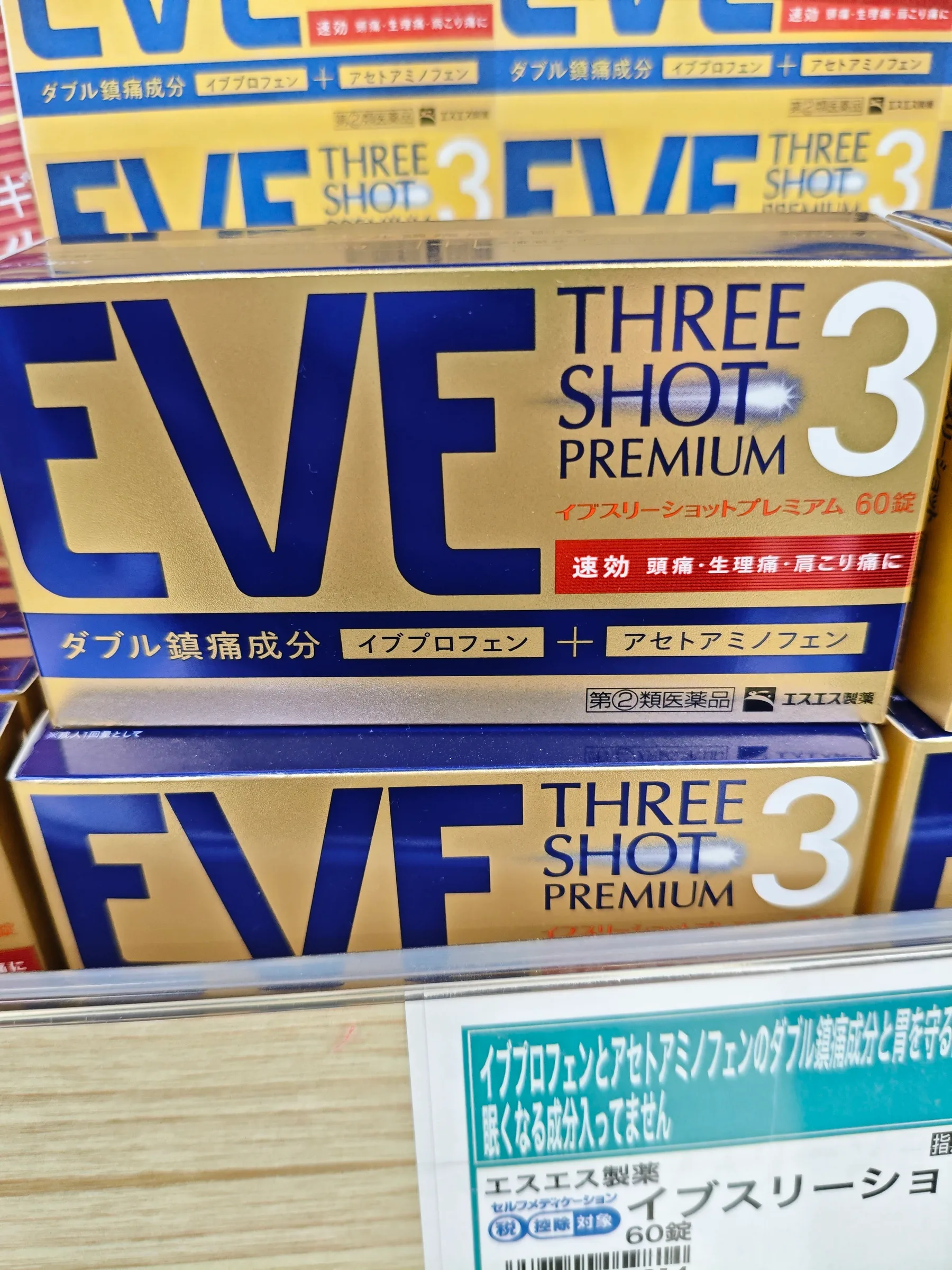
Japanese packaging can be difficult to read, but you will find the same active ingredients used in Western medication. Three common products cover most minor issues: Tylenol A, EVE, and Pabron Gold A.
Finding alternatives to paracetamol or ibuprofen
Tylenol A contains paracetamol, sold here in 300 mg doses per tablet. For fever or stronger headaches, EVE Quick is the standard ibuprofen product, easy to spot in its blue box.
If you pick up a bug on the Shinkansen, Pabron Gold A comes in tablets or powder sachets. For a sore throat, Ryukakusan powder works quickly to ease irritation.
Tip: Use Google Translate (Camera Mode) on medication boxes to instantly double-check dosages, active ingredients, and usage instructions while browsing Japanese drugstores.
Stomach trouble and motion sickness
After a heavy bowl of ramen, Ohta Isan herbal powder works well for heartburn. If your stomach feels heavy after a large meal, Cabagin Kowa helps with digestion.
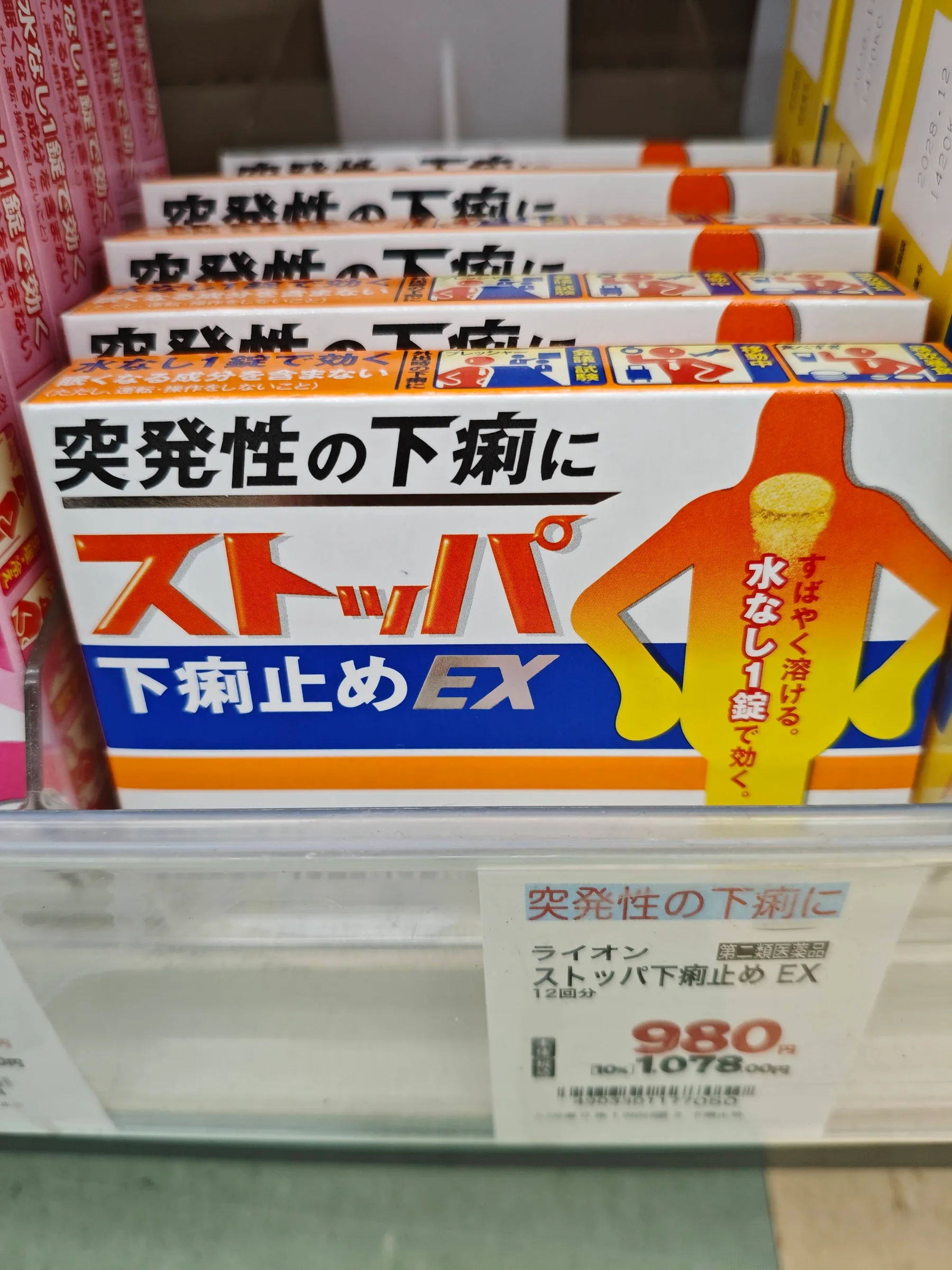
For sudden stomach emergencies while sightseeing, keep Stoppa EX with you. These tablets dissolve on your tongue without water, which helps when you are riding a bus or train.
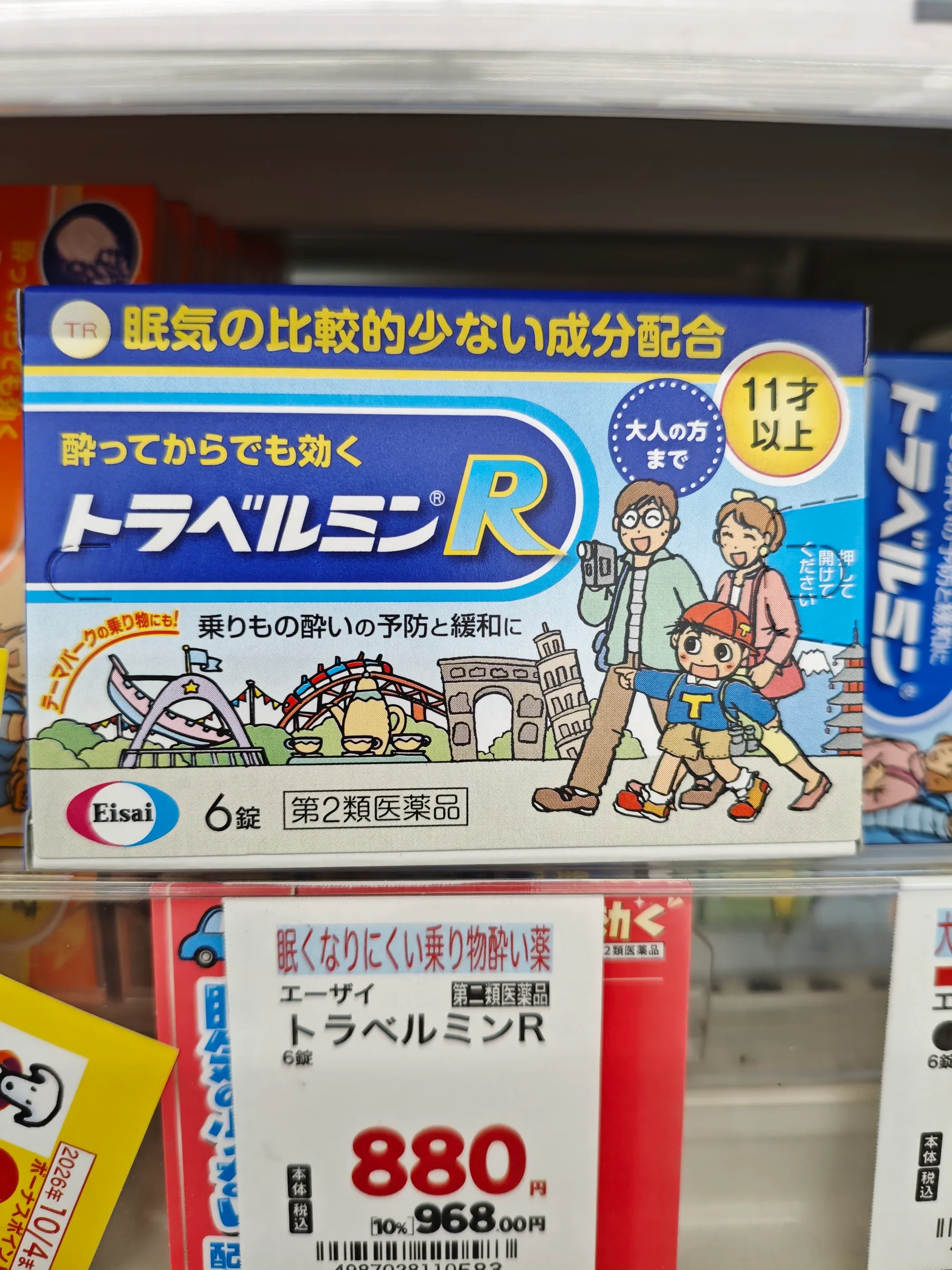
And remember, if you get motion sickness, make sure to take Travelmin! It's Japan's go-to remedy for keeping travel nausea at bay. The product lineup includes standard adult tablets, non-drowsy or low-drowsiness formulas such as Travelmin R, once-daily fast-dissolving options like Travelmin 1, and chewable drop-style variants designed for children. Typically taken 30 minutes before embarking on a trip, it remains a staple staple for travelers throughout Japan seeking reliable relief from motion sickness.
Canker Sore and Sore Throat Relief
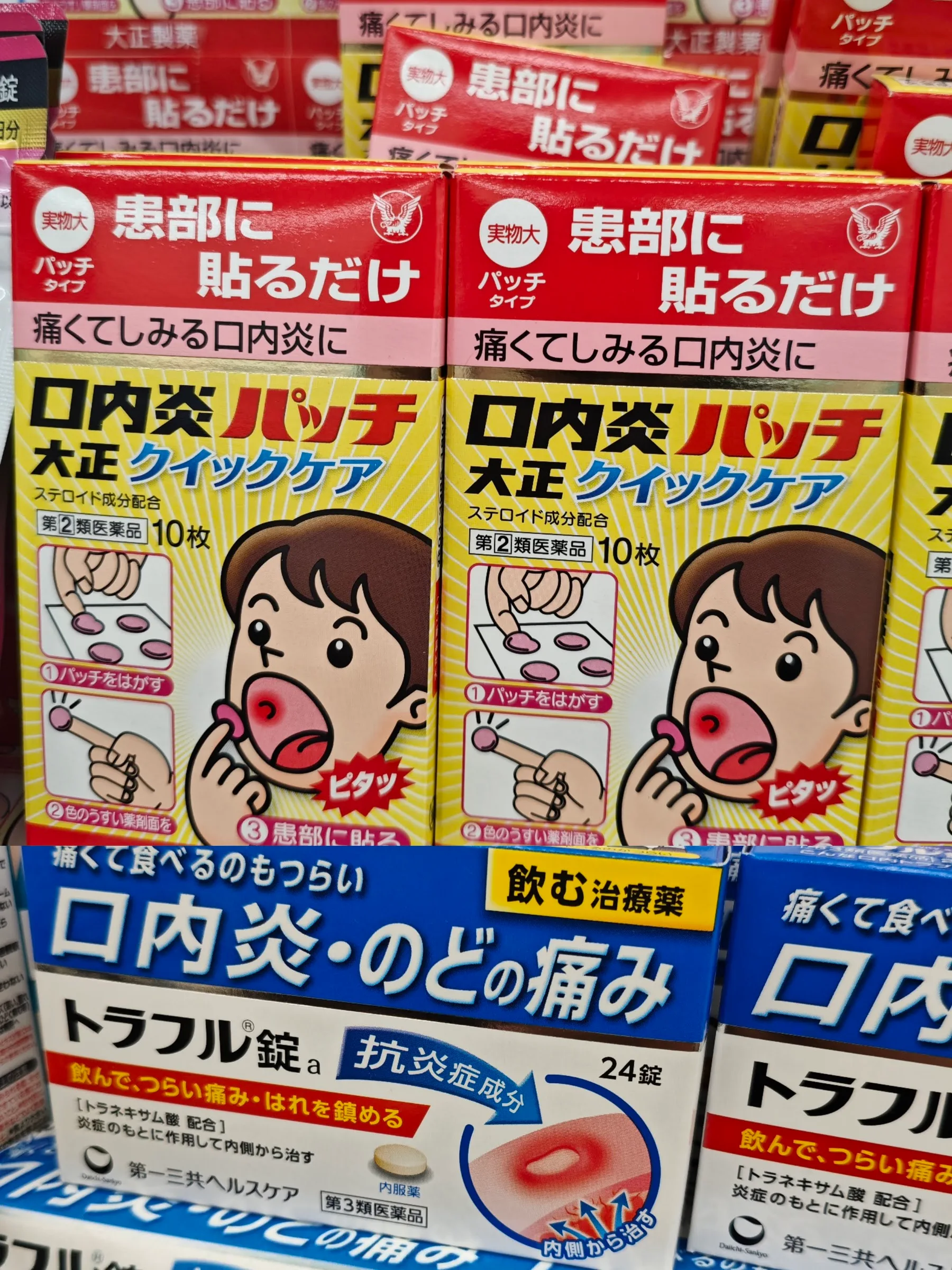
If you suffer from painful canker sores or a sore throat during your trip, Traful tablets work from the inside out using tranexamic acid to reduce inflammation and soothe mucosal pain. For direct, localized relief, Taisho Quick Care patches stick right onto the ulcer to shield it and treat it quickly with a steroid-based formula.
A range of syrups for children
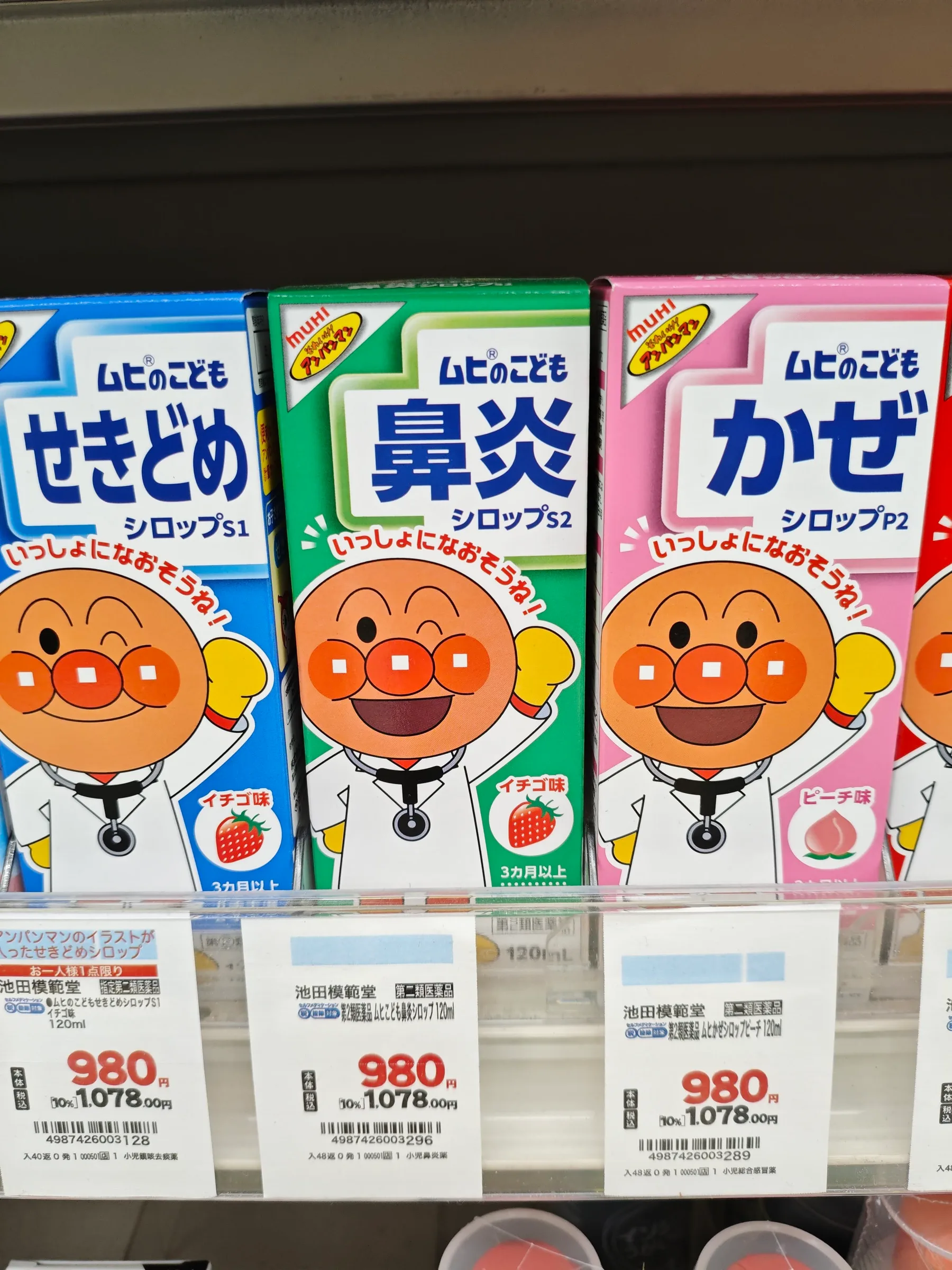
If you’re traveling in Japan with young children, keep an eye out for Muhi No Kodomo pediatric syrups, which are easy to spot thanks to the mascot Anpanman on the box. This color-coded lineup is perfect for treating unexpected minor ailments on the road: the blue box (Sekidome) targets coughs, the green box (Biyan) relieves a stuffy or runny nose, and the pink box (Kaze) treats general cold symptoms. Formulated for children 3 months and up in kid-approved flavors (strawberry and peach), these syrups are readily available in any Japanese drugstore.
Allergies and basic first aid
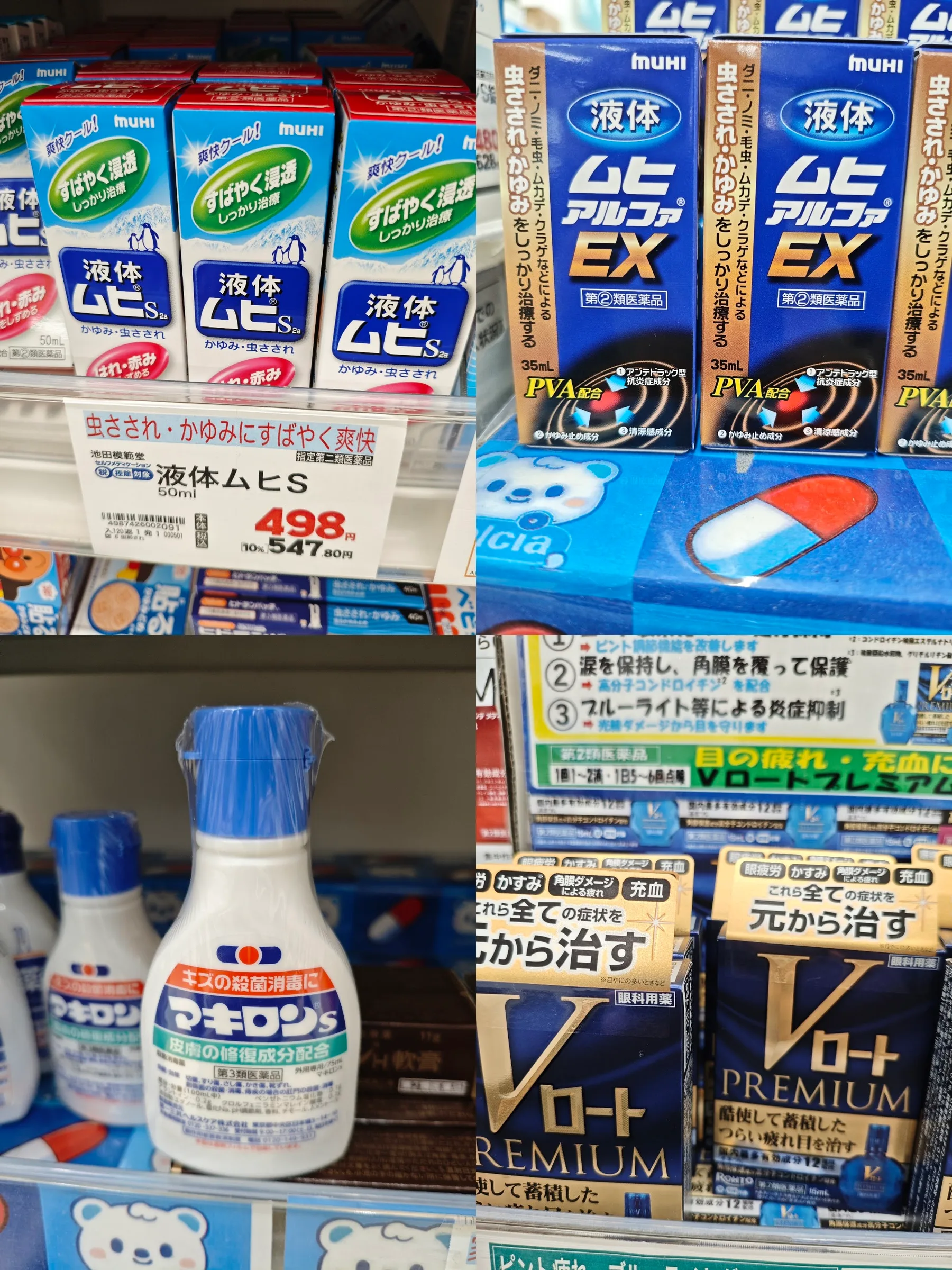
If you visit during spring, cedar pollen can irritate your eyes and nose. Antihistamines like Alesion or Claritin are available directly on store shelves. For insect bites, Muhi S offers fast, cooling relief from itching and redness, while Muhi Alpha EX provides an extra-strength formula for tougher stings and bites, like those from jellyfish or outdoor pests. If you scrape yourself while exploring, Makiron S is Japan's go-to liquid antiseptic spray to disinfect cuts, scrapes, and minor wounds without a harsh sting. Finally, after long travel days, screen fatigue, or eye dryness from air conditioning, V Rohto Premium eye drops help soothe tired eyes and restore visual comfort so you can fully enjoy the rest of your trip.
In the same antiseptics section, you'll also find bandages and gauze.
Tips for staying healthy while exploring Kyoto
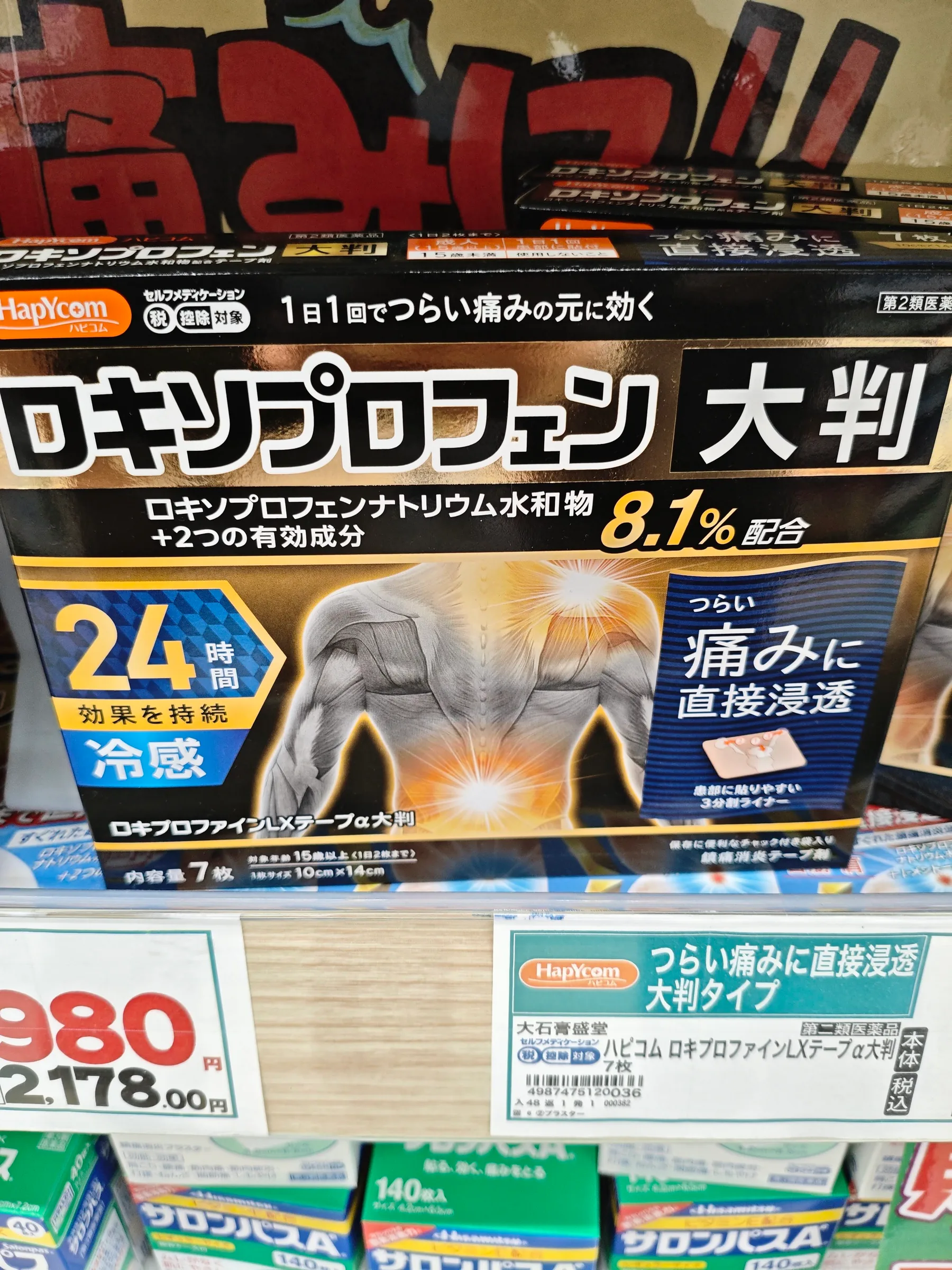
It is easy to walk over 15 kilometers a day on Kyoto pavements and temple steps. In the evening, apply pain-relief patches (shippu) to your calves. Local residents use them to keep their legs fresh for the next day.
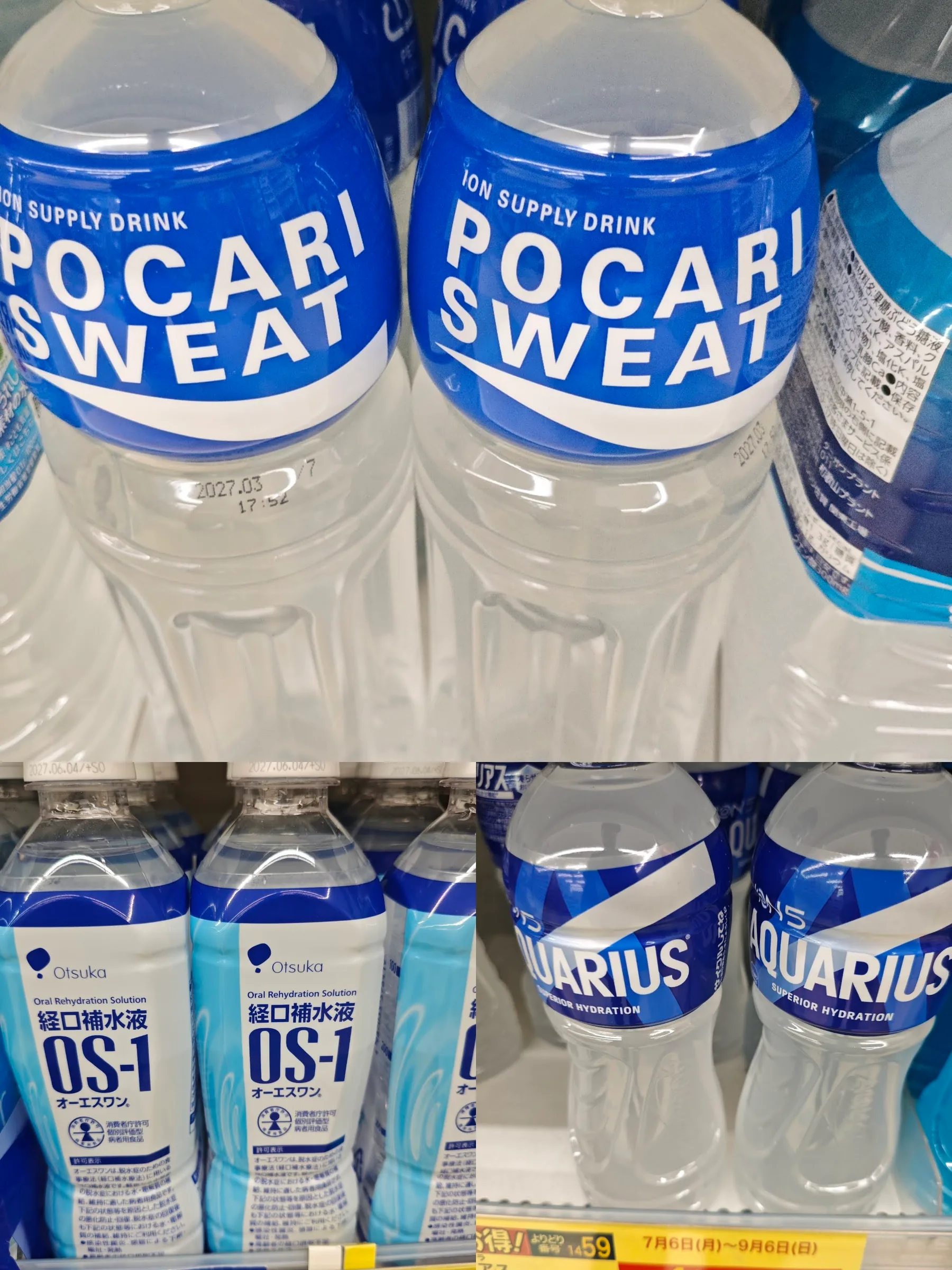
Summers are hot and humid. Grab a bottle of Pocari Sweat or Aquarius from a vending machine to stay hydrated, and keep salt candies in your bag if you ride a bicycle.
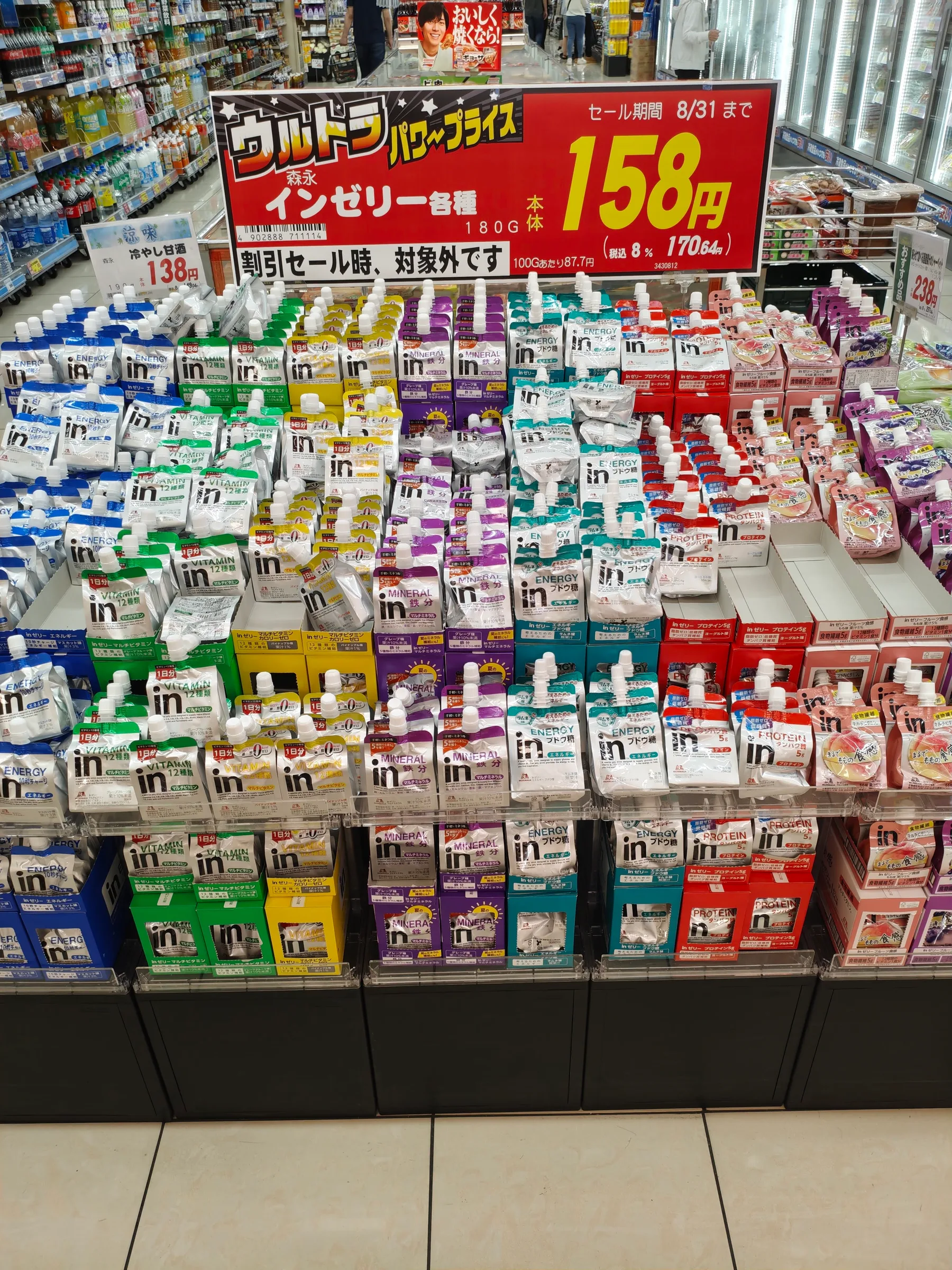
Another quick energy or nutrient boost during your days of exploring, in Jelly pouches are a true staple in Japan. Extremely popular and easy to consume on the go, they come in several color-coded versions depending on your needs: the blue version (Energy) provides a quick dose of carbohydrates, the green one (Multivitamin) covers your daily vitamin needs, the purple one (Mineral) helps replenish iron and essential minerals, and the red one (Protein) is ideal for muscle recovery. You can find them in all the drugstores mentioned above, as well as in supermarkets and convenience stores across the country—perfect for keeping your energy levels up throughout your trip.
Our practical advice on the ground: do not try to squeeze too much into one day. Walking for hours in hot weather brings fatigue fast, and adjusting your pace beats spending your late afternoon searching for a clinic.
Seeing an English-speaking doctor near Kyoto Station
If you need medical attention, Wada Clinic is a three-minute walk from the north exit of Kyoto Station. Doctor Wada speaks English and sees travellers for general medical consultations.
https://maps.app.goo.gl/ESTTuCpxb2R2kfWh6
Remember to bring your passport. You pay for the consultation on site by cash or credit card. Ask for an itemized receipt (ryoshusho) to submit to your travel insurance for reimbursement.