Is cycling in Kyoto a good idea
Kyoto has a grid layout inherited from the Heian period (794-1185). This straight grid makes orientation simple. You can easily find your way using the major perpendicular streets. However, flat maps hide the actual slope of the city.
The city rises gently from south to north. Kyoto Station sits at 30 meters above sea level, while Kinkaku-ji reaches 100 meters in the north. This 70-meter elevation gain is gradual but continuous. On a classic single-speed city bike, the effort quickly tires your legs.
Five cycling routes in Kyoto
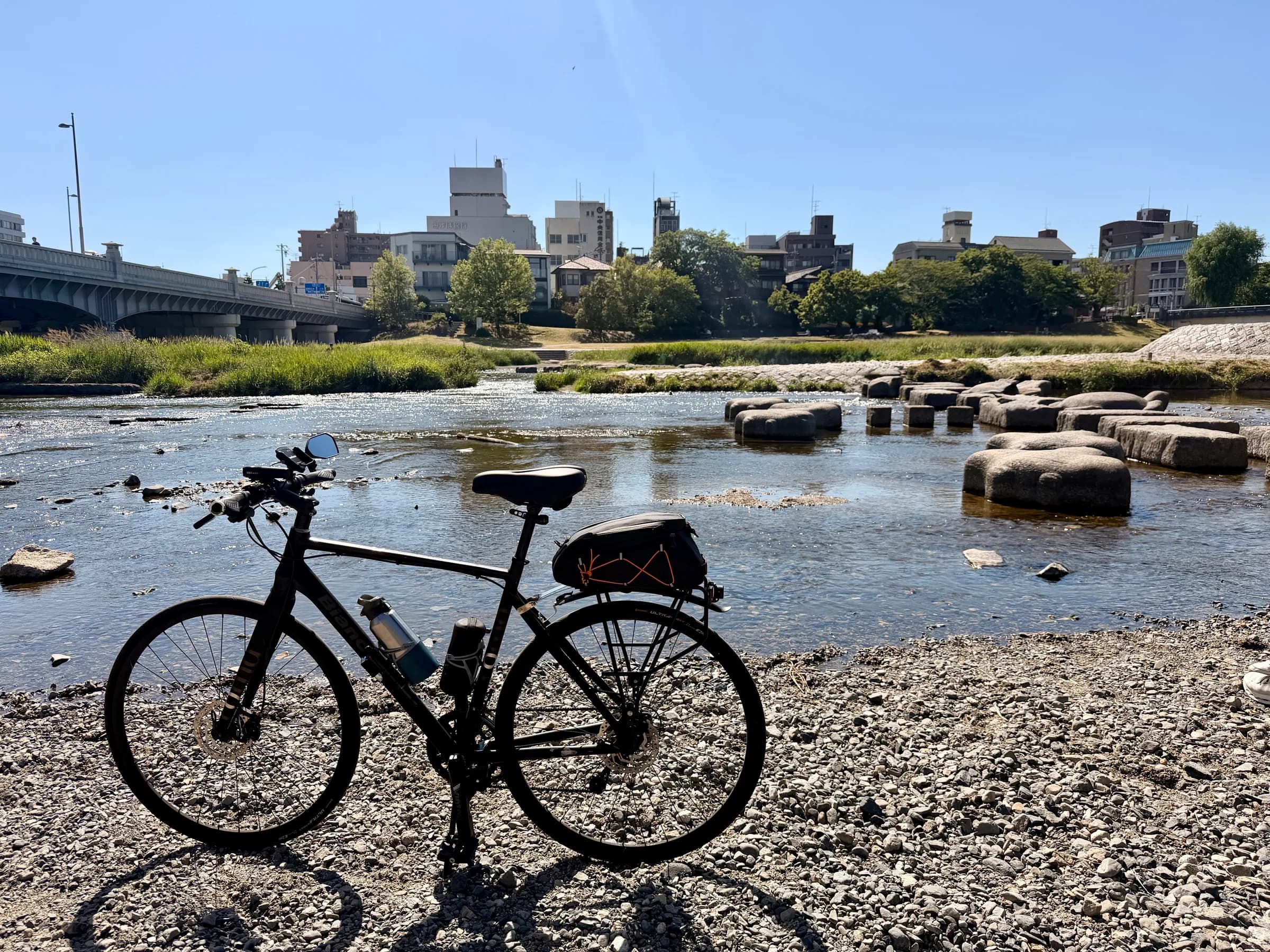
The path along the Kamogawa River offers a flat, 8-kilometer ride on packed dirt where cars are banned. You will share the path with locals and herons. Further east, the Okazaki neighborhood has wide streets. Its bicycle lanes make reaching local museums easy.
The Philosopher's Path stretches for 2 kilometers. During peak seasons, the crowds force you to get off your seat and push your bike. In Arashiyama, rules are strict. You must leave your bike in a paid municipal parking lot before walking into the bamboo forest. The route connecting Ginkaku-ji to Yoshida Shrine offers shaded paths.

Where to rent a bike in Kyoto and how much it costs
For bike rentals, the KCTP agency has offices near Kyoto Station. They provide helmets with their well-maintained bikes. In the city center, shops like J-Cycle and Kyoto Eco Trip offer various quality models.
Prices depend on the model. A standard city bike, known as a mamachari and equipped with a front basket, costs between 800 and 1,200 yen per day. For an electric-assist model, expect to pay between 1,500 and 2,500 yen per day.
Choosing between an electric bike and a standard model
Kyoto's climate often dictates this choice. Summer is hot and humid starting from 9:00 AM. Under these conditions, electric assistance prevents your ride from becoming an exhausting physical challenge.
The motor helps you climb the slopes leading to hillside temples like Kiyomizu-dera. On the other hand, for short, flat trips downtown or along the Kamogawa River, a standard multi-speed bicycle is perfectly fine.
Traffic rules to follow in Japan
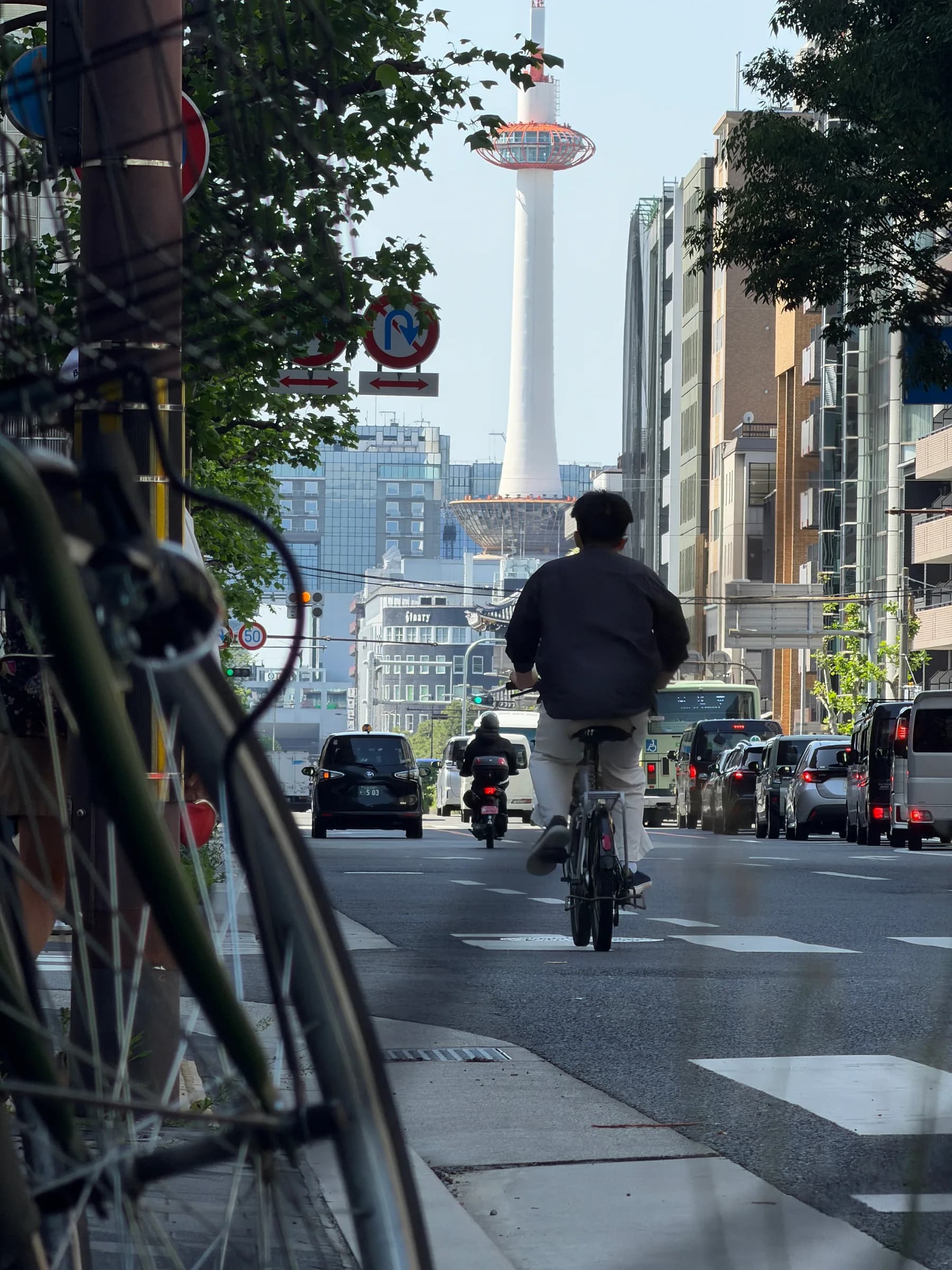
In Japan, traffic laws apply strictly to bicycles. You must ride on the left side of the street, or you risk a 6,000 yen fine. Using your phone while riding can result in a fine of up to 100,000 yen.
The city bans bicycles on several major roads. You cannot ride on the Shijo-dori shopping street or in the narrow pedestrian alleys of Gion. Holding an umbrella while riding is also illegal. You must turn on your lights as soon as night falls.
The parking headache and the risk of impoundment
Parking your bike just anywhere is impossible in Kyoto. Leaving it on a sidewalk leads to quick removal by the municipal impound service. To get your bike back, you must pay 3,500 yen and travel to the impound lot located in the southern part of the city.
To avoid this, the city offers a 200 yen one-day pass. It gives you access to municipal parking lots near major sightseeing spots. Some temples have free parking areas, while others require you to use nearby paid facilities.
Self-guided rides versus guided tours: the limits
Riding on your own offers great freedom. However, you must handle parking at every stop. During peak season, finding an open spot near popular temples requires patience and wastes time.
Navigating dense areas while avoiding restricted streets requires constant attention. Choosing a guided tour eliminates these logistical issues. You can ride peacefully without worrying about fines or getting lost.
The stress-free option: a guided day with Kimasu
To explore the region without the stress, the Kimasu team organizes small-group guided rides. Your guide handles the entire route and adjusts the itinerary to avoid the steepest hills in the city.
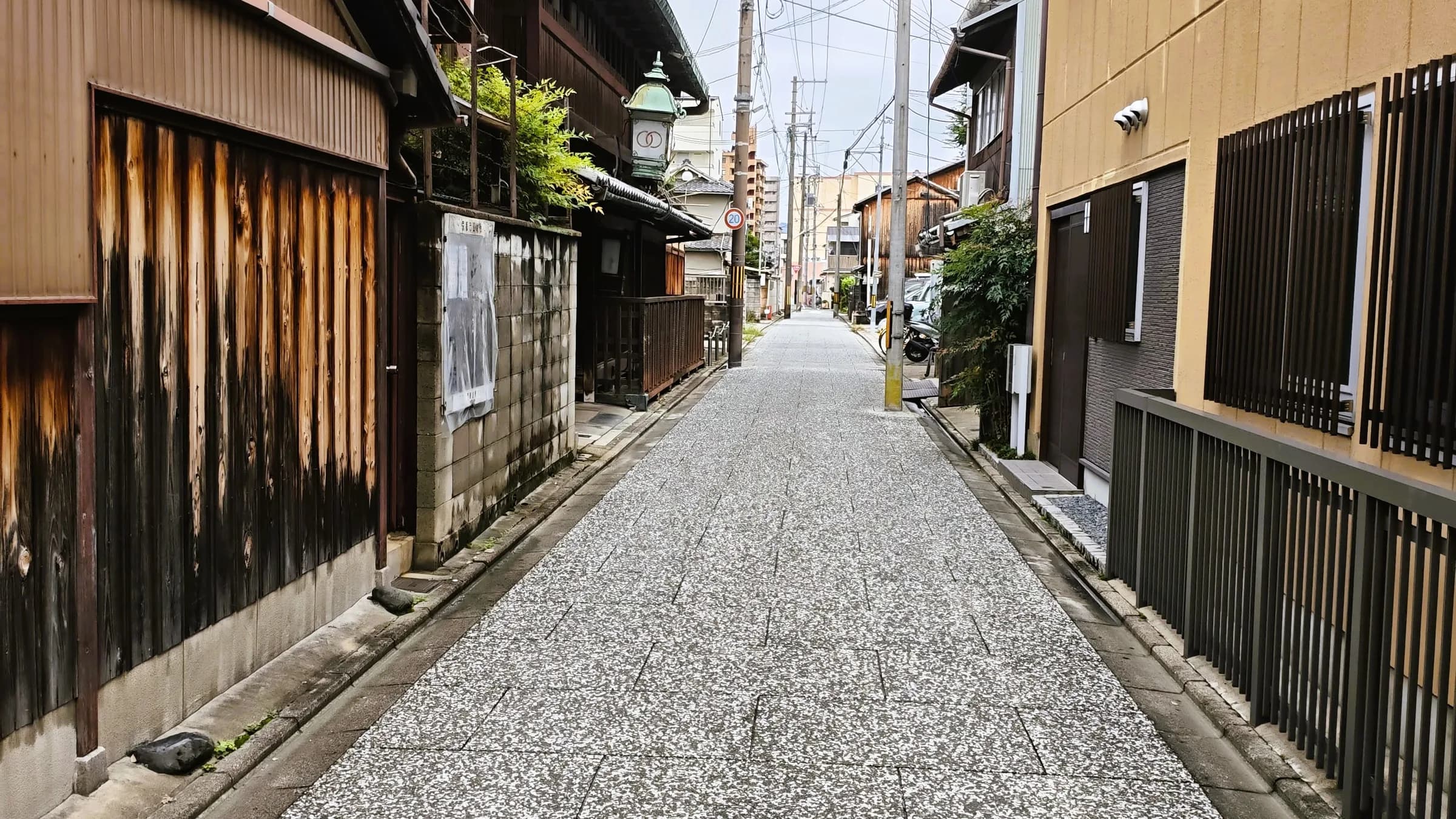
We handle parking payments to save you the trouble. We navigate through quiet backstreets, far from heavy traffic and the crowded buses on main boulevards.